Discover how regenerative medicine for dogs and cats can slow aging, improve health, and promote longevity. Learn about stem cell therapy and other treatments in this two-part series.
Regenerative medicine is making headlines for its potential to heal dogs, cats, and humans. But what exactly is it, and how does it work? In the first section of this two-part article, we take a close look at regenerative medicine for dogs and cats, examining how it works and why it’s revolutionizing the care of our animal companions.
Understanding the concept of regeneration
Regeneration is the process of replacing or restoring damaged or missing cells, tissues, organs, and even entire body parts. The “side effects” of regenerative medicine include age reversal, anti-aging, or “youthing,” as some refer to it.
Regenerative medicine focuses on developing and applying innovative treatments to heal tissues and organs, restoring function lost due to aging, disease, damage, or defects. These treatments can originate from unexpected sources and extend beyond what we typically consider regular therapies.
Regenerative medicine has roots in ancient wisdom.
The foundations of regenerative medicine originate from the ancient wisdom of traditional and indigenous healers. This approach to healing is based on the principle that the body can heal itself.
Regenerative medicine maintains a landscape that supports health. “Create the conditions for health, and disease goes away,” says Alberto Villoldo, a biological anthropologist and shaman. “Not only that, it doesn’t even manifest.”
Regenerative medicine maintains a landscape that supports health. As Alberto Villoldo, a biological anthropologist shaman, says: “Create the conditions for health and disease goes away, and not only that; it doesn’t even manifest.”
In the 21st century, as science catches up to this ancient wisdom, we now understand the molecular structures and biological mechanisms that enable regenerative medicine. The question remains as to how these ancient cultures achieved regeneration. Energy medicine provides the answer (see sidebar on page xx).
“Quantum leaping” and its role in regenerative medicine
Regenerative medicine transcends the confines of Newtonian physics and enters the realm of quantum evolution, or quantum leaping. This concept relies on the quantum world to implement changes necessary for thriving and rapid evolution.
This is how birds evolved from reptiles; they didn’t just start growing feathers, but became flighted from one evolutionary moment to the next.
Through the process of quantum leaping, we and our dogs and cats can become healthy and disease-free. Our immune systems no longer need to learn through exposure to pathogens. Additionally, we can upgrade the quality of our energy fields, which in turn upgrades our bodies.
Therapies used in regenerative medicine for dogs and cats
The primary therapies for regeneration target the cells, their cellular structures, mitochondrial health, cell metabolism and reproduction, and overall life function. Here is a list of therapies used in regenerative medicine:
- Supplements and nutraceuticals — mainly in the form of antioxidants and cofactors such as vitamins, minerals and enzymes
- Stem cell therapy involves harvesting undifferentiated cells and putting them into areas of the body where they can differentiate into new cells.
- Platelet-rich plasma (PRP) — harvested from the blood to create new tissue and cell growth.
- Telomerase extending therapy prevents the degradation of the DNA helix strand and extends the life of the cell’s reproduction.
- Prolotherapy — injecting a substance into a joint to create an immune response
- Energy or frequency medicine — sound, light, meditation, prayer, journeying.
Regenerative medicine goes far beyond symptomatic therapies
We are moving beyond relying solely on biochemistry and pharmaceuticals for healing as we confront the profound limitations of symptomatic treatments. Regenerative medicine focuses on longevity, ensuring that your lifespan – and that of your dog or cat – aligns with your health span.
We are learning to understand the deep energetic interconnections we share with our animal companions and see in them reflections of our inner states — mentally, emotionally, and sometimes physically. Along with this, we are seeking ways to achieve better health and longevity for both ourselves and our dogs and cats.
Healing is a multifactorial event that considers all aspects of wellness. This includes environment, nutrition, lifestyle choices, as well as the thoughts we think and how we navigate our emotional landscape. As most functional medicine doctors say, “You have to become healthy to be healthy.” All healing starts with the mindset to be healthy.
In the second part of this article, we will dive deeper into the various therapeutic options used in regenerative medicine for dogs and cats.
Real-Life Success Stories: How Regenerative Medicine Changed Lives
While regenerative medicine may sound futuristic, it’s already helping countless dogs and cats regain mobility, comfort, and quality of life. From injured joints to degenerative diseases, here are a few real-life cases that illustrate the significant impact these therapies can have.
Case 1: Marley, the Arthritic Labrador
Marley, a 10-year-old Labrador, struggled with advanced arthritis in his hips. Traditional treatments offered only temporary relief. After undergoing stem cell therapy, his mobility improved significantly within weeks. His pet parents reported he was once again playing fetch and going on long walks—something they thought was gone forever.
Case 2: Bella, the Cat with Chronic Gingivitis
Bella, a seven-year-old domestic shorthair, suffered from recurring gingivitis that made eating painful. After trying various treatments, her vet introduced platelet-rich plasma (PRP) therapy, which was injected into the affected gum tissue. Within a month, Bella’s inflammation reduced, and her appetite returned to normal.
Case 3: Duke, the Injured Service Dog
Duke, a retired German Shepherd service dog, faced a torn ligament that made surgery risky due to his age. His veterinarian recommended prolotherapy combined with laser and sound frequency therapy. The combination not only helped his ligament heal naturally but also reduced his chronic pain, giving him more years of comfort.
Energy drives biology
Our bodies, and those of our dogs and cats, are built for health. All tissues and cells can regenerate. To support this process, we must understand the mechanisms underlying bodily systems.
All matter is ultimately made of atoms and subatomic particles governed by the laws of quantum physics. Biological processes are based on the transfer of electrons from one molecule to another, resulting in a chemical reaction. This movement of electrons is fueled by energy.
We, along with our dogs and cats, are essentially energetic beings: energy drives physics, physics drives chemistry, and chemistry drives biology. Ultimately, then, energy drives biology.
Unlocking the secrets of DNA
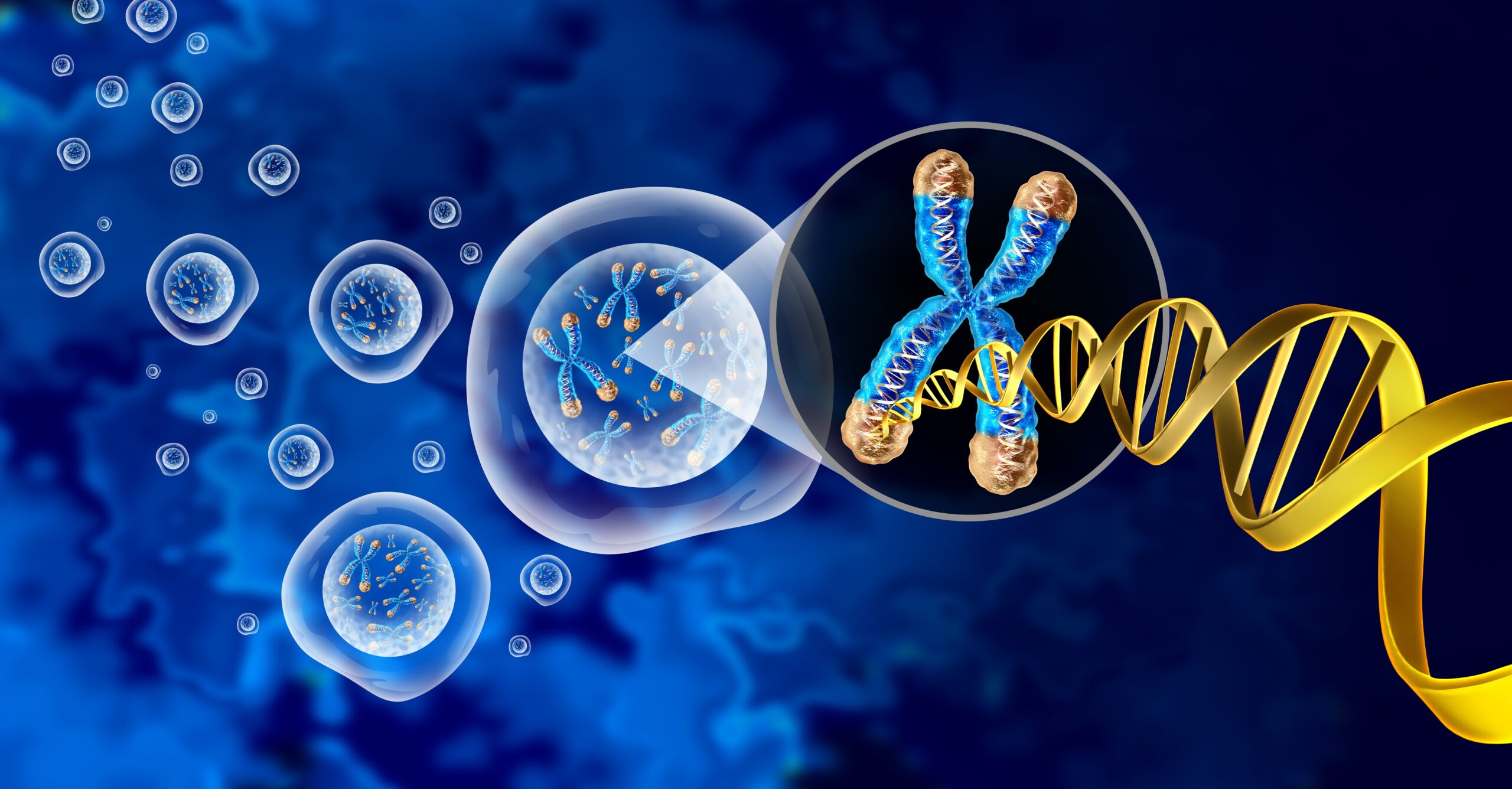
Our animals’ bodies (and our own) are protein-making factories. All cellular and tissue processes rely on the adequate production and function of proteins. Proteins – indeed, all of life — come from a blueprint of information known as DNA.
Within our DNA is a world of information that goes beyond the realms of Newtonian physics and biochemistry. It extends into the fields of electromagnetism, biphotonics (which involves the interaction between light or photons and the body’s tissues, cells, and molecules), and quantum mechanics.
What does this all mean? Simply put, the genetic material that creates and propagates the instructions for all life is a multifactorial blueprint whose fundamental nature is attuned to the world of vibration, frequency, and resonance.
FAQs:
Is regenerative medicine safe for pets?
Yes, when performed by a qualified vet, it’s generally safe and well-tolerated.
Can older pets benefit from these therapies?
Absolutely! Many aging pets see improved mobility and energy.
Are these treatments natural?
Many use the pet’s cells or blood, making them natural and minimally invasive.
How soon can results be seen?
Results vary, but some pets improve within weeks of treatment.
Final Words
Regenerative medicine offers new hope for aging and ill pets. It supports healing at the cellular and energetic levels. These therapies go beyond treating symptoms; they target the root cause. A healthy, vibrant life for your dog or cat is now more possible than ever.