
Learn the best way to teach your dog new behaviors with this beginner’s guide to clicker training dogs.
Clicker training helps your dog learn new behaviors. It also reinforces those she already knows. Clicker training benefits all dogs, including rescues, by providing clear, immediate feedback. This helps them build confidence and trust in humans, and in the learning process. In this beginner’s guide to clicker training dogs, we’ll examine the ins and outs of this type of training, and show you how to get started with your own dog.
Understanding clicker training
Clicker training involves positive reinforcement, which means rewarding your dog for behaviors you want to encourage.
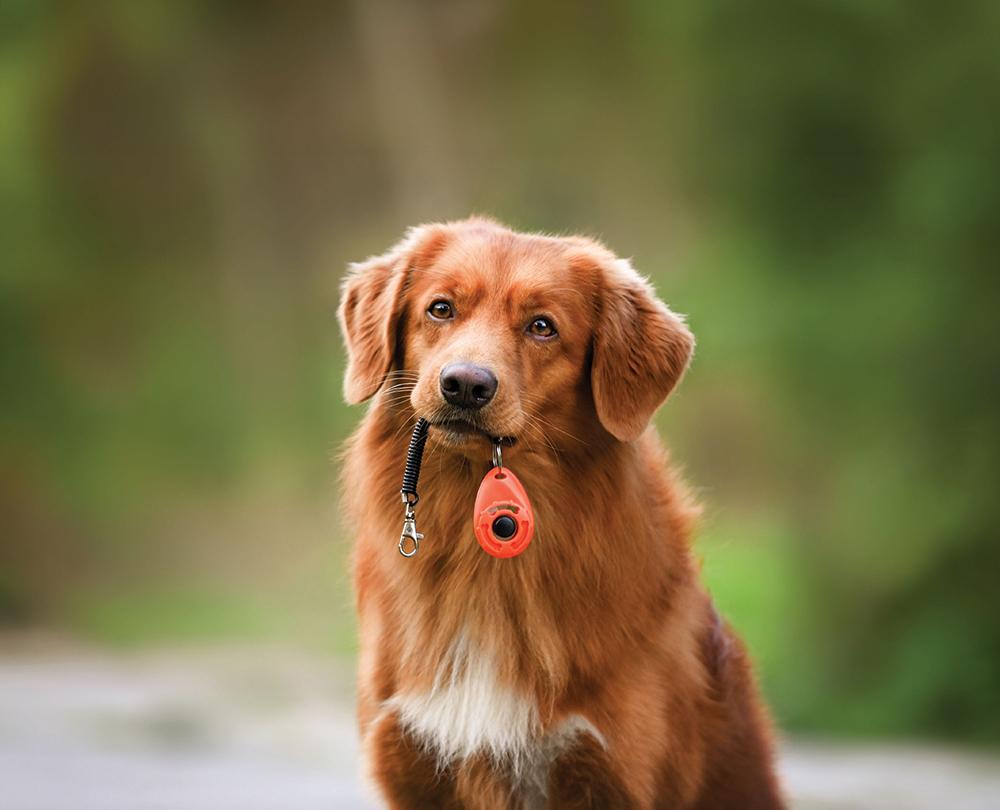
The clicker is a small, handheld device that makes a distinct clicking sound. You use the sound to mark the exact moment your dog performs a desired behavior, and immediately follow it with a reward. In other words, “click = reward.”
This precise timing helps your dog grasp exactly what she did right, making it easier for her to repeat the behavior.
Hint: The click is a positive marker, and never used to cause fear or stop a behavior.
When your dog does something you want, you click the clicker. Then immediately follow up with a reward, such as praise or a treat. This immediate feedback helps your dog make a clear connection between the behavior and the reward, improving the learning process.
The basics of clicker training for dogs
To get started with clicker training, you first need to teach your dog that the click sound means a reward is coming. This is known as “charging” the clicker.
Hint: Some dogs are sound sensitive. You can find clickers that are softer-sounding, or muffle the click by placing the device in your pocket before activating it. Once your dog realizes the click is a good thing, she’ll eagerly await it!
1. Teach your dog that “click = reward:” Click the clicker and immediately give your dog a treat. Repeat this several times to help your dog associate the click sound with receiving something she values. This process helps her understand the click is a signal. It means something good is about to happen.
2. Be consistent: Ensure each click is followed by a reward to reinforce the association. Consistency is key to maintaining the clicker’s effectiveness as a training tool. Always ensure the click means a valuable reward.
3. Use the clicker during training sessions: Once your dog understands that “click = reward,” you can start using the clicker to mark specific behaviors you want to reinforce. Start with a behavior your dog already knows well. For example, if she knows to sit then ask for a “sit.” The moment her butt hits the floor, click and treat.
Why clicker training is effective
Clicker training works effectively because it gives immediate feedback. When your dog hears the click, she understands exactly which behavior earned her a reward.
You can think of it as taking a photograph of the behavior. For example, think about that “sit” behavior. When you click, you're marking the exact moment your dog sits. It’s as if you’re snapping a photo of her in that position.
This timing is key, especially for dogs who may have had inconsistent training or rough experiences in the past.
The clicker gives a clear signal that a reward is coming. This actually gives you a moment to reach into your treat pouch for the reward. Your dog still understands why she is receiving the reward, because the clicker told her.
Hint: The clicker makes it easier to communicate with your dog. Dogs learn fast, but need clear and immediate feedback to know what you want. The clicker gives a clear, consistent signal that helps make training simpler and more effective.
You can use clicker training as a fantastic way to teach your dog new behaviors and reinforce good habits. It’s also helpful for rescue dogs who need extra reassurance.
The clicker gives your dog clear, immediate feedback, making it easier for her to understand and repeat the behaviors you’re looking for. With patience and consistency, you’ll boost your dog’s confidence and learning ability. You’ll also strengthen your bond.
So grab a clicker, pocket some tasty treats, and start using this beginner’s guide to clicker training dogs!
Benefits of clicker training for rescue dogs
Rescue dogs often come with a history of uncertainty or trauma. Clicker training can be especially helpful for these dogs because it offers a positive way for them to learn and build confidence.
Rescue dogs learn that offering behaviors is a good thing, not something that will be met with anger or intimidation. Because you are focusing on rewarding the behavior you want, the dog’s confusion and anxiety decreases.
Clicker training can also help overcome behavioral challenges in rescue dogs. Many of these dogs may exhibit fear-based behaviors or have difficulty adjusting to their new environments.
By focusing on positive reinforcement, and using the clicker to mark desired behaviors, you can help your rescue dog feel more secure and comfortable in her new home. Using a clicker makes training predictable and rewarding. This can be comforting for dogs with a rough past.
Common questions about clicker training for dogs
Q. What if I click by accident?
A. If you activate the clicker by mistake, you should still give your dog a treat. The clicker is a promise, and breaking that promise can reduce its effectiveness.
Q. Can I use a different sound or word?
A. Yes, you can use a word or sound other than a clicker, but it should be distinct and only used during training. Make sure it is consistently followed by a reward to maintain its effectiveness. For example, you might use a word like “yes” or “smart” as a conditioned reinforcer, — but ensure it is used exclusively in training contexts.
Q. How do I phase out the clicker or treat?
A. Once your dog has a good understanding of the task at hand, you can simply tell her how smart she is, but don’t click. Remember, the click is a promise that a prize is coming.
Q. Can I use the clicker to gain my dog’s attention?
A. No. The purpose of the click is to tell your dog she’s done something correctly. However, you can say your dog’s name and, when she turns to you, click that response and reward her. That way, you are clicking her for looking toward you.