

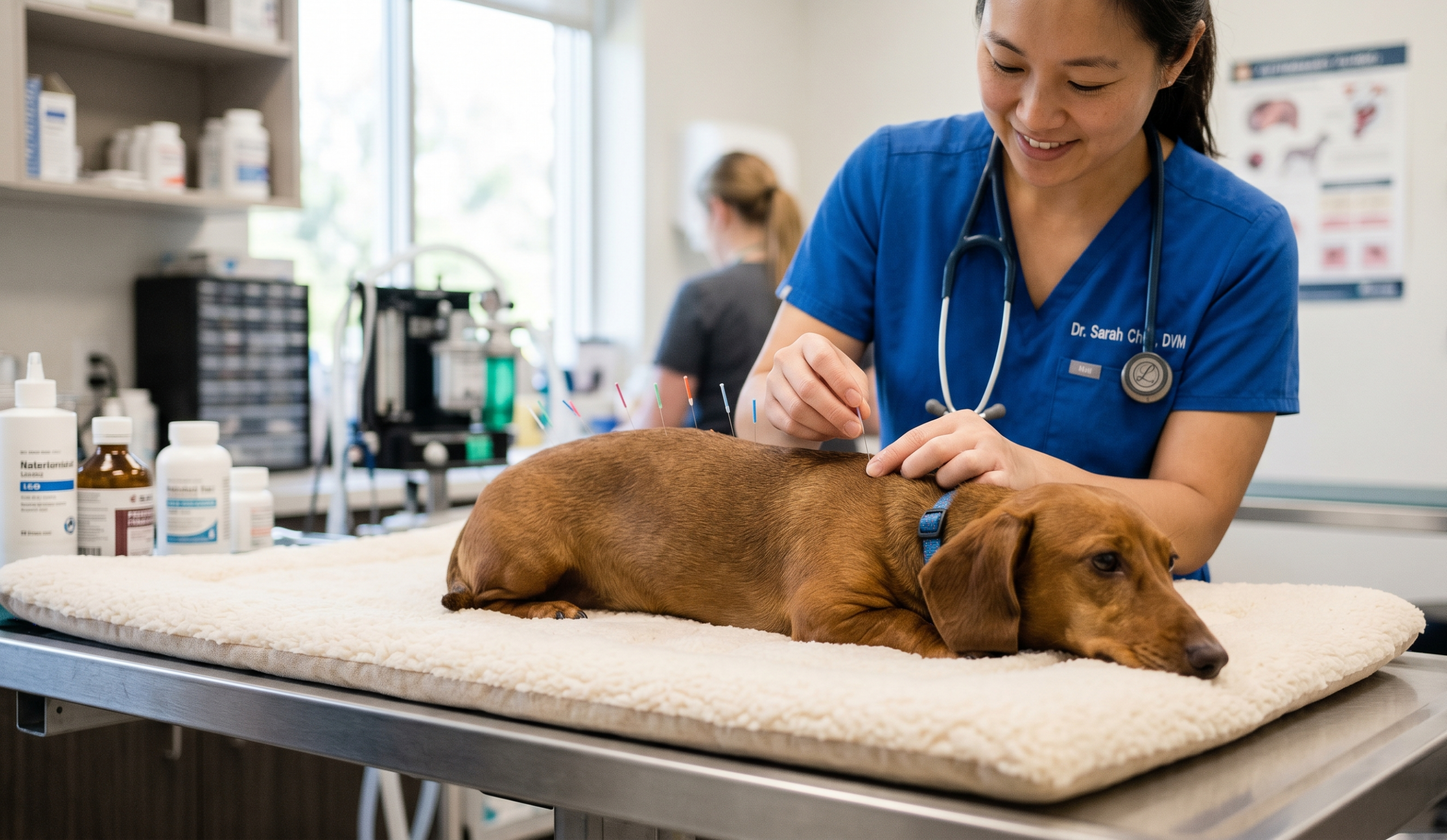
Thoracolumbar intervertebral disc extrusion (IVDE) remains one of the most common neurological emergencies in small animal practice, particularly in predisposed breeds such as Dachshunds. While surgical decompression is often the gold standard, many cases are managed medically due to financial or logistical constraints. This raises an important clinical question: can acupuncture improve recovery outcomes when added to medical management?
A recent research critically appraised three studies:
- One randomized controlled trial (Hayashi et al., 2007)
- One non‑randomized controlled trial (Tsai et al., 2015)
- One cohort study (Han et al., 2010)
Key Findings
- Electroacupuncture combined with manual stimulation of acupuncture points, when used alongside medical management, was associated with:
- Faster recovery of ambulation
- Higher likelihood of regaining ambulation in dogs with nonambulatory paraparesis or paralysis with deep pain perception (MFS grades 3–4)
- Dogs presenting with paralysis and no pain sensation (MFS grade 5) showed little to no benefit from acupuncture.
- Bee venom injections at acupoints were explored in one study, with some suggestion of benefit, but the evidence was less robust and requires cautious interpretation.
Clinical Application
For veterinary practitioners, the takeaway is that acupuncture may offer a mild but clinically meaningful benefit in select cases. Specifically, dogs with deep pain perception intact may recover ambulation more quickly when acupuncture is added to strict rest and analgesia.
Practical Considerations
When deciding whether to incorporate acupuncture:
- Clinical expertise: Practitioners trained in veterinary acupuncture can apply techniques safely and effectively.
- Client values and resources: Owners may be more receptive to adjunct therapies when surgery is not feasible.
- Availability: Access to trained practitioners and equipment (e.g., electroacupuncture units) varies by region.
Clinical Scenario
Consider an 18‑month‑old Dachshund presenting with acute nonambulatory paraparesis, localised to T3–L3. MRI referral is declined due to cost. Strict rest and analgesia are prescribed. In this context, acupuncture may be offered as an adjunct to potentially accelerate recovery.
Conclusion
The current evidence supports acupuncture as a reasonable adjunct to medical management in dogs with thoracolumbar IVDE who retain deep pain perception. This approach can shorten recovery time and improve ambulation outcomes. Practitioners should integrate this evidence with their clinical judgement, patient circumstances, and owner preferences to deliver the most compassionate and effective care.


