

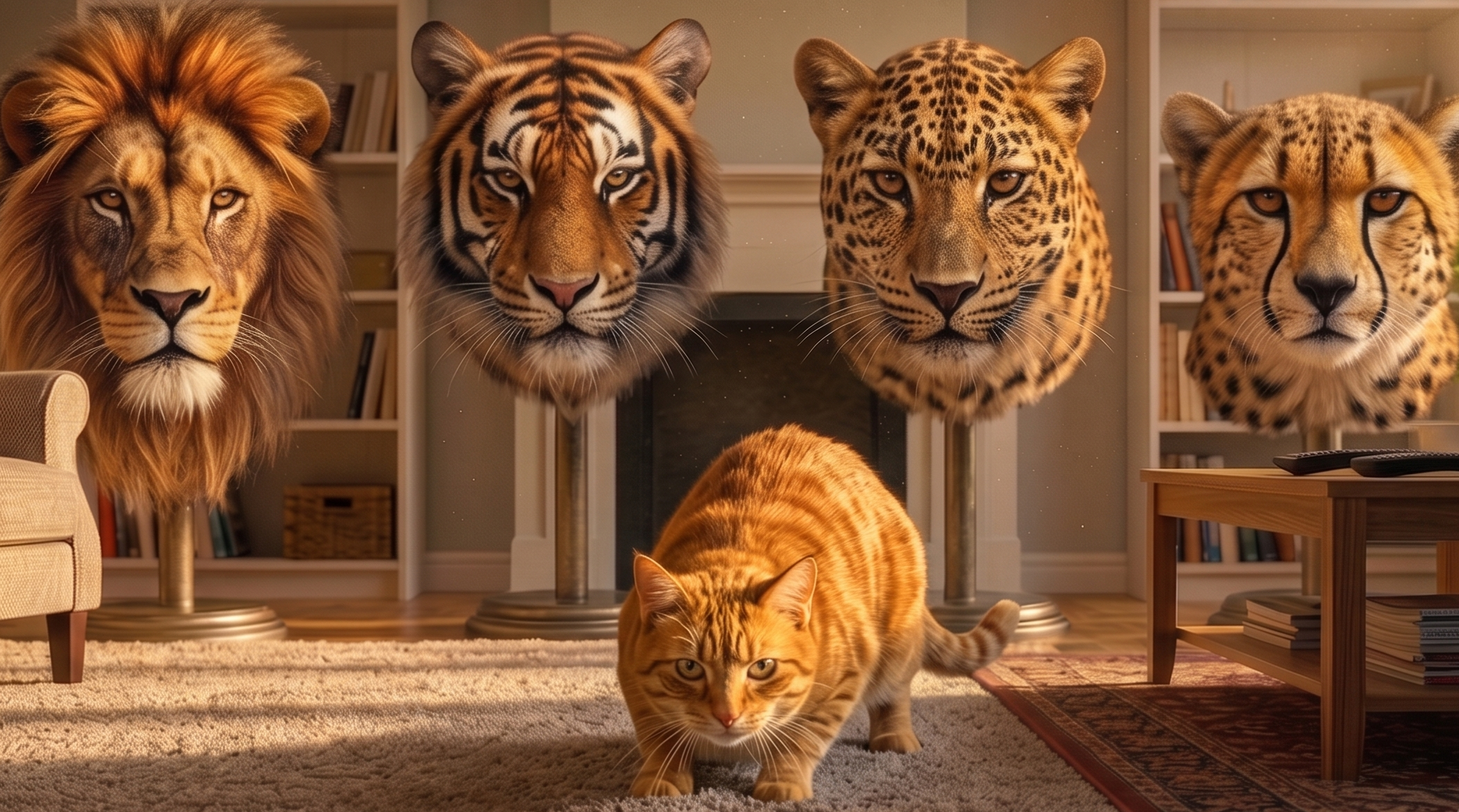
Have you ever watched your cat stalk a toy mouse across the living room floor and thought, “Wow, that looks like something I’d see on a nature documentary”? That’s because your cat and the big cats of the wild share a surprising amount in common. And understanding those connections can actually help you give your cat a happier, healthier life.
Built the Same Way
Domestic and wild cats are both obligate carnivores. This means their bodies are designed to run on meat. Their digestive systems, teeth, and even their eyes are built for hunting. Your cat’s sharp canine teeth? Same purpose as a lion’s. Those slit-shaped pupils that adjust to light so well? Cheetahs have them too. Even the way your cat crouches low before pouncing on a toy is a hardwired hunting behavior passed down through millions of years of evolution.
What We Can Learn From Big Cats
Here’s where it gets really interesting. Wildlife conservationists work hard to keep big cats mentally and physically healthy. The strategies they use can teach us a lot about caring for our cats at home.
1. Let Them Hunt Their Food: In the wild, cats work for every meal. Instead of just placing food in a bowl, try using a slow feeder or hiding small amounts of food around your home. This taps into your cat’s natural instinct and can even help manage weight.
2. Space to Roam and Climb Lions patrol large territories. Your cat may live indoors, but that instinct to move and explore is still there. Providing shelves, window perches, and climbing towers helps satisfy this deep-rooted need.
3. Respect Their Alone Time Big cats are largely solitary. Your domestic cat shares this trait. Giving your cat quiet spaces to retreat to reduces stress and supports better overall health.
4. Enrichment is Everything Big cats in zoos need mental stimulation to stay healthy — things like puzzle feeders, scent trails, and new textures to explore. Your cat is no different. Rotating toys, hiding food in puzzle feeders, and creating vertical spaces like cat trees can keep your cat’s sharp mind engaged.
The Key Takeaway
Your cat may curl up on your couch, but inside beats the heart of a wild hunter. Honoring those instincts shared between domestic and wild cats through enrichment, proper nutrition, and environmental design can dramatically improve their quality of life.
As always, talk to your veterinarian about the best ways to meet your individual cat’s health and behavioral needs. Every cat is unique!


