

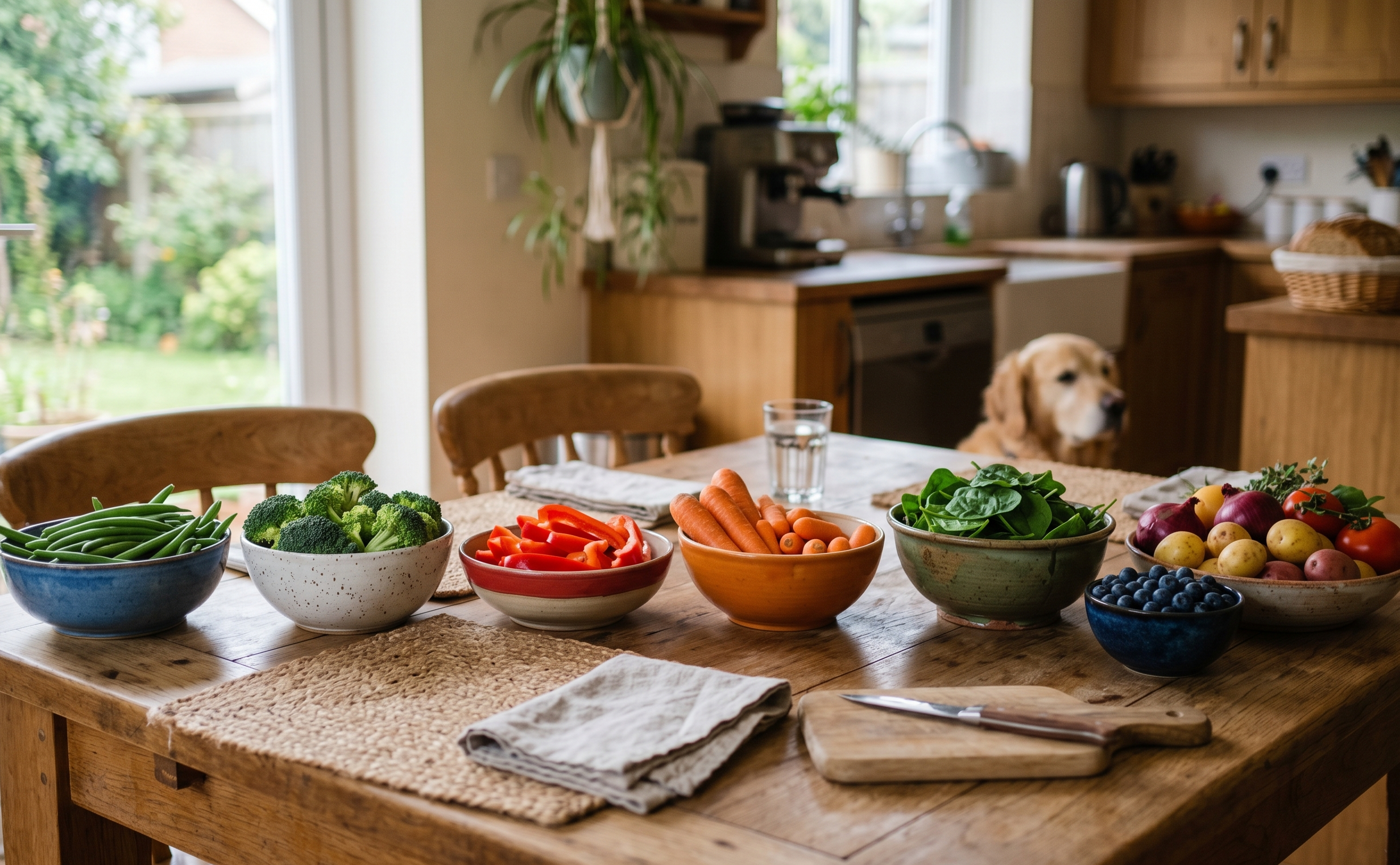
If you’re looking for simple ways to boost your dog’s nutrition, you don’t always need fancy supplements or expensive specialty foods. Sometimes, the best additions are already sitting in your refrigerator. Here are seven whole foods that can support your dog’s health — straight from nature’s pantry.
1. Blueberries
These tiny blue gems are packed with antioxidants. Antioxidants help fight damage in the body caused by unstable molecules. Blueberries make great low-calorie training treats and many dogs love their sweet taste. Toss a few into your dog’s bowl or use them as a reward during training sessions.
2. Spinach
Spinach is loaded with vitamins and minerals that support a healthy immune system. It’s a great leafy green to add in small amounts to your dog’s regular meals. Just remember — a little goes a long way!
3. Carrots
Carrots are one of the most recommended vegetables by veterinary nutritionists. They’re low in calories, crunchy, and many dogs absolutely love them. Baby carrots make excellent treats, especially if you’re watching your dog’s weight. At roughly 5 calories or less per piece, they’re a guilt-free snack.
4. Red Bell Peppers
Red bell peppers are rich in vitamins, especially Vitamin C and beta-carotene. These nutrients play an important role in supporting your dog’s immune system. Slice them into small pieces and add them to your dog’s bowl or offer them as a treat. Most dogs enjoy the slightly sweet flavor.
5. Green Beans
Green beans are another low-calorie powerhouse. They help your dog feel full without adding extra calories. Many veterinarians recommend adding plain green beans to a dog’s kibble, especially if your dog needs to lose a little weight. Just make sure they’re plain — no salt or seasoning added.
6. Pumpkin
Plain canned pumpkin (not pie filling) is a wonderful addition to your dog’s bowl. It’s high in fiber, which helps support healthy digestion. A small spoonful added to meals can help your dog feel fuller and support better stool quality. It’s especially helpful for dogs with sensitive stomachs.
7. Broccoli
Broccoli is a nutrient-rich veggie that many dogs enjoy. It’s low in calories and can be offered as a small treat or meal topper. Just be sure to offer it in small amounts, as too much can cause digestive upset in some dogs.
A Few Important Things to Remember
- Follow the 10% rule. No more than 10% of your dog’s daily diet should come from extras like these foods. Going over that amount can throw off the balance of their regular diet.
- Keep it plain. Never add salt, butter, oil, or seasoning to any food you share with your dog.
- Introduce new foods slowly. Sudden changes can upset your dog’s digestive system.
- Always check with your veterinarian before making changes to your dog’s diet, especially if your dog has any health conditions.
These whole foods can be a wonderful, healthy addition to your dog’s routine — but they work best alongside a complete and balanced diet. Whenever in doubt, ask your veterinarian!