
Cervical intervertebral disc herniation (IVDH) is one of the most frequently encountered neurological disorders in canine practice. While ventral slot decompression (VSD) remains the gold standard for relieving spinal cord compression, the trajectory of recovery is often dictated by the quality and intensity of postoperative rehabilitation. For veterinary professionals, optimizing these protocols is critical—especially in severe cases where functional recovery can be slow and incomplete.
Study Overview
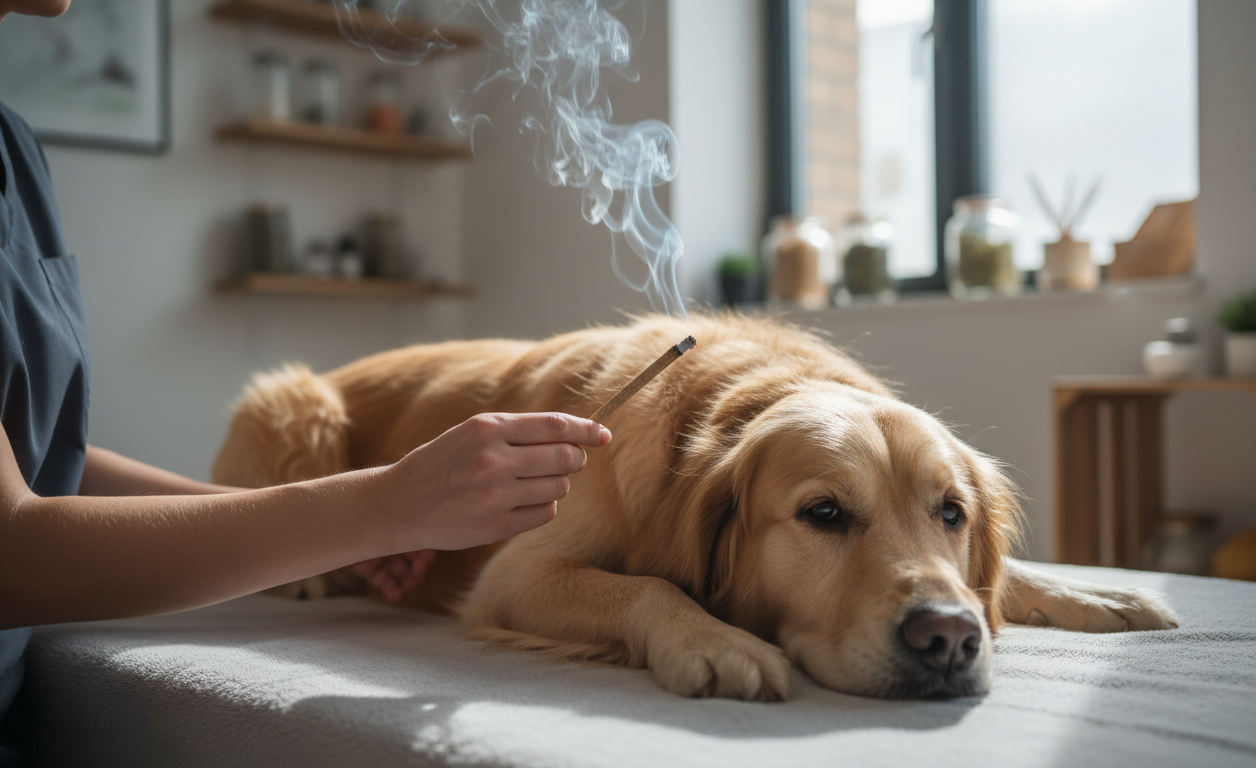
A recent study investigated the role of combining acupuncture–moxibustion (AM) in canine cervical IVDH rehabilitation with locomotor training (LT) compared to LT alone in dogs undergoing VSD for cervical IVDH. Seventy-nine dogs treated between 2022 and 2025 were enrolled. To minimize bias, propensity score matching (PSM) was applied based on Rusbridge Grade, resulting in two balanced groups of 20 dogs each.
Key Outcomes
- Motor Recovery: Dogs receiving AM plus LT regained standing and walking significantly faster than those in the LT-only group.
- Neurological Function: Olby scores, measured at five postoperative time points, showed greater improvement in the combined therapy group.
- Analgesic Use: The AM plus LT group required shorter durations of opioid analgesia, suggesting enhanced pain control.
- Long-Term Prognosis: At 6–8 months postoperatively, the complete success rate was higher in the combined therapy group, with benefits most pronounced in severe cases (Rusbridge grades 3 and 4).
Clinical Implications
For veterinary neurologists and rehabilitation specialists, these findings about acupuncture–moxibustion in canine cervical IVDH rehabilitation and locomotor training highlight several important considerations:
- Multimodal Rehabilitation: Incorporating acupuncture–moxibustion alongside structured locomotor training may accelerate recovery timelines and reduce reliance on analgesics.
- Severe Cases Benefit Most: Dogs with advanced neurological deficits demonstrated the greatest gains, underscoring the potential of adjunctive therapies in challenging cases.
- Feasibility in Practice: The study supports the clinical practicality of integrating AM into rehabilitation protocols, paving the way for broader adoption in specialty practices.
Future Directions
Larger-scale prospective studies are needed to validate these findings and refine treatment protocols. Questions should be pursued about optimal frequency, duration, and integration of AM with other rehabilitation modalities. Nonetheless, this study provides compelling evidence that combining traditional techniques with modern rehabilitation strategies can enhance outcomes in canine cervical IVDH.
Acupuncture–moxibustion in canine cervical IVDH rehabilitation combined with locomotor training represents a feasible and effective adjunct to conventional rehabilitation following ventral slot decompression. By accelerating motor recovery, improving neurological function, and reducing analgesic dependence, acupuncture–moxibustion in canine cervical IVDH rehabilitation offers a valuable tool for improving long-term outcomes.