
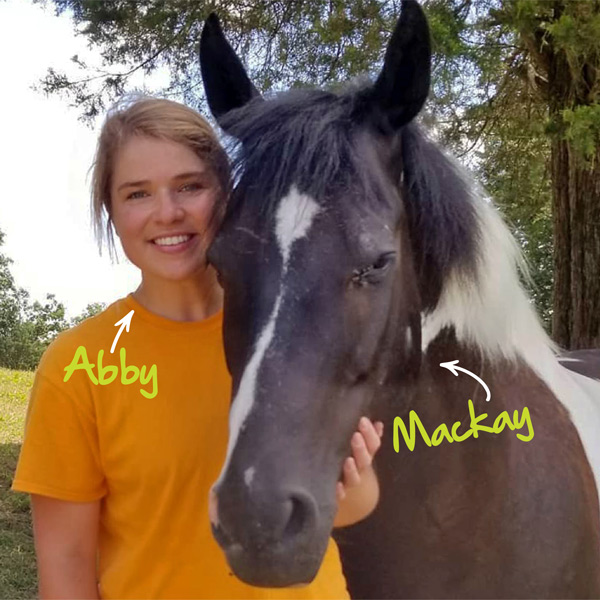
Abby Geick is an equine veterinarian who knows firsthand the powerful impact nutrition can have on a horses well-being.
When her 23-year-old horse, Mackay, lost weight, she took a closer look at his diet. The ration balancer he was on was no longer sufficient to maintain his weight and body condition, so she tried a Sentinel® Extruded Horse Feed, the same formulas she often recommends for her own patients.
Mackays now down to 2 quarts of Sentinel Senior twice a day and maintaining his weight. Geick said extruded feeds can have multiple benefits for senior horses, like Mackay, that dont have as robust of a gut and immune system.
Extruded nuggets contain more fat and fiber compared to pelleted feeds, and the cooking process helps break down starches and sugars much easier, Geick said.
Whats Extruded Feed?
Extrusion takes high quality, finely ground ingredients and pressure cooks them with moisture into light, airy nuggets. Lighter and larger than feed pellets, these nuggets have more volume, which encourages more chewing and slower eating.
Helping All Horses Live Healthier Lives
Working for New England Equine Medical & Surgical Center (NEEMSC) in New Hampshire, Geick says extruded feed plays a critical role in reintroducing horses to feed after colic surgeries. Because extruded nuggets are lighter and airier than pellets, they absorb water faster to create an easily digested mash.
That goes back to producing saliva to buffer the stomach, and its also easier on their teeth, so its helpful for long term dental health, as well, she said.
Finding Solutions in Quality Nutrition
Geick says she first heard about extruded feed when she rode competitively and again during her clinical work. Looking at diet as the main cause of concern for choke or weight loss and comparing different types of feed, extruded kept popping up as a potential solution.
Extruded feed helps support the hindgut for postoperative colic and colitis cases by improving nutrient absorption in the small intestine, Geick said.
Expert Advice on Equine Nutrition
Despite the awareness, Geick said the amount of information and products online makes it difficult for horse owners and veterinarians to know what feeds are backed by sound science. Thats an area where Geick says the Sentinel nutrition team fills an important role, as theyre able to recommend feeds, help educate owners and provide other valuable resources.
Sometimes major management changes need to be made to prevent choke episodes, fecal water syndrome or to make sure certain horses are getting adequate nutrients as they age, she said.