
Altitude training has long been a cornerstone of endurance conditioning in human athletes. The principle: exercise under hypoxic conditions creates local tissue oxygen deprivation, which acts as a powerful adaptive stressor for muscle. This stress triggers physiological changes that enhance endurance performance.
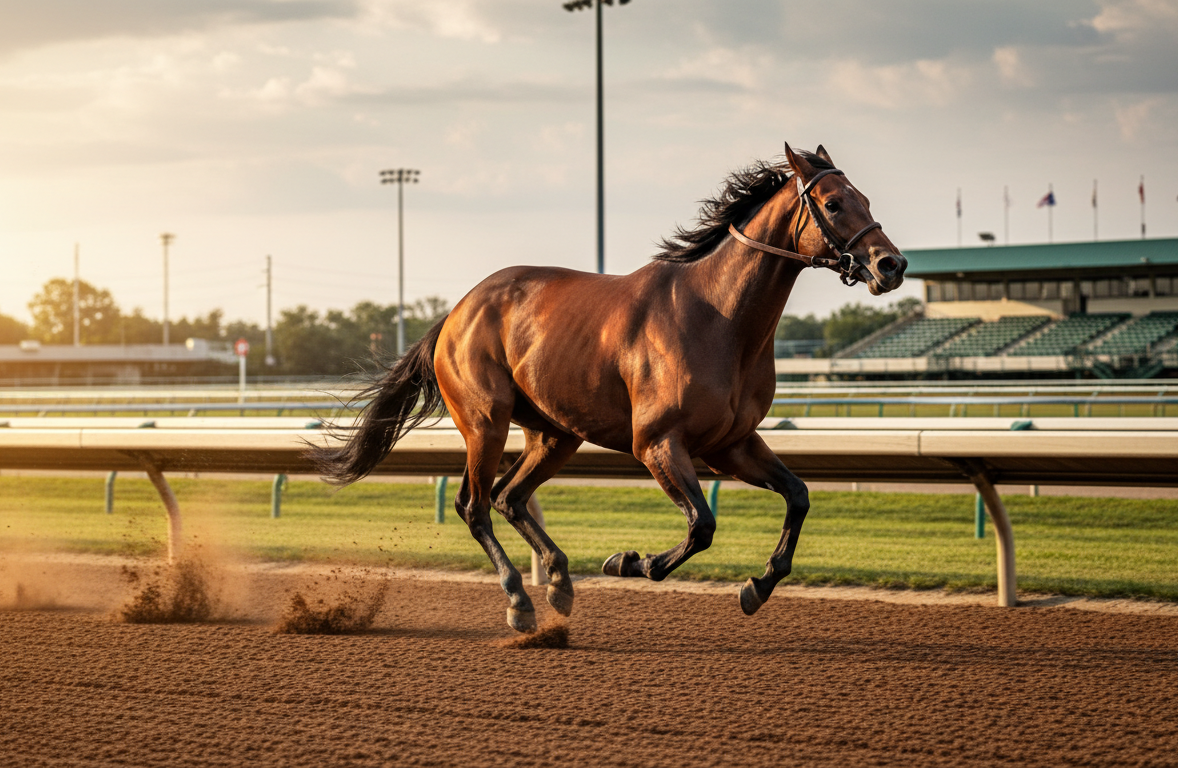
Now, this concept is being applied to the Thoroughbred horse, thanks to the development of purpose-built hypoxic chambers designed specifically for equine training.
The Science Behind Hypoxic Training
At the heart of hypoxic adaptation is the hypoxia-inducible factor (HIF) pathway, particularly HIF-1α, a master regulator of over 100 genes. These genes influence critical processes such as:
- Erythropoiesis – increasing red blood cell production for improved oxygen transport.
- Angiogenesis – promoting new blood vessel formation to enhance tissue oxygenation.
- Glucose metabolism and transport – optimizing energy supply during exercise.
- Mitochondrial biogenesis – boosting cellular energy production capacity.
When exercise is performed under hypoxic conditions, the activation of these pathways is amplified compared to training in normal oxygen environments. This creates an optimal setting for maximizing endurance adaptations.
Potential Benefits for Equine Athletes
For Thoroughbreds and other equine athletes, hypoxic training offers several potential advantages:
- Enhanced aerobic capacity through improved oxygen delivery and utilization.
- Greater muscular efficiency from mitochondrial adaptations.
- Improved recovery and conditioning when traditional high-impact training is limited.
Importantly, hypoxic training may also have a role in rehabilitation. Horses recovering from locomotor injuries often require reduced-impact exercise. Hypoxic treadmill training inside specialized chambers could provide a quality training stimulus without the mechanical stress of full-intensity workouts.
Current Applications and Considerations
While the concept is promising, hypoxic training in horses is still relatively new. Veterinary professionals should consider:
- Individual variability: Genetic factors influence how horses respond to hypoxic stimuli.
- Protocol design: Exercise prescriptions must be carefully tailored to elicit desired adaptations without undue stress.
- Monitoring welfare: Close observation is essential to ensure horses tolerate hypoxic conditions safely.
Conclusion
Hypoxic training represents an exciting frontier in equine sports medicine. As purpose-built hypoxic chambers become more accessible, veterinary professionals will play a key role in guiding safe integration of this technique into equine training programs.