You may be trained in first aid and CPR but when it comes to horses, the procedures are a bit different. Knowing how to check your equine companion’s vital signs could mean the difference between life and death.
Pulse
In adult horses, a normal, at-rest pulse is around 35 to 42 beats per minute. It’s slightly faster in youngsters and 70 to 90 beats in new born foals. Take the pulse either between the jaw bones or on the inside back of the knee, and count the beats per minute.
Respiratory rate
This is taken by counting the number of breaths per minute. You can do this by watching the flank or nostrils. A normal rate is 12 to 25 breaths per minute.
Temperature
Normals when taken from the rectum are 99.5° to 100° Fahrenheit (37.5° to 37.8° Celsius) in adults and 99° to 102°F (37.2° to 38.9° C) in foals. Using either a bulb or digital thermometer, lubricate (KY Jelly works well), raise the tail and insert the thermometer two to three inches. Wait three minutes before reading. If using a bulb thermometer, it’s wise to tie a fishing line to the end with a small alligator clip that clips to the tail hair. Horses have been known to suck a whole thermometer in, which is an emergency in itself.
Capillary refill
Gum color and capillary refill show the state of circulation. Push on the horse’s gum and release; the color should return to normal in two seconds. Gum color should be light pink; a bluish tinge indicates oxygen deficiency and is cause for concern. If your finger impression stays longer than three seconds, this could indicate shock.
Gut sounds
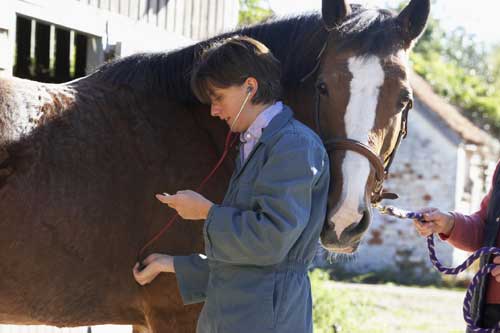
It’s imperative to read these when dealing with colic. Using a stethoscope, listen to both sides along the entire gut. You want to hear a low rumbling sound. Gas buildup sounds like very loud thunder and perhaps a pinging sound above the cecum. No gut sounds indicate possible obstruction and is an emergency.
If you suspect that your horse is in trouble, contacting your veterinarian is always advised. Understanding the basics of equine vital signs and how to check them, however, is a handy skill to have in your back pocket.