
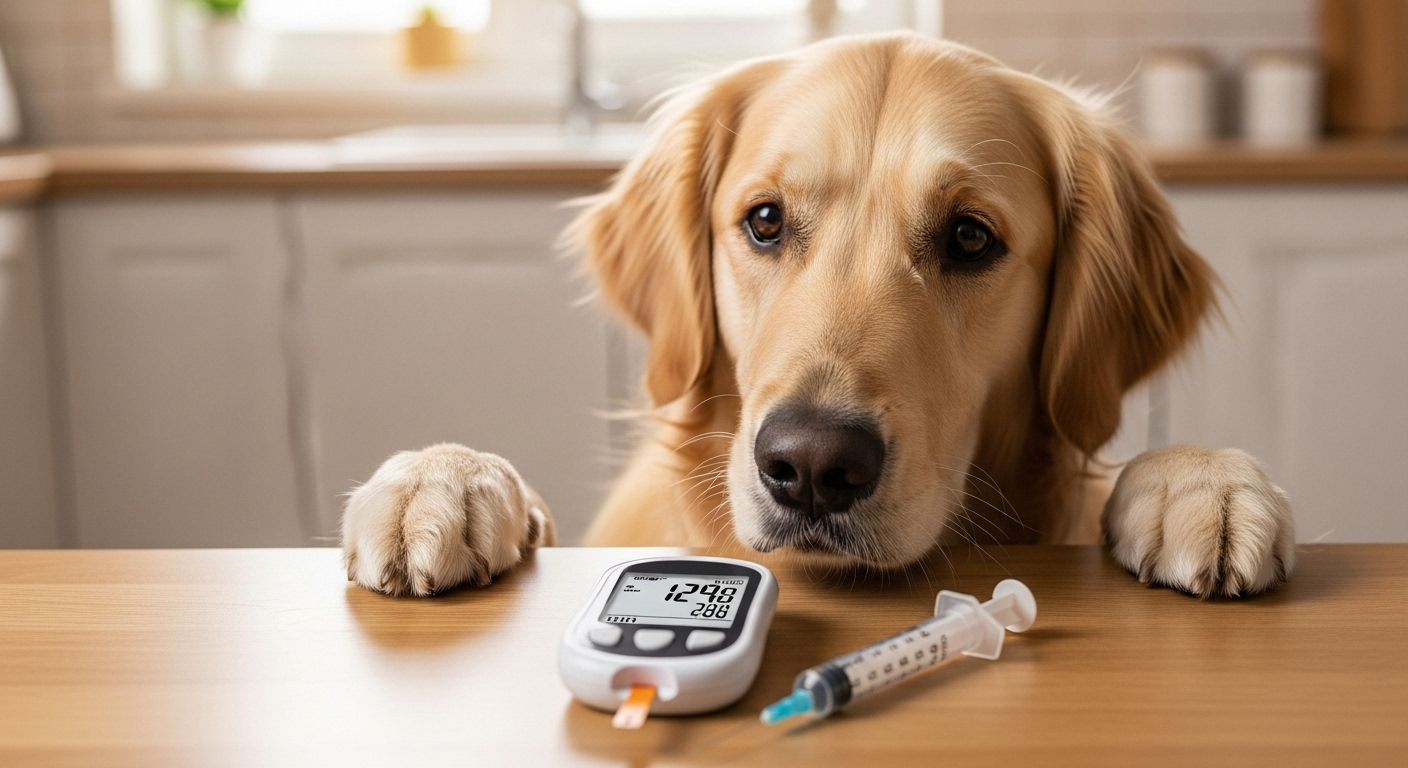
Canine diabetes is commonly seen in veterinary practice. Herbal medicine offers an alternative approach that can reduce blood sugar levels, increase glucose uptake and transport, promote insulin secretion and more.
Diabetes mellitus is a metabolic disease characterized by hyperglycemia, which is caused by impaired insulin secretion and/or effectiveness. It’s a growing concern in our canine population, where over 1% will suffer from clinical diabetes. This article looks at how herbs can be used to help treat diabetes by getting to the underlying cause of the disease (see sidebar).
A word about diet
While this paper will focus on herbal support, diet is of prime concern when it comes to diabetes. Calorie restriction can significantly reduce blood sugar levels. It is important to feed low glycemic index/load foods with good quality protein and fats, such as game meats, deep-sea fish, nuts, seeds, green vegetables, sea vegetables, and some fresh fruits. It is important to avoid simple carbohydrates and poor-quality fats, and provide foods rich in insoluble fibers. Dietary antioxidants/anti-inflammatories are helpful for preventing some oxidative damage, and include blueberries, blackberries, beets, and black beans. A good diet will maximize herbal support.
Herbal medicine and canine diabetes
Herbal medicine has been shown to reduce blood sugar levels and inhibit oxidative damage by preventing glucose absorption in the intestine, increasing glucose uptake and transport, promoting insulin secretion and pancreatic beta cells function, and/or sensitizing the cells to insulin, along with having a general anti-inflammatory effects.
- Many plants have been found to inhibit alpha-glucosidase or alpha-amylase. These enzymes convert starches into sugars and inhibit postprandial blood glucose levels. A few of these herbs include Sage, Fenugreek, Green Tea, Rosemary, Kudzu, Triphala, Shan Yao/Chinese Dioscarea, Arjuna bark, Blueberry leaf, Lemon Balm, and Bitter Melon. Guduchi, Magnolia bark, Licorice, Rosemary, Pomegranate, Fenugreek, Rehmannia, Chinese Dioscorea, and Agaricus blazei have all been shown to increase glucose transporter type-4 protein, which reduces blood sugar levels and enhances the muscle storage of glucose as glycogen.
- Upon ingesting foods containing glucose and fat, the body secretes GI hormones known as incretins, which stimulate pancreatic insulin release. Chicory, Jerusalem Artichoke, Burdock root and Dandelion root act as incretin analogs. Gymnema and Milk Thistle can promote pancreatic beta cell proliferation and protect against beta cell damage.
- Diabetes is an inflammatory disease. Much of the damage caused by elevated blood sugar can be reduced and/or prevented with anti-inflammatory herbs. Turmeric, Amla, Green Tea, Rosemary, Goji Berry, Milk Thistle, Blueberries and Pomegranate can lower blood sugar and have a significant effect on reducing the damage caused by inflammatory products.
Major leading herbs for diabetes in dogs
Herbal formulation is an art. When looking at any individual patient, the best approach is to use a combination of a major leading herb focused on the main pathologic cause, blended with assisting and supportive herbs to produce a balanced formula directed at that individual’s pattern of disharmony. There is no one formula for a diabetic dog; the practitioner must look at the individual reasons why that dog is diabetic in order to create the most advantageous formula. Below is a deeper look at a few of the major herbs used for diabetes.
Note: All doses listed are for a large dog; use ½ for a medium dog, and ¼ for a small dog.
American Ginseng root (Panax quinquefolius): This herb is moist, sweet and bitter, making it an ideal Yin tonic. Dr. John Scudder, an American herbalist in the late1800s, utilized American ginseng in the digestive sphere. He used it for lack of saliva, and for dyspepsia associated with nervous exhaustion. These “specific indications” illustrate how to select herbs to fit the individual patient (Wood, 2009).
American ginseng moderately lowers postprandial blood sugar by improving insulin sensitivity (Vuksan, et al, 2001; Vuksan, et al, 2000). Herbalist Paul Bergner believes American Ginseng is superior to Asian Ginseng for insulin resistance. In animal studies, an extract of Panax berries was more effective than the root for lowering blood glucose levels and alleviating insulin resistance (Yin, et al, 2008).
Dose: Tincture (1:5 or 1:2) 2-4 mL TID
Note: American Ginseng is an endangered herb. Use only sustainably cultivated products.
Astragalus/Huang Qi (Astragalus membranaceus): The astragalus root is slightly warm, sweet and moist. It has a long history of use in China for blood sugar issues, or what was known as “wasting and thirsting syndrome.” The herb has many other immune indications. In animal studies, Huang Qi prevented TNF-alpha induced insulin resistance and increased glycogen synthesis in peripheral tissues. Astragalus polysaccharides also improved insulin sensitivity in mice by enhancing protein kinase B (PKB) and GLUT-4 expression in muscle tissue (Liu, et al, 2010). The TCM formula Dang Gui Bu Xue Tang (1 part Dang Gui to 5 parts Astragalus) was also found to inhibit insulin resistance in animal studies (Liu, et al, 2011).
Dose: Tincture (1:5) 2-4 ml TID
Bitter Melon (Momordica charantia): The unripe fruit has a long history of use for both insulin dependent and non-dependent diabetes. It is a powerful hypoglycemic agent. Consumption has been shown to lower blood sugar levels and improve glucose tolerance. In animal studies, Momordica lowered triglycerides, LDL cholesterol, and blood sugar levels while improving insulin sensitivity, glucose tolerance, and insulin signaling (Sriphar, et al, 2007; Krawinkel and Keding, 2006). In a preliminary human study, a lyophilized wild Bitter Melon powder (4.8 g per day in capsules) significantly reduced symptoms of metabolic syndrome and waist circumference.
Dose: Tincture 30 drops TID
Black Seed (Nigella sativa): This herb has long been used in India and Pakistan as a hypoglycemic agent. It has been shown to improve beta cell activity and antioxidant status while concurrently decreasing insulin resistance.
Dose: Tincture (1:5) 1-2 ml TID
Blueberry leaf (Vaccinium corymbostum): This is another herb with a long history of use for diabetes. Herbalist Michael Moore felt the appropriate use of Blueberry lead was for prolonging the hypoglycemic effects of insulin in insulin dependent patients. The fruits of Blueberry and Bilberry also reduce blood sugar levels and are of great help in preventing diabetic retinopathy
Dose: Tincture (1:5) 1-2 ml TID
Cinnamon bark (Cinnamomum vera): This is a warm, dry, sweet and pungent herb. The bark of Ceylon Cinnamon (and possibly other species as well) increases the beta cells’ ability to utilize endogenous insulin, and is useful for insulin resistant diabetes, hyperinsulinemia and metabolic syndrome (Zare, et al, 2018). It lowers fasting blood glucose and triglycerides levels, while reducing fat mass.
Dose: Tincture (1:5) 1.5-2 ml TID; powder 1 gram per day
Dandelion root (Taraxacum officinalis): This herb has a bitter, sweet, and salty earthen moist taste. It is very important for non-insulin dependent diabetes as a cholagogue and aperient. Dandelion root will help patients improve gut transit time as well as poor digestion or trouble digesting fats. It is a very important herb for any concurrent digestive insufficiency with achlorhydria.
Dose: Tincture (1:5) 4-6 ml TID
Fenugreek seed (Trigonella foenum-graecum): The seed of this warm, moist, bitter and pungent herb is the part used. As a powder, it’s an excellent source of soluble fiber. Its specific indications is for treating blood sugar dysregulation caused by poor diet. Fenugreek seed has been shown to improve insulin sensitivity and improve glycemic control while decreasing fasting blood sugar levels.
Dose: Powdered seeds 20-30 gram BID
Holy Basil (Ocimum tenuiflorum): This is a warm, spicy, and sweet herb. The leaf is the part used. It’s an adaptogen and antioxidant that can lower blood sugar levels by enhancing glucose disposition (Vats, et al, 2002). In one animal study, Holy Basil prevented fructose-induced insulin resistance (Reddy, et al, 2008). It also has anxiolytic effects and can reduce elevated cortisol levels due to chronic stress.
Dose: Tincture (1:5 or 1:2) 2-3 mL TID
Lycium fruit (Lycium barbarum, L. chinensis): Slightly warm, sweet, and sour, this fruit is used to tonify the Liver and Kidney Yin, and is a nutritive tonic. It is traditionally used in Chinese medicine to reduce blood sugar levels and enhance circulation (especially to the eyes and legs), helping prevent damage to the capillaries. Lycium fruit is a strong antioxidant and its polysaccharide fraction reduces blood glucose levels, LDL cholesterol, and triglycerides.. An ethanol extract of the Lycium root (Di Gu Pi) has also been n found to inhibit insulin resistance and improve lipid metabolism in obese mice.
Dose: Tincture (1:4) 3-5 mL QID
Milk Thistle (Silybum marianum): This sweet and oily seed has been branded a hepatic protector. It has many other indications, one being a restorative of beta cells in the pancreas. Milk Thistle significantly reduces glycosylated hemoglobin, fasting blood glucose, total cholesterol, and LDL.
Dose: Tincture (1:5) 2-3 ml QID
References
Lu, J., Zou, D., et al, Preventive Effect of Radix Astragali on Insulin Resistance Caused by Tumor Necrosis Factor-Alpha [Article in Chinese], Zhongguo Zhong Xi Yi Jie He Za Zhi, 1999 Jul;19(7):420-2
Reddy, S.S., Karuna, R., et al, Prevention of Insulin Resistance by Ingesting Aqueous Extract of Ocimum sanctum to Fructose-Fed Rats, Horm Metab Res, 2008;40:44-9
Sridhar, M.G., Vinayagamoorthi, R., et al, Bitter Gourd (Momordica charantia) Improves Insulin Sensitivity by Increasing Skeletal Muscle Insulin-Stimulated IRS-1 Tyrosine Phosphorylation in High-Fat-Fed Rats, Br J Nutr, 2008 Apr;99(4):806-12
Vats, V., Grover, J.K., et al, Evaluation of Anti-Hyperglycemic and Hypoglycemic Effect of Trigonella foenum-graecum Linn. Ocimum sanctum Linn. and Pterocarpus marsupium Linn. in Normal and Alloxanized Diabetic Rats, J Ethnopharmacol. 2002, Jan; 79(1):95-100
Vuksan, V., Stavro, M.P., et al, Similar Postprandial Glycemic Reductions With Escalation of Dose and Administration Time of American Ginseng in Type 2 Diabetes, Diabetes Care, 2000 Sep;23(9):1221-6
Winston, David; 2020-2021 Professional herbal class, class notes
Wood, Matthew; The Earthwise Herbal: A complete Guide to New World Medicinal Plants; North Atlantic Books, 2009
Zare, R., Najarzade, A., et a, Efficacy of Cinnamon in Patients With Type II Diabetes Mellitus: A Randomized Controlled Clinical Trial, Clin Nutr, 2018