Pain management during and after surgical dental extractions in dogs remains a critical aspect of veterinary practice. While multimodal analgesia is the gold standard, recent research has explored the integration of electro-acupuncture (EAP) as a complementary technique. A controlled study involving thirty canine patients undergoing surgical extraction of fractured or diseased teeth provides compelling evidence for the efficacy of EAP in enhancing analgesic outcomes.
Study Design
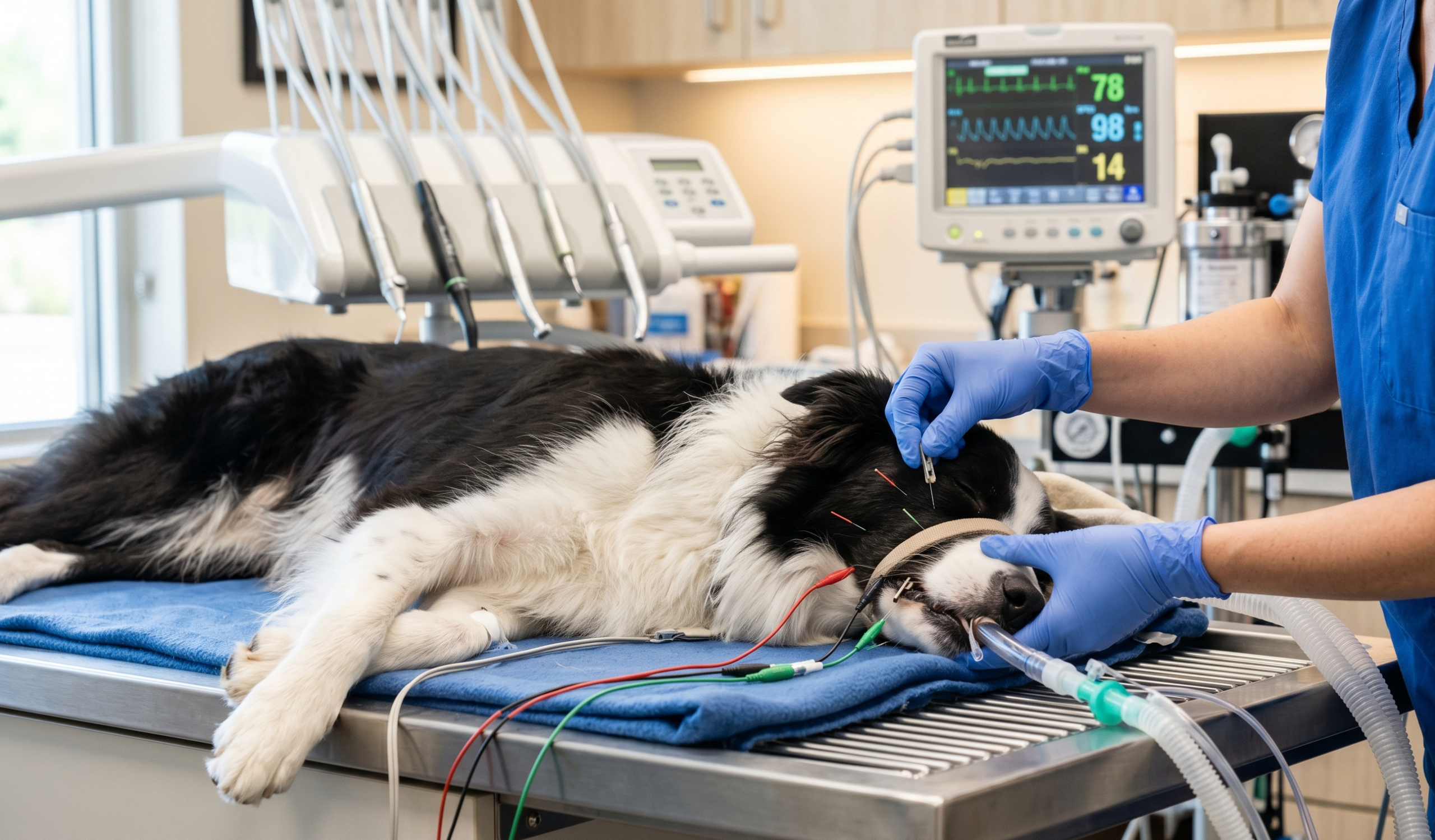
Dogs were randomly assigned to either a Test Group (EAP at relevant acupoints) or a Control Group (EAP at non-relevant acupoints). All patients received standard anesthesia before acupuncture treatment.
- Test Group acupoints: Tai-yang + ST-42 and LI-4 + ST-6
- Control Group acupoints: BL-20 + GB-34 and LIV-13 + KID-3
- Stimulation protocol: 20 minutes of electrical stimulation
Pain was assessed using the modified Glasgow Composite Pain Scale (mGCPS), which evaluates vocalization, response to touch, demeanor, and posture/activity. Measurements were taken at 30 minutes, 1, 2, 4, and 24 hours post-extubation. Physiological parameters—heart rate (HR), respiratory rate (RR), and body temperature (BT)—were also recorded.
Key Findings
The results demonstrated a clear analgesic benefit in the Test Group:
- Pain scores: mGCPS scores were significantly lower—by 42%, 35%, 24%, 41%, and 60% at 30 minutes, 1, 2, 4, and 24 hours, respectively.
- Physiological data: HR was reduced by 21% and RR by 10% compared to the Control Group.
- Overall outcome: Dogs receiving EAP at relevant acupoints exhibited calmer demeanor, reduced pain behaviors, and more stable vital signs.
Clinical Implications
For veterinary professionals, these findings highlight the potential of integrating EAP into multimodal pain management protocols during dental surgeries. Benefits include:
- Enhanced analgesia: Lower pain scores suggest improved patient comfort.
- Reduced stress response: Stabilized HR and RR indicate diminished sympathetic activation.
- Non-pharmacological support: EAP may reduce reliance on higher doses of analgesics, minimizing drug-related side effects.
Practical Considerations
While EAP requires training and familiarity with acupoint locations, its application is relatively straightforward once mastered. Incorporating it into routine dental procedures could provide a valuable adjunct to conventional analgesia, especially in patients with contraindications to certain medications.
Conclusion
This study underscores the promise of electro-acupuncture as a complementary tool in veterinary dentistry. By reducing pain scores and stabilizing physiological parameters, EAP offers a safe and effective way to optimize patient recovery. As veterinary medicine continues to embrace integrative approaches, EAP may become a standard adjunct in surgical pain management protocols.