Myofascial pain syndrome (MPS) develops from trigger points (TrPs) in taut muscle bands in horses. These hypersensitive spots impair muscle function and cause pain. Recognizing MPS is essential for effective treatment in equine patients.
Dry Needling as a Treatment Option
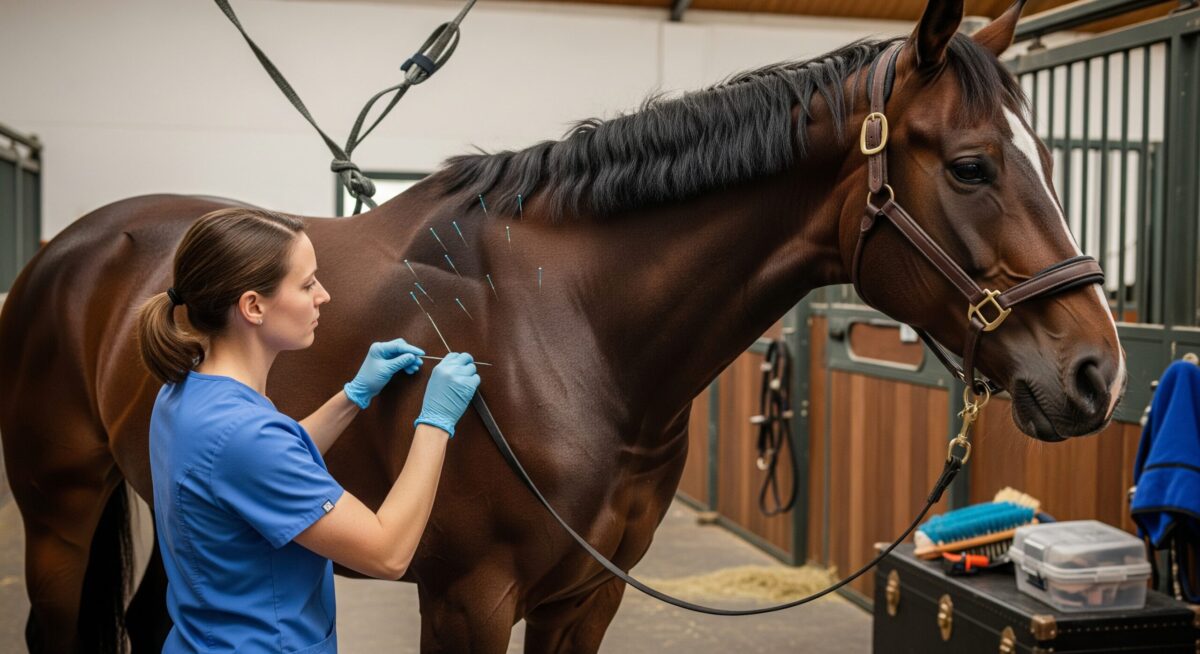
Dry needling (DN) is a common intervention for MPS in humans. The effectiveness of dry needling in horses, however, lacks substantial evidence. A recent study aimed to evaluate DN’s impact on TrP-related pain in the brachiocephalic muscle of horses.
Study Design and Methodology
The study enrolled 98 horses, dividing them into two groups. Sixty-six horses received weekly DN sessions for three weeks. The control group of 32 horses did not receive any intervention. This controlled design ensures reliable results.
Assessing Pain and Function
Researchers assessed pain and function using multiple methods. Pressure algometry, numerical rating scale (NRS), and functional total test score (FTTS) measured changes over time. Behavioral indicators like jump sign (JS), equine pain face (EPF), and local twitch responses (LTRs) were also monitored.
Results of the Study
Results demonstrated significant increases in pressure pain thresholds (p < 0.001). Improvements were particularly notable after the second and third DN sessions. Both NRS and FTTS scores improved significantly over time (p < 0.001).
Changes in Behavioral Indicators
Local twitch responses decreased progressively throughout the study. However, EPF and JS showed minimal variation, indicating stable pain levels in those areas. These findings highlight the varying responses to treatment.
Implications for Veterinary Practice
This study about dry needling in horses supports its use to alleviate local muscle pain and enhance function in horses with TrPs. Veterinary professionals should consider implementing DN as part of their treatment protocols.
Future Research Directions
Further studies are necessary to refine dry needling protocols. Investigating long-term effects will provide deeper insights into its efficacy and safety in equine patients.