
An evidence-based review of functional foods for dogs, highlighting clinical applications, dosing, and mechanisms to enhance health span and reduce disease burden.
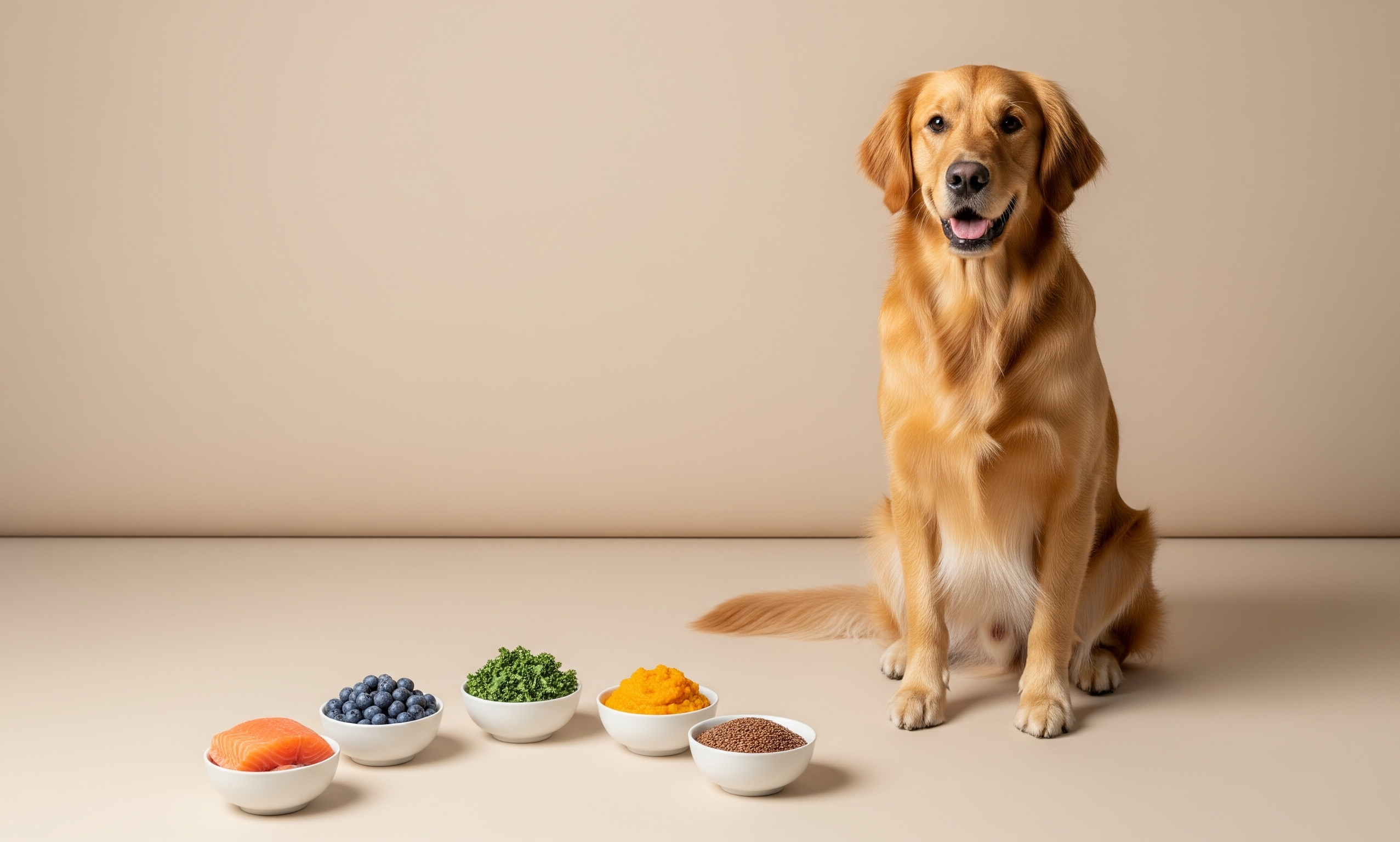
Functional foods — dietary components that provide benefits beyond basic nutrition — offer veterinarians practical tools to enhance health and mitigate disease risk in dogs. A growing body of peer-reviewed research in companion animals demonstrates the clinically relevant effects of: fermentable fibers and prebiotics, probiotic and postbiotic preparations; Omega-3 long-chain polyunsaturated fatty acids; medium-chain triglycerides; marine extracts (e.g. green-lipped mussel); mushroom-derived β-glucans; polyphenol-rich foods; seaweed derivatives for oral health; and selected botanicals such as cranberry for urinary support. These ingredients act through convergent mechanisms that include modulation of the intestinal microbiome and its metabolites (short-chain fatty acids and bile acids), reinforcement of mucosal and systemic immunity, attenuation of oxidative stress, anti-inflammatory effects, neurometabolic support, and modification of cartilage metabolism. This review synthesizes canine-specific evidence for health enhancement and disease prevention, emphasizes dosing and formulation considerations, and provides practical whole-food examples veterinarians can apply in integrative care.¹,²
Introduction to functional foods
“Functional foods” are commonly defined as foods or food components that, by virtue of bioactive constituents, confer health benefits beyond essential nutrition when consumed as part of a normal diet. In veterinary practice, this concept overlaps with “nutraceuticals” and “medical nutrition.” Still, the distinguishing feature of functional foods is their use within complete and balanced diets, or as adjuncts to such diets, rather than as stand-alone drugs. In dogs, an expanding evidence base supports a role for functional foods in preventing and co-managing chronic disorders, including osteoarthritis, obesity and metabolic dysfunction, cognitive decline and epilepsy, chronic enteropathies, periodontal disease, and urinary tract susceptibility. The dog’s well-characterized microbiome and translational neurocognitive aging model further justify nutrition-centric strategies as part of holistic veterinary care.³
Mechanistic framework: how functional foods work
Functional foods operate through a limited set of mutually reinforcing mechanisms relevant across organ systems. Microbiome and postbiotic signaling. Fermentable fibers and prebiotics (e.g. inulin-type fructans, fructooligosaccharides [FOS]) selectively enrich commensals and increase short-chain fatty acid (SCFA) production. This improves epithelial barrier function, reduces proteolytic putrefaction, and modulates immune tone and metabolic signaling via G-protein-coupled receptors and histone deacetylase inhibition.⁴⁻⁹ 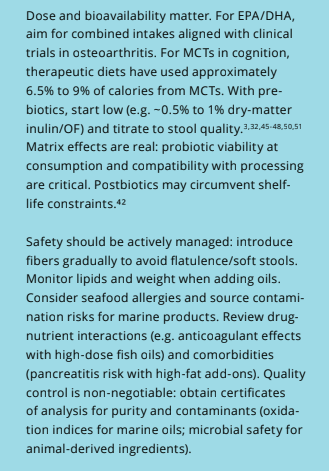 Immunomodulation. Probiotics and β-glucans train innate immunity, bias adaptive responses (isotype switching, Treg activity), and can improve vaccine kinetics or mucosal defense; effects depend on strain, dose, and matrix.¹⁰⁻¹⁴ Anti-inflammatory and antioxidant actions. Omega-3 EPA/DHA alter eicosanoid balance and increase pro-resolving mediators (resolvins, protectins), decreasing joint and skin inflammation. Polyphenols quench reactive species and modulate NF-κB activity. Antioxidant blends synergize with environmental enrichment to support brain-derived neurotrophic factor (BDNF) and synaptic plasticity in aging dogs.¹⁵⁻²¹ Neurometabolic support. Medium-chain triglycerides (MCTs) elevate circulating ketone bodies, providing an alternative brain fuel that improves cognition and decreases seizure frequency in subsets of epileptic dogs.²²⁻²⁴ Tissue-specific effects. Marine extracts (green-lipped mussel) and certain botanicals can modulate cartilage metabolism or reduce urinary pathogen adhesion, respectively. Seaweed-derived components influence salivary metabolomics and plaque formation, supporting oral health.²⁵,²⁶
Major functional food categories with canine evidence and practical examples
Dietary fibers: prebiotics, fermentable fibers, and functional carbohydrates Evidence Dietary fibers represent one of the most extensively studied functional food categories in canine nutrition, with diverse mechanisms of action that extend far beyond traditional concepts of digestive regularity. Low-dose inulin and oligofructose (OF) improve fecal SCFA profiles and decrease phenolic putrefactive metabolites without compromising digestibility or stool quality in dogs.³¹ In overweight dogs, inulin-type fructans shift bile acids and microbiota, with implications for weight control and insulin sensitivity.³² In raw-fed dogs, adding inulin or yeast cell-wall extract increased fecal SCFAs, a proxy for colonic health.³³ Reviews concur that prebiotics can counteract proteolytic fermentation associated with high-protein diets and support a eubiotic microbiome, although responses are dose-dependent and individualized.³⁴⁻³⁶ 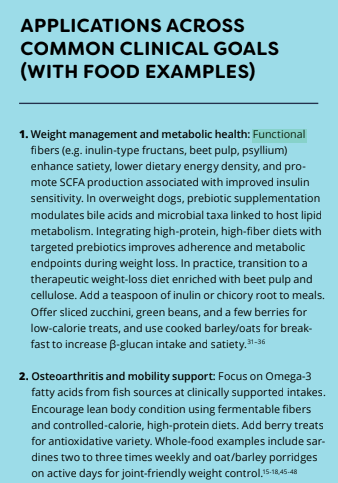
 The mechanisms underlying fiber benefits involve multiple pathways. Fermentable fibers serve as substrates for beneficial bacteria, particularly Bifidobacterium and Lactobacillus species, leading to increased production of SCFAs, including acetate, propionate, and butyrate. These metabolites lower colonic pH, creating an environment unfavorable to pathogenic bacteria while promoting the growth of beneficial microbes. Butyrate specifically serves as the primary energy source for colonocytes and has profound effects on epithelial barrier integrity, reducing intestinal permeability and supporting immune function. Different fiber types provide distinct benefits through varied fermentation patterns. Soluble fibers like inulin and FOS undergo rapid fermentation in the proximal colon, providing immediate SCFA production and prebiotic effects. Insoluble fibers such as cellulose and wheat bran provide bulk and mechanical stimulation throughout the digestive tract, promoting normal transit time and stool formation. Mixed-fiber sources like beet pulp contain both soluble and insoluble components, offering comprehensive digestive support. Specific fiber categories and their application
- Prebiotic fibers (Inulin-type fructans): Jerusalem artichoke, chicory root, and purified inulin preparations selectively stimulate beneficial bacteria growth. These fibers resist upper GI digestion, arriving intact in the colon where they undergo selective fermentation. Clinical studies demonstrate improved fecal microbiome diversity and increased SCFA production within two to three weeks of supplementation.
- β-glucans: Found in organic oats, barley, and medicinal mushrooms, these fibers provide both fermentable substrate and immunomodulatory effects. Cereal β-glucans specifically support satiety and may improve lipid profiles.
- Mixed-source fibers: Psyllium husk provides both soluble gel-forming properties and mechanical bulk, making it particularly useful for dogs with inconsistent stool quality. Its unique properties allow for bidirectional stool normalization — firming loose stools while softening hard stools.
Whole-food examples and practical use
- Fresh vegetables: Cooked pumpkin, sweet potato, carrots, and green beans provide mixed fiber content with high palatability. Steam or boil vegetables to improve digestibility while preserving fiber content. Introduce gradually, starting with 1-2 tablespoons per 10 kg body weight.
- Chicory root or Jerusalem artichoke: These natural inulin/FOS sources can be finely chopped and added to home-prepared meals. Many commercial diets use purified inulin from these sources. Start with ¼ teaspoon per 10 kg body weight and increase gradually.³¹,³²
- Canned plain pumpkin: This mixed soluble/insoluble fiber source is excellent for stool quality modulation. Use 1-3 tablespoons per meal, depending on dog size. Avoid pie filling preparations containing sugar and spices.³⁴⁻³⁶
- Beet pulp: Available as dried flakes or pellets, beet pulp provides excellent fiber balance. Soak dried forms before feeding to prevent gastric expansion. Beet pulp is particularly useful in weight management diets due to its low caloric density and high satiety value.
- Psyllium husk: Start with ¼ teaspoon per 10 kg body weight mixed with adequate water. Psyllium husk is excellent for dogs with chronic digestive issues. Always provide plenty of water to prevent esophageal or intestinal obstruction.³⁴⁻³⁶
- Organic oats and barley: Cooked organic grains provide β-glucan-rich fermentable fiber. Prepare with water or low-sodium broth. They’re particularly beneficial for overweight dogs as a portion extender.³⁴,³⁵
- Apple and carrot pieces: Fresh or lightly cooked pieces provide pectin and mixed fibers. Remove apple seeds and cores. These treats are useful as low-calorie training treats while contributing to daily fiber intake.
- Seaweed and kelp meals: Dried kelp meal provides unique polysaccharides and trace minerals. Use sparingly due to iodine content. These meals are particularly beneficial when combined with other fiber sources for comprehensive microbiome support.
Clinical applications and dosing guidelines
- Gastrointestinal health: For acute digestive upset, combine soluble fibers (pumpkin, psyllium) with probiotics. For chronic enteropathies, gradually introduce mixed-fiber sources while monitoring stool quality and frequency.
- Metabolic support: Inulin-type fructans show particular promise for insulin sensitivity improvement. Consider 0.5% to 2% of dry matter intake from prebiotic fibers in diabetic or prediabetic dogs.
- Microbiome modulation: For dogs on high-protein or raw diets, prebiotic supplementation helps balance fermentation patterns. Use inulin or FOS at 0.5% toi 1% dry matter to counteract proteolytic fermentation.
Clinical pearls Start with ~0.5% to 1% dry-matter inulin/OF or small teaspoon-level portions of food fibers per 10 kg body weight, titrating to stool quality. Introduce all fiber sources gradually over seven to ten days to allow microbiome adaptation and prevent flatulence. Monitor water intake as increased fiber requires additional hydration. Combine with high-quality protein in weight-management patients. Consider individual tolerance –0some dogs may require lower starting doses or specific fiber types based on their digestive sensitivity.³¹,³²,³⁶ Probiotics and postbiotics Evidence Randomized trials in client-owned dogs with acute uncomplicated diarrhea show that multi-strain probiotic products can shorten the duration of clinical signs, with some products performing comparably to metronidazole while avoiding antibiotic exposure.³⁷⁻³⁹ Shelter and field studies are mixed at individual endpoints. Still, aggregate data support a clinically meaningful benefit and high safety margin.⁴⁰,⁴¹ Postbiotic approaches, including heat-killed lactobacilli or butyrate delivery, may provide immune benefits without viability constraints. Early canine data demonstrate ex vivo cytokine modulation and improvements in digestive biomarkers, but larger field trials are needed.⁴²⁻⁴⁴ Whole-food examples and practical use
- Plain, unsweetened kefir or yogurt with live cultures: These can provide modest probiotic exposure for tolerant dogs. Potency and strain identity are inconsistent, so these should complement, not replace, veterinary-validated probiotic products.¹⁰,³⁷
- Probiotic-fortified complete diets or freeze-dried functional toppers: Supporting daily GI resilience in dogs prone to stress diarrhea,³⁷⁻⁴¹ they should be labeled with strain and CFU at the end of shelf life.
- Postbiotic foods: Fiber-fermentable blends raise endogenous butyrate (see prebiotics above). Emerging heat-killed lactobacillus powders can be mixed into meals when shelf life or heat processing precludes live organisms.⁴²⁻⁴⁴
Clinical pearls Match strain to indication when possible (e.g. Enterococcus faecium SF68, Bifidobacterium animalis strains for acute diarrhea). Verify CFU counts at feeding and avoid sweetened dairy (xylitol toxicity risk).¹⁰,²⁸,³⁹⁻⁴¹ Omega-3 long-chain polyunsaturated fatty acids (EPA/DHA) Evidence Multiple randomized, controlled trials in dogs with naturally occurring osteoarthritis demonstrate that increasing dietary EPA/DHA improves clinical signs, weight-bearing, and owner-assessed pain and function, sometimes enabling NSAID dose reduction.⁴⁵⁻⁴⁸ Benefits likely reflect shifted lipid mediator profiles and pro-resolving signaling. Whole-food examples and practical use
- Tinned sardines or mackerel in water: Can be fed two to three times weekly as an adjunct to a balanced diet. These fish provide EPA/DHA with minimal mercury compared with large predatory fish.45-48 For small dogs, tinned sardines and mackerel should be rinsed, boneless and skinless.
- Lightly cooked salmon or pollock: These fish can be used as meal toppers; drain visible fat to control calories.⁴⁵⁻⁴⁸
- Algal oil (schizochytrium-derived): For fish-allergic dogs or sustainability-minded owners, this oil can be used as a non-fish EPA/DHA source.⁴⁵⁻⁴⁸ Avoid relying on plant ALA sources (e.g. flaxseed) to meet EPA/DHA needs, since conversion to EPA/DHA in dogs is inefficient.⁴⁵⁻⁴⁸
Clinical pearls Choose products with oxidation safeguards (peroxide/anisidine indices), store them cold, and escalate dose gradually to minimize GI effects. Monitor caloric load in overweight dogs.⁴⁵⁻⁴⁸ Medium-chain triglycerides (MCTs) for cognition and epilepsy Evidence In senior dogs with cognitive dysfunction syndrome (CDS), MCT-enriched therapeutic diets improve multiple CDS domains within 90 days in double-blinded trials. Colony-dog studies confirm rapid gains in attention and spatial learning with MCTs, likely mediated by ketone availability and neuronal energetics.²²,²³,⁴⁹⁻⁵¹ In idiopathic epilepsy, a double-blind, placebo-controlled crossover trial showed that an MCT-enriched diet reduced seizure burden in a responder subset.²⁴ Antioxidant and mitochondrial cofactor blends (e.g., arginine, B vitamins, fish oil, lipoic acid, carnitine) add complementary cognitive benefits, especially combined with environmental enrichment.⁵²⁻⁵⁵ Whole-food examples and practical use
- MCT oil (caprylic C8 and capric C10): Introduce slowly with meals. Use veterinary therapeutic diets formulated at ~6.5% to 9% calories from MCTs when available.²²⁻²⁴, ⁵⁰,⁵¹
- Limited coconut oil: Can be used as a food adjunct. Recognize that lauric acid (C12) is less ketogenic than C8/C10. Monitor caloric density and pancreatitis risk.²²⁻²⁴
- Eggs, sardines, and organ meats: Providing choline, carnitine, and B vitamins, they complement brain-supportive diets aimed at senior cognitive health.⁵²⁻⁵⁵
Clinical pearls Introduce MCTs gradually to reduce GI side effects. Track owner-reported CDS questionnaires and seizure logs to determine response and adjust inclusion rates.²²⁻²⁴,⁴⁹⁻⁵¹ Mushroom-derived β-blucans Evidence Oral β-1,3/1,6-glucans modulate canine immune responses, including vaccine-related antibody isotypes and markers of trained innate immunity.¹¹,¹²,⁵⁷⁻⁵⁹ Some studies also suggest clinical benefits for inflammatory skin signs or osteoarthritis, though results vary and optimal inclusion rates remain under study.¹¹,¹²,⁶⁰ Medicinal mushroom polysaccharopeptides (e.g. Coriolus versicolor PSP) have shown promising survival signals in a small pilot trial of canine hemangiosarcoma, illustrating potential for functional immunonutrition in oncology pending confirmatory trials.⁶¹ Whole-food examples and practical use
- Cooked culinary mushrooms such as shiitake or maitake: Incorporated into home-prepared diets (finely chopped, sautéed in water or broth) they supply β-glucans and ergothioneine.¹¹,⁵⁷⁻⁵⁹
- Hot-water extracts or powders of reishi, turkey tail, or maitake: Make sure these are formulated for pets (standardized β-glucan content).⁵⁷⁻⁶¹
- Organic oats and barley: These are cereal β-glucan sources for dogs that tolerate grains.³⁴,³⁵
Clinical pearls Choose products with quantified β-glucan content and introduce slowly to avoid GI upset. In oncology support, counsel owners that early studies are hypothesis-generating rather than definitive.⁵⁷⁻⁶¹ Polyphenol-rich foods Evidence Polyphenols exert antioxidant and anti-inflammatory effects and may support endothelial and mitochondrial function. In canine research, disease-outcome trials are limited, but antioxidant-enriched diets (including polyphenolic components) and enrichment improve cognition and BDNF (Brain-Derived Neurotrophic Factor) in aged dogs. Limited work in exercising dogs suggests improved oxidative status with berry supplementation.¹⁹⁻²¹,⁶² Whole-food examples and practical use:
- Blueberries, blackberries, and raspberries: Offer as low-calorie training rewards or meal toppers (fresh or frozen, unsweetened). Typically, one to three berries per 5 kg body weight are best for small dogs, and more for large breeds.⁶²
- Pomegranate arils and decaffeinated green tea extracts: To be used sparingly in home-prepared diets.¹⁹⁻²¹
- Turmeric (curcumin): Incorporate into cooked food as a spice adjunct when tolerated Pair with fat and pepper for bioavailability, recognizing limited canine randomized controlled trials.¹⁹⁻²¹
Clinical pearls Avoid grapes and raisins due to nephrotoxicity. Moderate oxalate-rich berries in stone-prone dogs, and monitor stool and pruritus for idiosyncratic reactions.¹⁹⁻²¹
Conclusions
Functional foods are increasingly evidence-based in canine practice. The strongest clinical signals include EPA/DHA for osteoarthritis, MCTs and antioxidant blends for cognitive aging (with adjunct benefits in a subset of epileptic dogs), and targeted probiotics for acute diarrhea. Fermentable fibers and prebiotics provide the metabolic foundation that supports gut barrier function and immune homeostasis. Integrating these tools into diet-centric plans — using quality-assured ingredients, measured whole-food additions, and objective outcome tracking — can enhance health span and reduce disease burden in canine patients receiving holistic care. Continued rigorous clinical research will refine optimal combinations, doses, and patient selection, but the current evidence base is sufficient to justify thoughtful, everyday use in practice.¹⁻⁴⁸,⁵⁷⁻⁶1 __________________________________________________________
References
1Pilla R, Suchodolski JS. (2021). The gut microbiome of dogs and cats, and the influence of diet. Veterinary Clinics of North America: Small Animal Practice, 51(3), 551-572. 2Mondo E, et al. (2019). Role of gut microbiota in dog and cat health and disease. Frontiers in Microbiology, 10, 2191. 3Araujo JA, et al. (2005). Assessment of nutritional interventions for modification of age-associated cognitive dysfunction in dogs. Journal of the American Veterinary Medical Association, 227(5), 722-728. 4Propst EL, et al. (2003). Effects of oligofructose and inulin on digestibility, stool quality, and fecal metabolites in dogs. Journal of Animal Science, 81(12), 2920-2930. 5Barry KA, et al. (2009). Low-level fructan supplementation of dogs enhances nutrient digestion and modifies stool metabolites. Journal of Animal Science, 87(10), 3244-3252. 6Pinna C, et al. (2018). Influence of dietary protein and fructooligosaccharides on fecal microbiota and fermentative end-products in dogs. BMC Veterinary Research, 14, 385. 7Beloshapka AN, et al. (2012). Inulin or yeast cell-wall extract increases fecal SCFA in raw-fed dogs. American Journal of Veterinary Research, 73(7), 1016-1023. 8Biagi G, et al. (2010). Influence of potential prebiotics and fiber-rich ingredients on canine gut microbiota. Animal Feed Science and Technology, 159(3-4), 110-121. 9Alexander C, et al. (2018). Inulin-type fructans modulate blood metabolites, bile acids, and fecal microbiota in overweight dogs. British Journal of Nutrition, 120(10), 1106-1118. 10Kelley RL, et al. (2009). Bifidobacterium animalis AHC7 in acute idiopathic diarrhea in dogs. Veterinary Therapeutics, 10(3), 121-130. 11Stuyven E, et al. (2009). Oral β-1,3/1,6-glucan alters vaccine-specific isotype responses in dogs. Veterinary Immunology and Immunopathology, 131(2), 199-207. 12Fries-Craft K, et al. (2023). Dietary yeast β-1,3/1,6-glucan supplementation modulates immune responses in adult dogs. Journal of Animal Science, 101(3), skad029. 13Paris S, et al. (2020). β-Glucan-induced trained immunity and enhanced rabies vaccine responses in dogs. Frontiers in Immunology, 11, 564497. 14Jugan MC, et al. (2023). Probiotics versus fecal microbiota transplant in canine AHDS. Frontiers in Veterinary Science, 10, 1050538. 15Roush JK, et al. (2010). Fish-oil omega-3 fatty acids improve weight bearing in canine osteoarthritis. Journal of the American Veterinary Medical Association, 236(1), 67-73. 16Fritsch DA, et al. (2010). Dose-titration effects of fish oil in osteoarthritic dogs. Journal of Veterinary Internal Medicine, 24(5), 1020-1026. 17Mehler SJ, et al. (2016). EPA/DHA supplementation improves clinical signs of OA in dogs. Research in Veterinary Science, 105, 171-178. 18Hielm-Björkman A, et al. (2012). Deep-sea fish oil in canine OA: randomized, double-blind, placebo-controlled study. BMC Veterinary Research, 8, 157. 19Cotman CW, et al. (2002). Antioxidant-enriched diet reduces cognitive dysfunction in aged canines. Neurobiology of Aging, 23(5), 809-818. 20Milgram NW, et al. (2002). Dietary enrichment counteracts age-associated cognitive dysfunction in canines. Neurobiology of Aging, 23(5), 737-745. 21Fahnestock M, et al. (2012). BDNF increases with behavioral enrichment and antioxidant diet in aged dogs. Neurobiology of Aging, 33(3), 545-554. 22Pan Y, et al. (2010). MCT supplementation improves cognition in aged dogs via ketone provision. British Journal of Nutrition, 103(11), 1746-1754. 23Pan Y, et al. (2018). MCT diet plus brain-protection blend improves CDS signs in client-owned dogs. Frontiers in Nutrition, 5, 127. 24Law TH, et al. (2015). MCT diet reduces seizures in idiopathic epilepsy: double-blind crossover trial in dogs. British Journal of Nutrition, 114(9), 1438-1447. 25Bui LM, Bierer TL. (2003). Green-lipped mussel in canine arthritis: double-blind longitudinal study. New Zealand Veterinary Journal, 51(3), 103-108. 26Hielm-Björkman A, et al. (2007). Perna canaliculus (GLM) in OA dogs: randomized evaluation. Inflammopharmacology, 15(6), 272-278. 27Pan Y, et al. (2018). Cognitive enhancement with antioxidant/arginine/fish-oil blend in aged dogs. British Journal of Nutrition, 119(3), 349-358. 28Bybee SN, et al. (2011). Enterococcus faecium SF68 in shelter dogs and cats. Journal of Veterinary Internal Medicine, 25(4), 856-860. 29Shmalberg J, et al. (2019). Probiotic versus metronidazole for acute canine diarrhea: randomized double-blind trial. Frontiers in Veterinary Science, 6, 163. 30Nixon SL, et al. (2019). Efficacy of an anti-diarrheal probiotic in dogs. Journal of Veterinary Internal Medicine, 33(4), 1286-1295. 31Garcia-Mazcorro JF, et al. (2017). FOS/inulin and fecal microbiota in healthy dogs and cats. PeerJ, 5, e3184. 32Alexander C, et al. (2018). Prebiotic inulin-type fructans in overweight dogs. British Journal of Nutrition, 120(10), 1106-1118. 33Beloshapka AN, et al. (2012). Inulin or yeast cell-wall extract in raw-fed dogs. American Journal of Veterinary Research, 73(7), 1016-1023. 34Schmitz S, Suchodolski JS. (2016). Understanding the canine intestinal microbiota and clinical implications. Veterinary Medicine and Science, 2(3), 91-114. 35Biagi G, et al. (2010). Ingredient-specific effects on canine microbiota. Animal Feed Science and Technology, 159(3-4), 110-121. 36Pinna C, et al. (2014). Utilization of prebiotics and synbiotics in dogs. Italian Journal of Animal Science, 13, 3107. 37Shmalberg J, et al. (2019). Probiotics vs metronidazole in acute diarrhea. Frontiers in Veterinary Science, 6, 163. 38Bybee SN, et al. (2011). SF68 in shelters. Journal of Veterinary Internal Medicine, 25(4), 856-860. 39Kelley RL, et al. (2009). B. animalis AHC7 in acute diarrhea. Veterinary Therapeutics, 10(3), 121-130. 40Gómez-Gallego C, et al. (2016). Canine-specific probiotic combination and acute diarrhea. Research in Veterinary Science, 105, 38-46. 41Langlois DK, et al. (2020). Metronidazole in acute canine diarrhea: evidence summary. Journal of Veterinary Internal Medicine, 34(2), 1006-1011. 42Heat-killed Lactobacillus (postbiotic) immunomodulation in dogs: emerging evidence summarized in recent preprints and pilot studies (2024-2025). 43Butyrate and probiotic combinations in dogs: emerging data (2024). 44Jugan MC, et al. (2023). Probiotics vs FMT in AHDS. Frontiers in Veterinary Science, 10, 1050538. 45Roush JK, et al. (2010). Omega-3s on OA weight-bearing. Journal of the American Veterinary Medical Association, 236(1), 67-73. 46Fritsch DA, et al. (2010). Dose-titration EPA/DHA in OA. Journal of Veterinary Internal Medicine, 24(5), 1020-1026. 47Mehler SJ, et al. (2016). EPA/DHA clinical signs in OA. Research in Veterinary Science, 105, 171-178. 48Roush JK, et al. (2010). Multicenter EPA/DHA OA assessment. Journal of the American Veterinary Medical Association, 236(1), 59-66. 49Cotman CW, et al. (2002). Antioxidant diet and cognition. Neurobiology of Aging, 23(5), 809-818. 50Pan Y, et al. (2018). MCTs + brain protection blend. Frontiers in Nutrition, 5, 127. 51Pan Y, et al. (2010). MCTs elevate ketones and improve cognition. British Journal of Nutrition, 103(11), 1746-1754. 52Milgram NW, et al. (2002). Enrichment + antioxidants benefits. Neurobiology of Aging, 23(5), 737-745. 53May KA, et al. (2019). Nutrition and the aging brain (dogs/cats). Journal of the American Veterinary Medical Association, 255(11), 1245-1258. 54Tynes VV, et al. (2021). Nutritional management of behavior and brain disorders in small animals. Veterinary Clinics: Small Animal Practice, 51(6), 1153-1172. 55Blanchard T, et al. (2025). Systematic review: cognition in aging pets. GeroScience, 47, 1-29. 56Marchi PH, et al. (2024). Dose-response β-glucans: immunity and microbiome in dogs. Microorganisms, 12(1), 113. 57De Souza Theodoro S, et al. (2024). β-glucans (Euglena vs Saccharomyces) modulate canine immune parameters. PLoS ONE, 19(7), e0304833. 58Paris S, et al. (2020). Trained immunity in dogs with β-glucans. Frontiers in Immunology, 11, 566893. 59Beynen AC. (2011). β-glucans in canine atopy: double-blind data. American Journal of Animal and Veterinary Sciences, 6(4), 176-180. 60Brown DC, Reetz JA. (2012). Coriolus versicolor polysaccharopeptide in canine hemangiosarcoma: pilot dose-escalation study. Evidence-Based Complementary and Alternative Medicine, 2012, 384301.