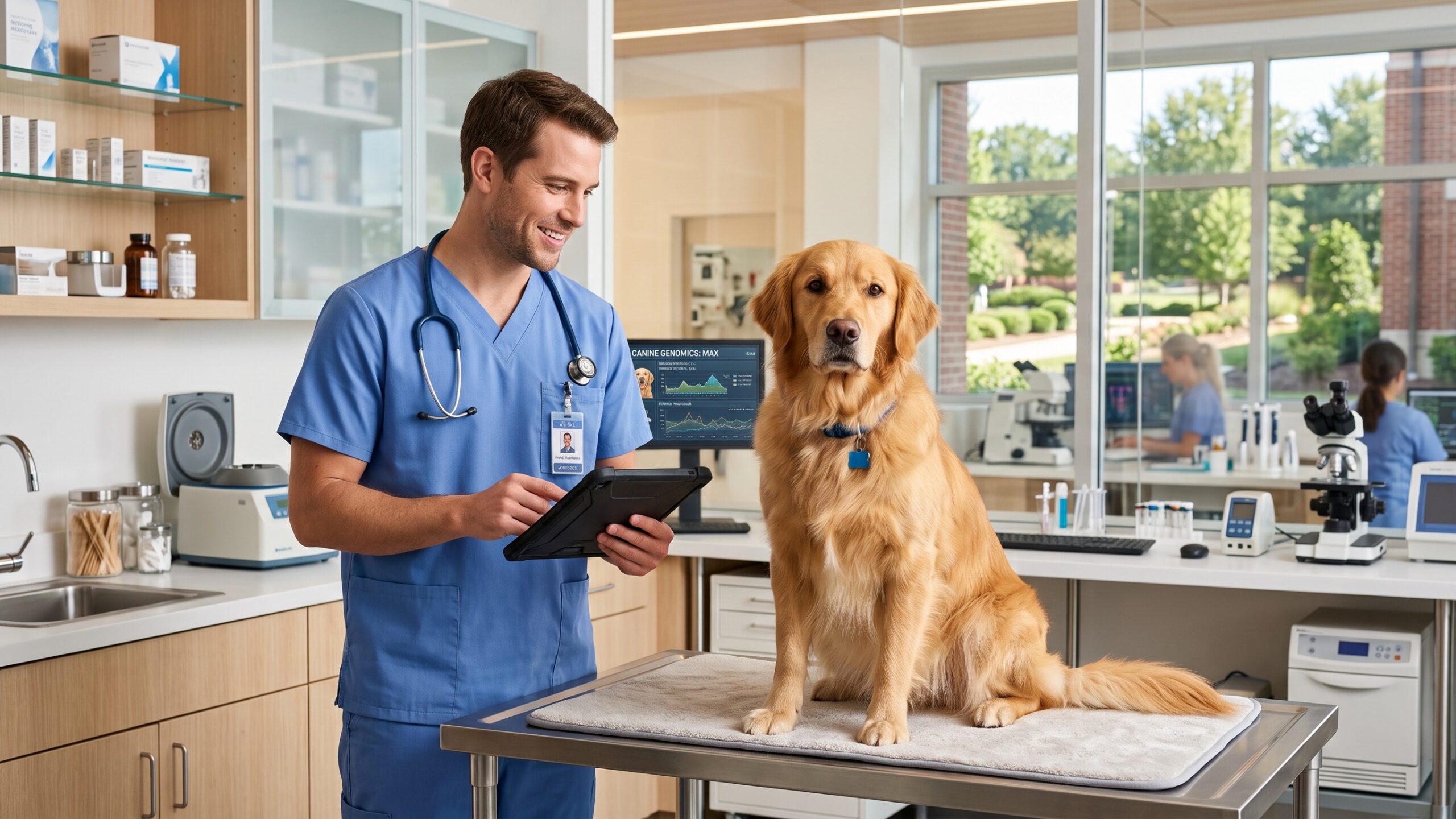
Veterinarians are no strangers to complexity. Dogs present with layered, nuanced health challenges that rarely fit neatly into a single diagnostic box. For years, vets have relied on clinical signs, bloodwork, imaging, and histopathology to guide decisions. But a growing field known as multiomics is opening doors that were previously closed — offering a far more complete picture of what is happening inside a patient at the molecular level.
So what exactly is multiomics, and how can it help us better protect and treat our canine patients?
What Is Multiomics?
Multiomics refers to the combined study of multiple biological “layers” within a living system. Think of each layer as one piece of a puzzle. On its own, each piece gives you some information. But when you put them all together, the full image becomes clear.
These layers include:
- Genomics — the study of a dog’s complete DNA
- Transcriptomics — which genes are being expressed, and when
- Proteomics — the proteins that cells are producing
- Metabolomics — small molecules that reflect the body’s metabolic activity
- Microbiomics — the community of microorganisms living in and on the body
When studied together, these layers can reveal the root causes of disease, identify early warning signs, and point toward targeted treatment strategies in ways that single-layer approaches simply cannot.
Why Does This Matter for Dogs Specifically?
Dogs suffer from many of the same diseases that affect humans — cancer, autoimmune disorders, infectious disease, and metabolic conditions. In many cases, the genetic and molecular underpinnings of these diseases are remarkably similar across species. This makes dogs not only important patients in their own right, but also valuable models for understanding disease more broadly.
Let’s look at a few real-world examples of how multiomics is already making an impact in canine medicine.
Cancer: The Case of Hemangiosarcoma
Canine hemangiosarcoma (HSA) is one of the most devastating diagnoses a dog owner can receive. Often called a “silent killer,” splenic HSA typically shows no clinical signs until the tumor ruptures — at which point the situation becomes a life-threatening emergency.
One of the biggest challenges clinicians face is distinguishing HSA from benign splenic masses at the time of presentation, without costly surgery and lengthy histopathological analysis.
This is exactly where multiomics steps in. Researchers at Cornell University’s Baker Institute for Animal Health have used a genome-wide technique called Chromatin Run-On sequencing (ChRO-seq) — a transcriptomics-based tool — to analyze gene expression patterns in HSA tumors. Their findings revealed that extracellular matrix (ECM) remodeling plays a key role in HSA development.
By identifying unique gene signatures and molecular biomarkers, this research is paving the way for:
- Rapid, non-invasive diagnostics that could differentiate malignant from benign disease at first presentation
- Early detection screening tools for high-risk breeds
- Novel therapeutic targets that could lead to more effective treatments
This is multiomics — specifically genomics and transcriptomics — being put to work in a direct, clinically meaningful way.
Infectious Disease: Chagas Disease in Dogs
Canine trypanosomiasis, caused by Trypanosoma cruzi, is a zoonotic disease most commonly seen in the southern United States. It attacks the myocardial cells of dogs, leading to granulomatous myocarditis, arrhythmias, and potentially fatal cardiac dysfunction. Clinical signs can range from subtle — mild exercise intolerance, ECG changes — to severe, including collapse, syncope, and sudden death.
A multiomics approach offers exciting possibilities here. By combining:
- Genomics to understand which dogs may be genetically predisposed to severe disease
- Transcriptomics and proteomics to identify early biomarkers of cardiac involvement
- Metabolomics to detect shifts in cellular energy use caused by myocardial damage
- Microbiomics to understand how the gut microbiome may influence immune response to the parasite
…clinicians could one day have tools that detect infection and cardiac compromise earlier, predict disease progression, and guide individualized treatment decisions — well before irreversible damage occurs.
Immunodeficiency: Understanding Immune System Failure
Severe Combined Immunodeficiency (SCID) and Selective IgA Deficiency in dogs are conditions where the immune system fails to mount proper defenses. Affected puppies may show signs of infection as early as three weeks of age, and outcomes can be poor without early intervention.
Genomics has already proven valuable here. Research into gene therapy for canine monogenic diseases — including immune deficiencies — has shown that understanding the specific genetic mutations involved can open the door to targeted corrective strategies. As our genomic databases grow and proteomics helps us understand which immune proteins are absent or dysfunctional, we move closer to personalized immunological support for these patients.
Microbiomics also plays a role. Dogs with IgA deficiency are prone to recurrent respiratory infections, otitis, and gastrointestinal issues. Understanding how an altered microbiome contributes to — or results from — immune dysfunction could help us design better supportive care strategies, including targeted probiotic or dietary interventions.
The Bigger Picture: What Multiomics Means for Clinical Practice
Most multiomics research is happening at the academic and translational level. But the pace of progress is accelerating, and the clinical applications are growing. Here is what veterinary practitioners can expect to see more of in the coming years:
1. Better Diagnostic Biomarkers
Liquid biopsies, blood-based gene expression panels, and metabolomic profiles are becoming more accessible. These tools can help identify disease earlier and with greater accuracy.
2. Breed-Specific Risk Stratification
Certain breeds are predisposed to specific conditions — Golden Retrievers and HSA, German Shepherds and degenerative myelopathy, Boxers and cardiac disease. Genomic profiling can help identify individual dogs at elevated risk, allowing for proactive monitoring.
3. More Targeted Therapies
Rather than a one-size-fits-all approach, multiomics enables us to understand why a particular dog’s cancer or infection is behaving the way it is — and to tailor treatment accordingly.
4. Microbiome-Based Interventions
The gut microbiome is increasingly linked to immune function, mental health, metabolic disease, and even cancer. Microbiomic profiling may soon become a routine part of wellness evaluations, guiding dietary and therapeutic recommendations.
A Note on Collaboration and Continued Learning
Multiomics is inherently interdisciplinary. It sits at the intersection of veterinary medicine, molecular biology, bioinformatics, and data science. As practitioners, staying connected with veterinary research institutions, academic journals, and continuing education opportunities will be key to integrating these advances into practice.
The era of precision medicine in veterinary care is not a distant future — it is unfolding right now. Multiomics gives us the tools to look deeper, diagnose earlier, treat more precisely, and ultimately improve outcomes for our canine patients.