
Looking for the perfect holiday gift for your furry friend? Discover how to choose the right toys for your dog.
You might think dog toys are just toys – no big deal. Truth is, there are several things to consider when buying toys for your dog. These include his age, play style, toy types, and safety. In this article, we provide expert advice on how to choose the right toys for your dog.
Start by considering your dog’s age
“A dog’s interests and needs change as they grow and learn, so their age and play style is a big determinant in what kind of toy to buy,” says Vivian Zottola, MSc, anthrozoologist and research associate at the Center for Behavior Studies.
She explains that puppies and adolescent dogs are generally active, curious, and teething. Therefore, it’s essential to choose toys that relieve teething and cater to high activity levels. “Some adult dogs like to chew, and others don’t,” she adds. “Senior dogs may not chew as much but still like to explore with their noses.”
Dog toys for different play styles
The types of toys you choose for your dog also depend on their play style. You need to realize every dog is different, with their own unique interests and skills.
“One of the main findings of our research is that dogs have multiple intelligences, or what we refer to as cognitive skills,” says Dr. Brian Hare, Professor of Cognitive Neuroscience at Duke University, founder of the Duke Canine Cognition Center, and co-founder of Dognition.
“Just like you can be good at reading but not math, or vice versa, some dogs are good at some cognitive skills but not others. This is relevant to toys because many use different cognitive skills to solve problems.”
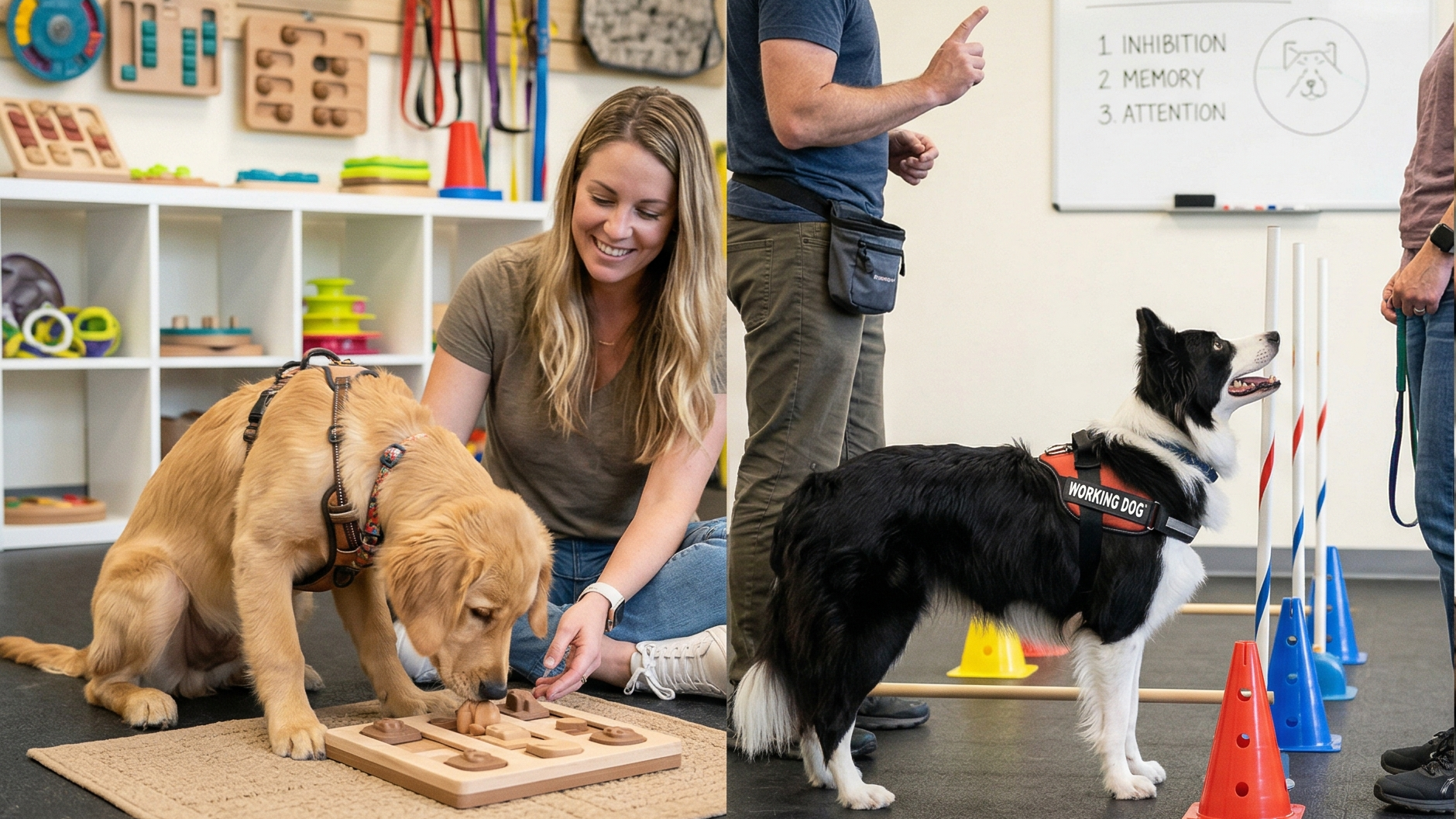
If your dog has a good memory, says Dr. Hare, he might enjoy toys where you hide treats in different compartments for him to find.
“If your dog is an independent problem solver, meanwhile, you might give him puzzle games where he has to figure out how to unlock or unlatch something to get the treat.”
Dog toy types to choose from
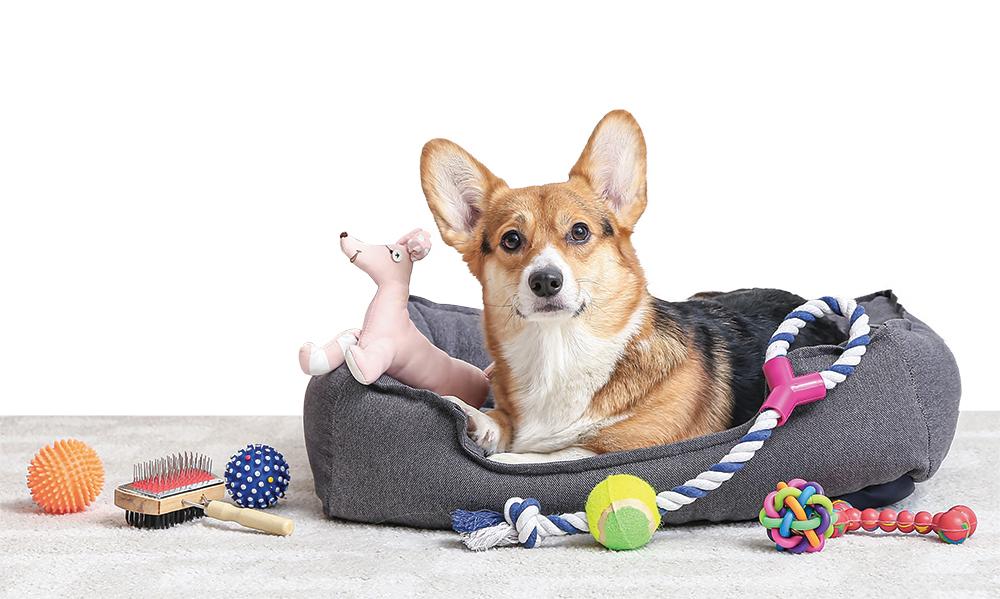
You can choose from a huge variety of dog toys. It’s important to pick something that provides physical and mental stimulation while catering to his play style and enhancing your bond.
- “Any toy that helps with physical activity is a significant investment, like ball throwers that can throw a long distance without putting your shoulder out,” suggests Vanessa Woods, a research scientist and Director of Duke Puppy Kindergarten. “Use balls that are brightly colored so they are easy to find.”
- Vivian recommends buying toys with varying difficulty levels. “These toys not only provide entertainment but also help educate your dog. Keep it simple for pups just starting out.”
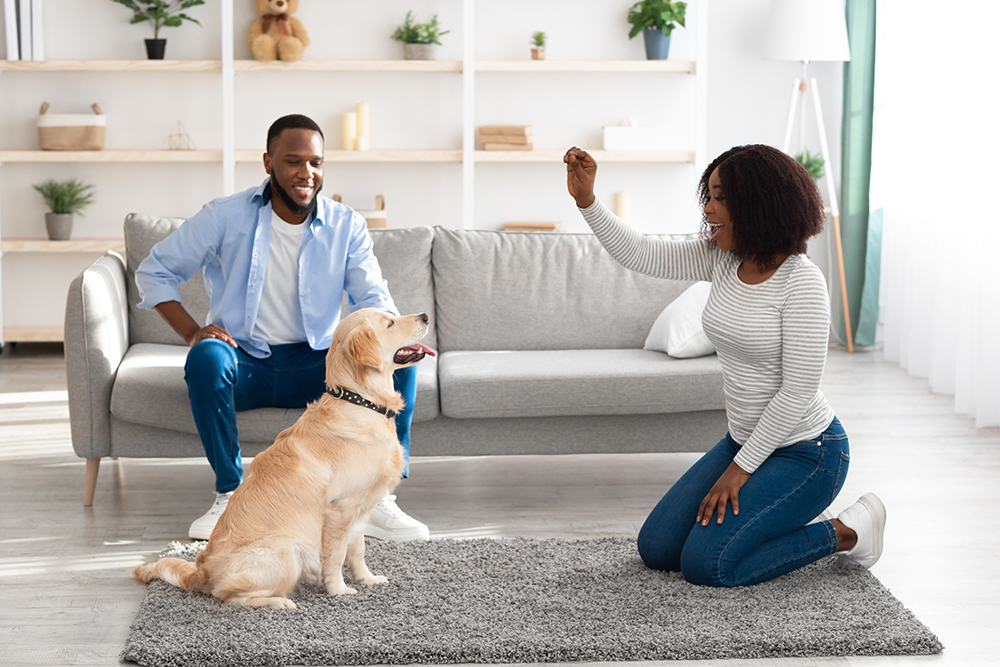
- “Like kids, dogs enjoy quality time with you,” adds Vaneesa. “Almost any toy becomes fun if you are involved in the game.” She adds that playing games is a great way to figure out how your dog’s mind works, how he solves problems, and who he is. It also helps you recognize his developmental milestones
- Again, also consider toys that encourage dogs to work for food or treats, as they’re effective at combating boredom.“All dogs can benefit from activities that involve foraging for food, whether through a snuffle mat or other hide-and-seek toys,” says Vivian. She recommends using these toy types whenever possible, as they enrich a dog’s experience. They are also a great way to keep him occupied if you work from home or need to run an errand.“These toys tap into a dog’s natural instinct to seek out food. This can elevate his mood and contribute to his overall happiness. They promote problem-solving skills and help you regulate your dog’s eating pace, making them a valuable addition to his toy collection.”
- “Kongs or other toys you can fill with a little bit of peanut butter are also awesome,” adds Vanessa.
You don’t need to be a rocket scientist to learn how to choose the right toys for your dog. Pick something that suits his age and play style. Pay attention to safety and quality as key factors.
Additionally, interactive toys that challenge your dog both physically and mentally add extra enjoyment and activity to his life. Once you hit on something your dog loves, you’ll both be in for months of fun, long after the holidays are over!
What makes a safe, quality dog toy?
Always consider quality and durability when choosing toys for your dog. Another important factor is sustainability.
“A good toy is one that lightens our carbon pawprint,” says Dr. Hare. “Find well-made and durable toys so they don’t end up being thrown in the trash after ten minutes.”
“We buy a lot of stuffies, but you cannot just dig out your old stuffies and give them to your puppy,” says Vanessa. “Stuffies for dogs differ from stuffies for kids.” The former are generally tougher, she says, and don’t have buttons for eyes or plastic pieces that could choke a puppy. “We buy stuffies made from sturdy recycled material, like fire hoses.”
Examples of sustainable products that can double as toys include Elk Antler Chews from Wapiti Labs. These healthy, natural chews are great for teething puppies, and help relieve boredom or stress.
Vivian agrees that toy safety is paramount. “Avoid toys made from plastic that contains harmful chemicals, and consider natural fiber options to prevent chewing and swallowing issues. Also avoid toys with small parts or those your dog can easily tear apart, as they may pose a choking hazard, especially for smaller dogs.”
The ”impossible task:” improving the dog-human bond
“One of our favorite games to play is called the ‘impossible task’,” says Vanessa. “You lock a treat inside a snap container and ask your dog to get the treat.”
She says some dogs will try to solve the problem and open the container themselves, while others try to recruit help by making eye contact with the people around them.
“This game is a neat way of discovering how your dog’s mind works – are they an independent problem solver or a recruiter?”
Vanessa found that puppies who played the “impossible task” for five minutes every two weeks made twice as much eye contact with humans than puppies who only played the game once.
“Eye contact is super important for bonding between dogs and their people” she says. “If a game like this can improve the amount of eye contact a dog makes, it may enhance that relationship.”