Cervical intervertebral disc disease remains a significant challenge in small animal neurology, often requiring surgical intervention followed by intensive rehabilitation. A recent case study highlights the successful integration of conventional neurosurgery with complementary therapies from Traditional Chinese Medicine, underscoring the potential of multimodal approaches in veterinary practice.
Case Overview
A five‑year‑old male beagle, weighing 17.7 kg, presented with acute cervical disc extrusion at C2–C3. Neurological examination revealed tetraparesis flaccida, necessitating surgical decompression. A ventral slot fenestration was performed, addressing the mechanical compression but leaving the patient with significant postoperative complications:
- Localized edema at the surgical site
- Severe pain
- Persistent tetraparesis
- Proprioceptive ataxia affecting the left thoracic and pelvic limbs
Rehabilitation and Integrative Approach
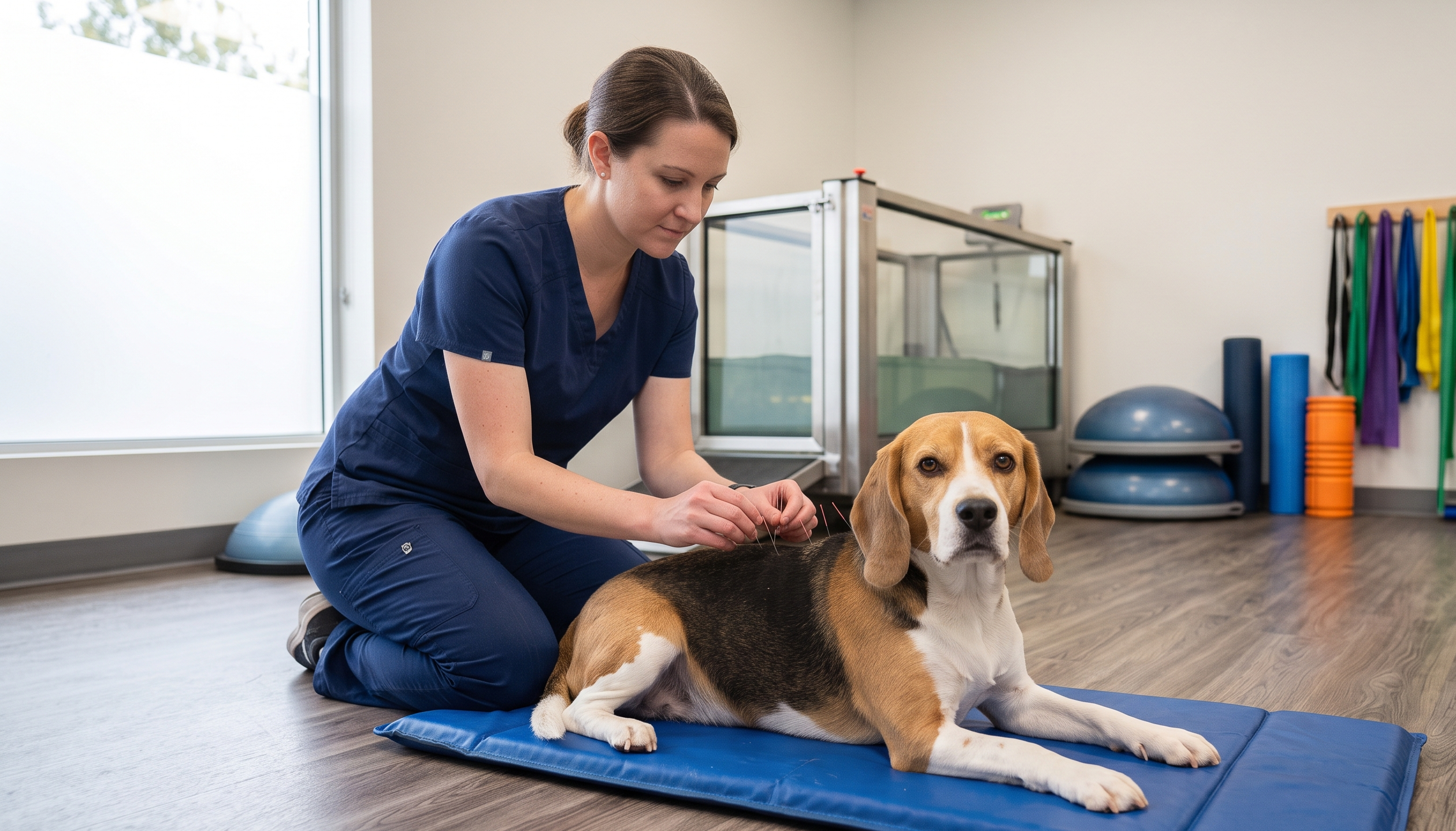
Following surgery, the patient was referred to a rehabilitation service where a structured program was initiated. Alongside conventional physiotherapy, integrative modalities rooted in Traditional Chinese Medicine were employed. These included acupuncture and supportive techniques aimed at modulating pain, reducing inflammation, and enhancing neuromuscular recovery.
The therapeutic goals were:
- Pain management: Acupuncture provided immediate analgesic effects, reducing reliance on pharmacological agents.
- Edema control: Local stimulation improved circulation and lymphatic drainage.
- Neurological recovery: Targeted points facilitated proprioceptive feedback and motor function restoration.
- Functional rehabilitation: Physiotherapy exercises reinforced muscle strength and coordination.
Clinical Outcome
Remarkably, postoperative complications resolved rapidly following the initiation of IVDD integrative veterinary treatment. Pain and edema subsided within days, and neurological function improved steadily. Within a few weeks, the patient achieved clinical discharge, demonstrating restored mobility and functional independence.
Implications for Veterinary Practice
This case illustrates several key takeaways for veterinary professionals:
- Multimodal therapy enhances recovery by addressing both physiological and neurological dimensions of disease.
- Integrative medicine can complement surgical intervention, accelerating rehabilitation and improving patient comfort.
- Early rehabilitation is critical in optimizing outcomes for spinal cord injuries.
- Evidence-based integration of complementary therapies should be considered in complex neurological cases.
Conclusion
The successful IVDD integrative veterinary treatment and recovery of this beagle underscores the value of combining conventional neurosurgical techniques with integrative therapies. For veterinary professionals managing spinal cord injuries, incorporating modalities such as acupuncture into rehabilitation protocols may significantly improve patient outcomes. As veterinary medicine continues to evolve, embracing integrative approaches offers a promising avenue for enhancing neurological and functional recovery in canine patients.