Its spring the start of another allergy season! Seasonal allergies in people usually show up as sniffling, sneezing and coughing. But canine allergies usually take the form of allergic dermatitis irritation and/or inflammation of the skin. Follow these steps to take control of his allergies.
1. FIND OUT IF HE HAS LEAKY GUT SYNDROME
The first thing I recommend for a dog with allergies is to address his diet and the possibility of leaky gut syndrome. In my experience, dysbiosis (leaky gut) is often the underlying cause of seasonal allergies that get progressively worse from one year to the next. There isnt only one leaky gut protocol for all dogs, so work with a holistic or integrative vet to put together a treatment plan for your canine. If you suspect food allergies, your vet can identify what proteins you should avoid feeding your dog with a Nutriscan saliva test.
2. TRANSITION TO AN ANTI-INFLAMMATORY DIET
Diets that create or worsen inflammation are high in carbohydrates. Your allergic dogs diet should be free of grains and potatoes, since carbs feed inflammation and yeast, a common secondary issue to allergies.
If you adhere to Chinese food principles, you will want to avoid energetically warm or hot foods during periods of inflammation. This means avoiding chicken and beef and opting for more cooling proteins such as bison or rabbit.
 Omega-3 fatty acids can decrease inflammation throughout the body. The best sources are krill, salmon, tuna, anchovy and sardine oil as well as other marine oils (e.g. squid). Cod liver oil does not provide enough EFAs for dogs; its a good source of vitamins A and D, but not essential fatty acids. Plant sources of EFAs (flax, primrose, hemp, borage oils) cant be efficiently converted to utilizable DHA, and additional sources of Omega-6 fatty acids (safflower, sunflower, canola, corn oil) should not be given to dogs struggling with skin inflammation.
Coconut oil contains lauric acid, which helps decrease the bodys production of yeast. Using fish oil with coconut oil can help moderate or even suppress the inflammatory response.
3. ASSESS HIS IMMUNE SYSTEM
Seasonal allergies are an immune system response, and one of the best ways to keep your dogs immune function optimal is by avoiding unnecessary vaccines and drugs. Vaccines stimulate the immune system, which is the last thing an allergic dog needs. Talk to your veterinarian about titers to measure his immunity to core diseases as an alternative to automatically vaccinating. If your dog must receive the rabies vaccine, I recommend you have it done during the winter, or when his allergic symptoms are
minimal.
4. CONTROL ALLERGENS
Your dogs paws and hair collect literally millions of allergens each time she goes outdoors.
Frequent baths wash away allergens and provide relief from itching and irritation. Use a grain-free shampoo. My recommendation is an organic coconut oil-based shampoo with added essential oils (such as peppermint or tea tree, which are naturally antibacterial) that has specifically been created for animals.
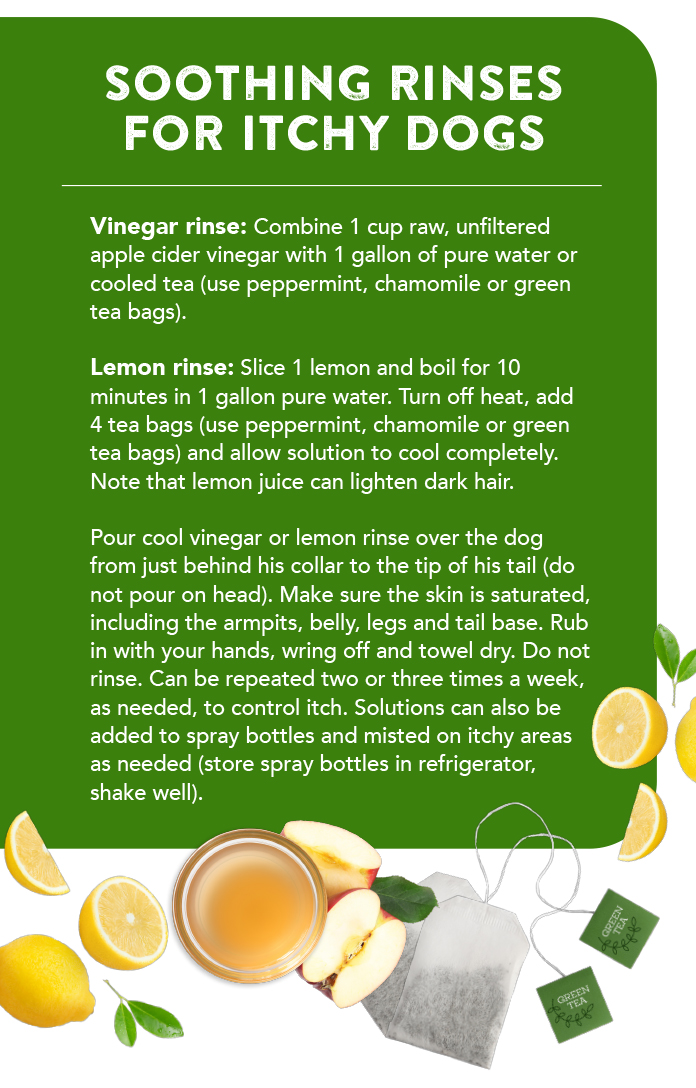
Soothing dips are under-utilized, all-natural solutions that can dramatically reduce skin irritation during allergy season. My two favorite dips are homemade vinegar and lemon rinses. See the sidebar below for my recipes.
Foot soaks reduce the allergens your dog tracks into the house. Feet are a common area of focus for allergic dogs because they sweat from their pads, creating a moist, sticky surface for allergens. If your dog is prone to licking and chewing her feet, this is a great way to reduce the potential for infected nail beds, interdigital cysts, and inflamed, swollen pads.
Set up the foot soak outside your door and walking your dog through it every time she comes indoors. This incredibly simple trick has kept many of my seasonal allergy patients off medications the entire summer. You can use my rinse recipes as foot soak solutions, or buy Povidone Iodine (Betadine) and dilute it to an iced tea color. This is especially beneficial for dogs that chew to the point of creating infections.
Eye rinses specifically for dogs can provide relief for itchy eyes. Its very important that you never use a human medicated eye drop without your veterinarians consent! Basic saline contact solution (no added ingredients) can really help reduce itchy eyes during peak allergy season.
Keep your home interior as allergen-free as possible. Vacuum and clean floors as well as dog bedding. Use non-toxic cleaning agents rather than chemical-based household cleaners. Consider investing in an air purifier to remove indoor allergens. Covering your dogs bed with dust mite covers that can be frequently washed also reduces allergen contamination.
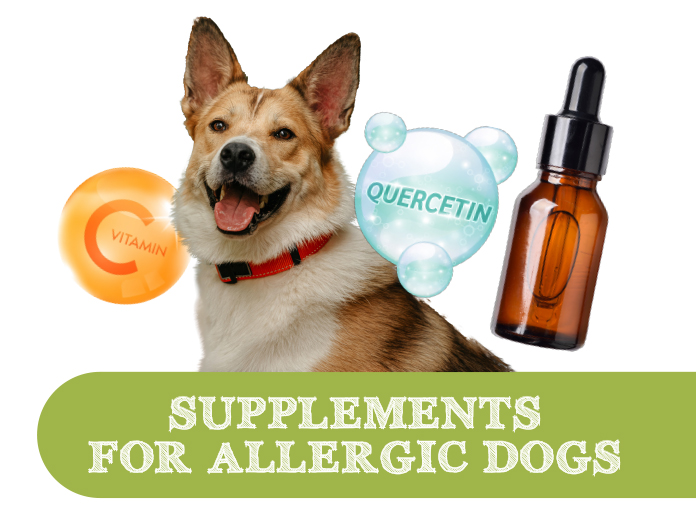
Quercetin is a bioflavonoid with anti-inflammatory and antioxidant. I call it natures Benadryl because its very effective at suppressing histamine release.
Vitamin C can also function as a natural antihistamine; dogs can tolerate higher doses of the non-acidic form, calcium ascorbate.
Bromelain and papain are proteolytic enzymes that increase absorption of quercetin, making it more effective. I like to combine quercetin, bromelain and papain because they have a great synergistic effect. They also suppress prostaglandin release, which in turn decreases the pain and inflammation of irritated mucus membranes.
Stinging nettle and butterbur are two herbs that may also be beneficial.
Homeopathics of various types are useful (they are based on your dogs individual symptoms). I frequently recommend HistoPlex-AB by Biotics Research, a blend of standardized herbal extracts with immune-modulating effects. I also use Moducare by Thorne Research to help modulate overactive immune systems.
Diffused essential oils such as eucalyptus oil can be healing to mucus membranes while lemon oil can provide airborne antioxidants that reduce your dogs internal and external inflammation. Peppermint oil is naturally astringing and lavender oil naturally soothing.
Local honey contains small amounts of pollen from the local area that can help desensitize the body to local allergens. The best place to pick up local honey is from a farmers market in your area.

A dog with allergies is usually very itchy. Hell scratch excessively. He might bite or chew at a certain part of his body. He may also rub his body against the floor or furniture. As the itching and scratching get worse, the skin often becomes inflamed and tender. There might be areas of hair loss, open sores, or sores that have scabbed over.
Your dog might develop hot spots, which are inflamed, infected areas of skin resulting from an overgrowth of normal bacteria. Hot spots can develop very quickly, and are usually red and angry-looking. They ooze pus, and often cause bleeding and hair loss.
He may have problems with his ears. The ear canals become itchy and inflamed as part of the generalized allergic response. They can also become infected with yeast and bacteria. Symptoms of a brewing ear infection include scratching at the ears, aggressive headshaking, hair loss around the ears, and a bad smell or discharge from the ears.
Allergic dogs can develop generalized redness, which means inflammation almost anywhere. They might have red puffy eyes, red oral tissue, a red chin, red muzzle, red paws, a red belly or inner thighs, and even a red anus or tail base.
Respiratory symptoms arent common in dogs with allergies, but theyre not unheard of. Your dog may have a runny nose, watery eyes, and be sneezing or coughing. Dogs with seasonal allergies to pollens, ragweed and molds also tend to develop sensitivity to other allergens. And animals with a weakness in the lung field can and bronchitis just as people do.
The more your dog is exposed to allergens he is sensitive to, the more intense and long-lasting his allergic response will become. Address potential root causes at the first sign of any type of allergic response, which usually occurs around six to 12 months of age. When symptoms are identified and addressed immediately, you reduce the risk of an escalating allergic response from one year to the next.
[su_button url=”https://facebook.com/AnimalWellnessMagazine” target=”blank” style=”flat” background=”#3b800d” color=”#ffffff” size=”8″ wide=”yes” center=”yes” radius=”0″ text_shadow=”0px 0px 0px #000000″]Visit our Facebook page for more great content![/su_button]