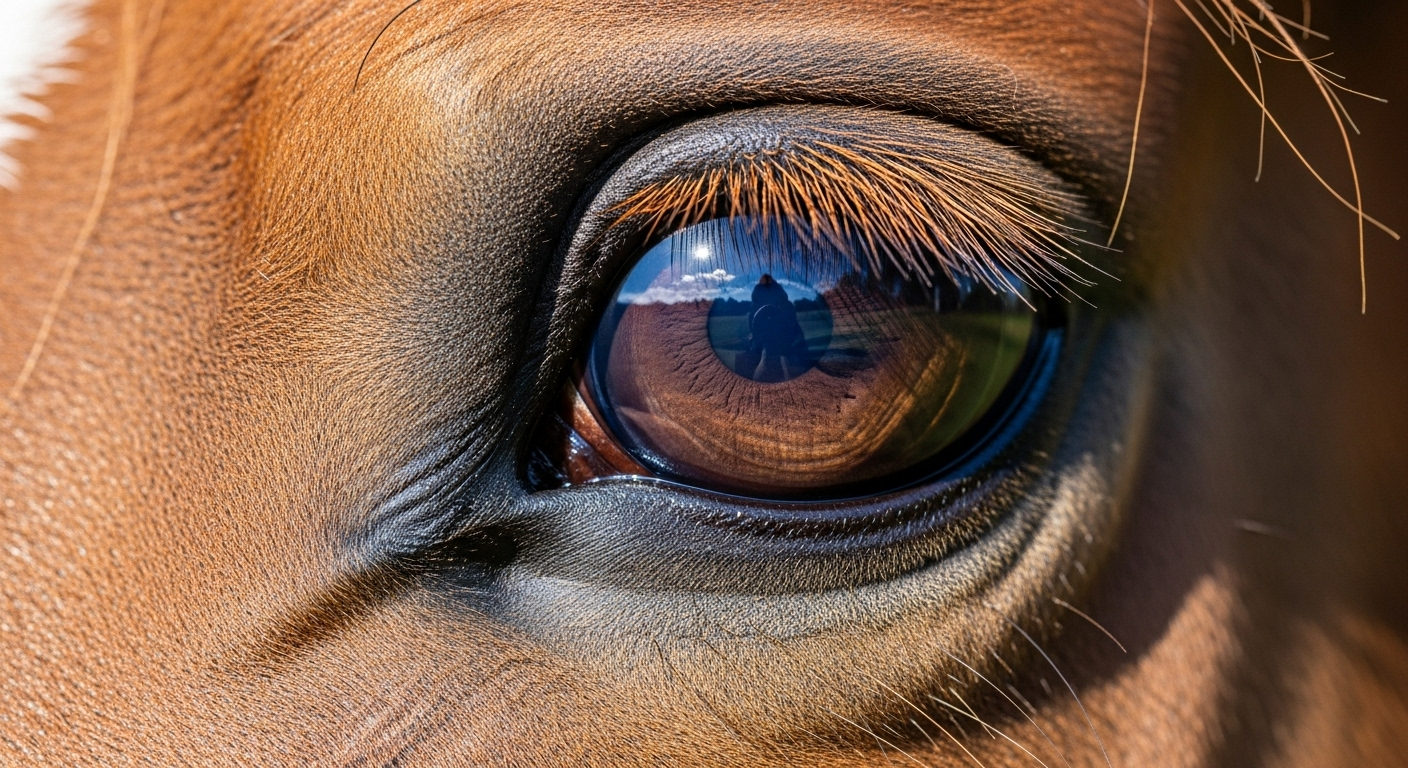
Equine recurrent autoimmune uveitis (ERAU) remains one of the most challenging conditions for veterinary professionals, often leading to blindness and significant pain in affected horses. However, a recent study from the University of Florida has introduced a novel treatment that could transform the management of this debilitating disease.
Peptide reduces inflammation in the eye
Conducted by a team of veterinary researchers, the study explores the use of a SOCS1-KIR mimetic peptide in an eyedrop formulation. This peptide works by modulating immune cell communication, effectively reducing inflammation within the eye. The initial findings have been particularly encouraging, demonstrating notable improvements in vision and a significant reduction in pain for horses treated with the eyedrops.
A targeted approach to ERAU
For veterinary professionals, this development represents a significant advancement in the treatment of ERAU. Traditional management strategies often involve corticosteroids and non-steroidal anti-inflammatory drugs (NSAIDs), which can have limited efficacy and potential side effects. The SOCS1-KIR mimetic peptide offers a targeted approach to reducing inflammation, potentially minimizing the need for more invasive treatments and improving long-term outcomes for affected horses.
The study’s authors emphasize the need for further clinical trials to validate these initial findings. These trials will provide critical data on the treatment’s efficacy, safety, and optimal dosing protocols. As the research progresses, veterinary professionals can look forward to a potential new tool in their arsenal for managing this challenging condition.
Cross-species implications
Interestingly, the mechanisms underlying the treatment’s success in horses may also have implications for human medicine. Uveitis is a leading cause of blindness in people, and the principles of immune cell regulation explored in this study could pave the way for new therapies in human ophthalmology.
Significant step forward
The development of this eyedrop treatment represents a significant step forward in the management of equine recurrent autoimmune uveitis. Veterinary professionals should monitor the progress of further clinical trials, as this treatment could offer a more effective and targeted approach to managing this condition. The potential cross-species applications also highlight the importance of continued research in veterinary medicine, driving advancements that can benefit both animals and humans. As we await the results of additional trials, the initial findings from this study provide hope for a brighter future in the treatment of ERAU.