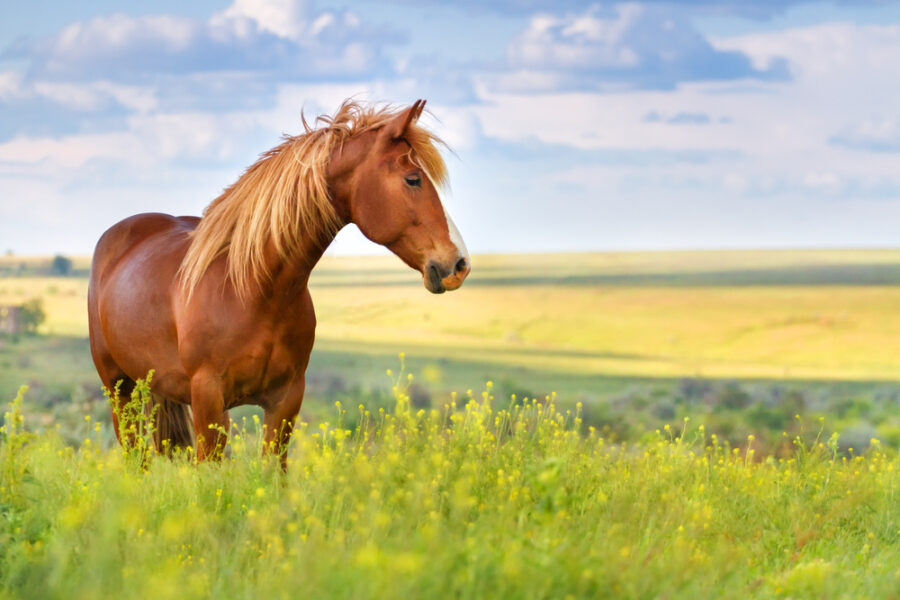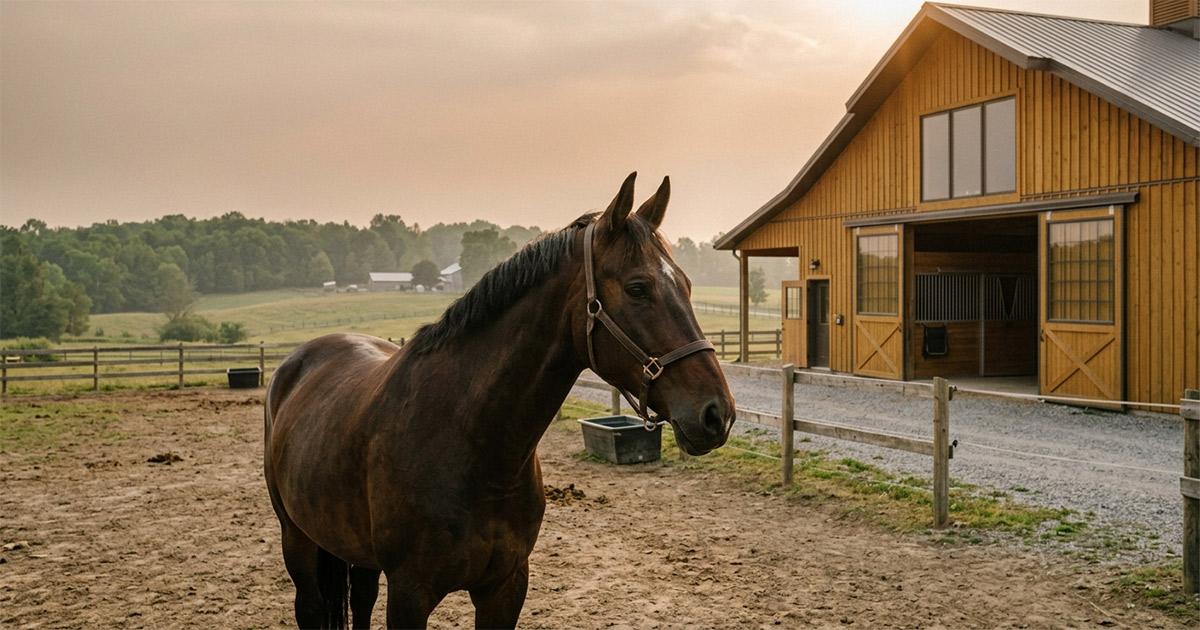
A horse’s respiratory system is remarkably efficient, allowing it to move large volumes of air during exercise. However, this efficiency also means horses are highly sensitive to airborne pollutants. Wildfire smoke, dusty barns, mold spores, and poor ventilation can all irritate the respiratory tract, reducing performance and affecting long-term health. As extreme weather events become more common and many horses spend significant time in enclosed environments, protecting equine lung health has never been more important.
By understanding common respiratory hazards and making a few management adjustments, horse owners can help their horses breathe easier throughout the year.
How Poor Air Quality Affects the Equine Respiratory System
Horses inhale significantly more air than humans, especially during exercise. At a gallop, a horse can move more than 1,500 liters of air through its lungs every minute. Along with oxygen, that air may contain fine dust particles, smoke, allergens, mold spores, and other irritants.
When these particles enter the respiratory tract, they can:
- Irritate the delicate lining of the airways
- Trigger inflammation
- Increase mucus production
- Reduce oxygen exchange
- Make breathing more difficult during exercise
Repeated exposure can contribute to chronic respiratory conditions such as equine asthma (formerly known as heaves or recurrent airway obstruction) and inflammatory airway disease, both of which can limit performance and quality of life.
Common Sources of Poor Air Quality
Many respiratory irritants are found in everyday equine environments. While some are seasonal, others are present year-round.
Wildfire Smoke
Smoke from nearby or distant wildfires contains microscopic particulate matter that penetrates deep into the lungs. Even if smoke is only visible as haze, air quality may be poor enough to affect horses.
Extended smoke exposure may cause:
- Coughing
- Increased respiratory effort
- Reduced stamina
- Eye and nasal irritation
- Worsening of existing respiratory conditions
Barn Dust
Barn dust is often a mixture of hay particles, dried manure, soil, hair, feed dust, bacteria, and other organic materials. Daily exposure can irritate the respiratory system, particularly in enclosed barns with limited airflow.
Dust levels often increase during:
- Sweeping aisles
- Feeding dry hay
- Cleaning stalls
- Moving bedding
Mold Spores
Poorly stored hay or damp bedding can develop mold that releases airborne spores. Even small amounts may trigger inflammation in sensitive horses.
Always inspect hay for:
- Musty odors
- Visible mold
- Excessive dust
- Heat damage or moisture
Early Warning Signs of Respiratory Stress
Respiratory problems often begin subtly before becoming obvious.
Watch for signs such as:
- Occasional coughing
- Nasal discharge
- Flared nostrils at rest
- Increased breathing rate
- Reduced exercise tolerance
- Longer recovery after work
- Audible breathing or wheezing
- Decreased enthusiasm during riding
If these signs persist or worsen, veterinary evaluation is recommended to identify the underlying cause before permanent airway changes occur.
Stable Management Strategies for Cleaner Air
Many respiratory issues can be minimized through thoughtful stable management.
Wetting or Steaming Hay
Hay is one of the largest sources of airborne dust inside barns.
Lightly soaking hay for 20 to 30 minutes before feeding can reduce dust particles. Hay steaming is another excellent option because it reduces respirable dust while helping preserve nutritional quality.
Avoid soaking hay for extended periods, as prolonged soaking may reduce important nutrients and encourage bacterial growth.
Improve Ventilation
Fresh air is one of the most effective ways to reduce airborne contaminants.
Good ventilation includes:
- Open windows whenever weather allows
- Ridge vents or cupolas
- Fans that circulate fresh air rather than blowing dust
- Avoiding tightly sealed barns
- Maximizing outdoor time
Air should continually exchange without creating strong drafts directly on horses.
Choose Low-Dust Bedding
Some bedding materials produce significantly less dust than others.
Lower-dust options may include:
- Dust-extracted wood shavings
- Paper bedding
- Cardboard bedding
- Hemp bedding
- Properly processed wood pellets
Avoid overly dusty straw or bedding stored in damp conditions where mold can develop.
Keep Dust Down During Chores
Simple routines can greatly improve barn air quality.
For example:
- Sweep aisles after horses are outside.
- Avoid blowing dust with leaf blowers.
- Store hay separately from stalls whenever possible.
- Clean cobwebs and accumulated dust regularly.
- Feed hay outdoors when conditions permit.
Natural Respiratory Support
Healthy lungs benefit from overall wellness, not just clean air.
Encourage Hydration
Adequate water intake helps maintain healthy mucus membranes that trap and remove inhaled particles. During hot weather or smoky conditions, ensuring horses remain well hydrated becomes especially important.
Herbal Respiratory Support
Some horse owners use herbal blends as part of a comprehensive respiratory wellness plan. Ingredients commonly included are:
- Marshmallow root
- Mullein
- Thyme
- Licorice root
- Peppermint
- Echinacea
These herbs may help soothe irritated airways or support normal respiratory function, but they should complement—not replace—good environmental management and veterinary care. Always consult your veterinarian before introducing herbal supplements, particularly for horses with medical conditions or those competing under medication regulations.
Support the Immune System
A balanced forage-based diet, appropriate vitamin and mineral intake, regular exercise when air quality permits, and stress reduction all contribute to healthy respiratory defenses.
When to Modify Workload or Turnout
During periods of poor air quality, reducing exercise may be one of the best ways to protect your horse’s lungs.
Consider modifying activity when:
- Air Quality Index (AQI) levels are elevated.
- Smoke is visible or smells strong.
- Your horse begins coughing during exercise.
- Recovery after work becomes unusually slow.
- Your horse has a history of equine asthma or respiratory disease.
On smoky days, light turnout may be preferable to strenuous training, provided outdoor air quality remains acceptable. If both indoor and outdoor conditions are poor, consult your veterinarian about the safest management approach.
Once air quality improves, gradually return horses to normal exercise rather than immediately resuming intense work.
Clean Air Supports Lifelong Health
Healthy lungs are essential for every horse, whether competing at the highest levels or enjoying quiet trail rides. By reducing exposure to dust, smoke, and mold while improving ventilation and supporting respiratory wellness through good nutrition and hydration, horse owners can significantly reduce the risk of chronic airway problems.
Small changes in daily management often make the biggest difference. Cleaner air not only improves performance but also helps horses breathe comfortably throughout every stage of life.