Horses are intelligent, social, and highly active animals. In the wild, they roam vast distances, graze for up to 18 hours a day, and live in herds. When we place them in stables, we ask them to live in a way that is far removed from their natural lifestyle. It should come as no surprise, then, that many stabled horses develop signs of stress — and in some cases, full-blown stereotypic behaviors, commonly known as stable vices.
As equine veterinarians and horse health professionals, understanding the why behind these behaviors — and how integrative strategies can help — is increasingly important to delivering whole-horse care.
What Are Stable Vices and Why Do They Develop?
Stable vices are repetitive, abnormal behaviors that horses develop largely in response to stress, boredom, and an environment that fails to meet their behavioral needs. These include:
- Crib-biting and wind-sucking
- Weaving and stall walking
- Pacing and circling
- Head shaking, tongue flicking, and teeth grinding
- Self-mutilation and coprophagy
According to veterinary data, stereotypic mares have even shown lower mating success compared to non-stereotypic mares, highlighting that these behaviors carry real physiological consequences — not just behavioral ones.
Once established, stable vices are notoriously difficult to eliminate. This makes prevention through enrichment and stress reduction a priority, rather than an afterthought.
The Role of Environmental Enrichment
Environmental enrichment is one of the most evidence-supported, low-risk interventions available for stabled horses. The goal is simple: give horses more opportunities to engage in natural behaviors.
Practical enrichment strategies include:
- Ad libitum forage access — Providing hay continuously mimics natural grazing patterns and reduces boredom-driven behaviors significantly
- Social contact — Even visual or tactile access to other horses can dramatically reduce anxiety
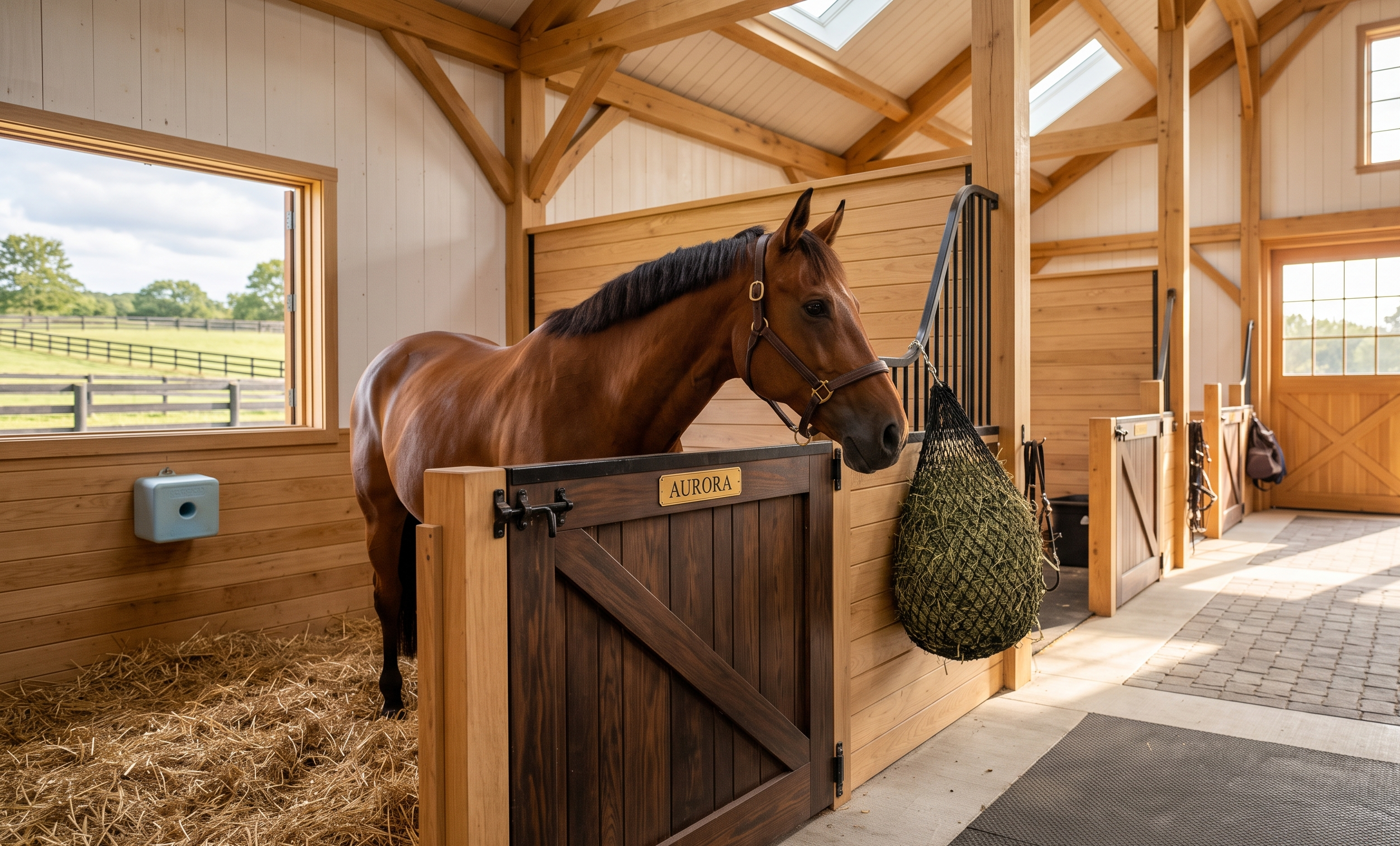
- Foraging toys and feeders — Slow feeders, hay nets, and treat-dispensing toys encourage natural foraging behavior
- Turnout time — Regular, daily turnout remains one of the single most effective interventions for reducing stable vice frequency
- Varied stable environments — Mirrors, windows with outside views, and safe objects to interact with have shown benefit in reducing weaving and stall walking
Bodywork and Manual Therapies
Integrative bodywork modalities are gaining traction in equine practice as complementary tools to support horses dealing with chronic stress and tension.
- Massage therapy — Helps relieve muscle tension that often accumulates in stressed horses, particularly in the neck, back, and hindquarters
- Acupuncture — Growing evidence supports its use in managing musculoskeletal pain and supporting nervous system balance in horses
- Laser therapy (Photobiomodulation) — Increasingly used for tissue healing and pain reduction, with broader calming effects reported in clinical settings
- Physical rehabilitation — Structured, low-stress movement programs support both physical recovery and mental stimulation
Routine, Predictability, and Human Interaction
Behavioral science tells us that predictability reduces anxiety across species. Horses thrive on consistent schedules for feeding, turnout, grooming, and training. Unpredictable handling or abrupt schedule changes can trigger or worsen stress responses.
Positive, low-stress human interaction — including gentle grooming and ground work — also builds trust and provides valuable mental stimulation.
A Note for Clinicians
When a horse presents with stereotypic behaviors or signs of stress-related illness, a thorough clinical workup remains essential. Underlying pain, gastrointestinal issues, or hormonal imbalances may be contributing factors that must not be overlooked.
Always encourage horse owners to work closely with their veterinarian when developing a behavioral enrichment or stress-reduction plan tailored to their individual horse.
The well-being of the whole horse — mind and body — is at the heart of excellent equine veterinary care.