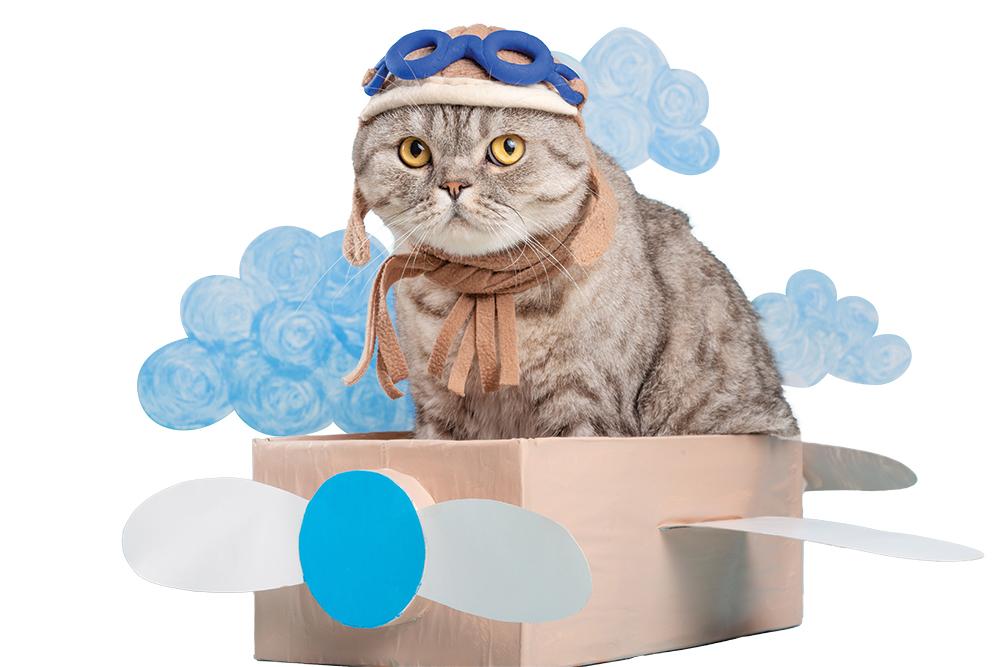
Check out these essential tips for traveling with cats, whether moving or on holiday. Keep your feline friend healthy, safe, and stress-free.
We don’t often associate cats with travel. However, many people take their feline friends with them on holiday. Others need to make travel arrangements for their cats if they’re moving to another state or country. Cats are creatures of habit, though, and not as sociable as dogs. So you need to factor in some special considerations so your cat stays as stress-free and safe as possible. Read on for a comprehensive guide to traveling with cats.
1. Give priority to your cat’s health and diet when traveling
- In most cases, you should keep your cat on the same diet she eats at home. This helps prevent gastrointestinal upsets such as diarrhea. You’ll need to pack her regular food to take with you. The same applies to any supplements she might be taking.
- Veterinarian Dr. Michelle H. Heyer suggests you add a probiotic to aid with digestion.
- Be sure your cat also has access to fresh, clean water while traveling — it’s important that she stays hydrated.
- It’s a good idea as well to talk to your integrative or holistic veterinarian about natural remedies for anxiety or motion sickness. Flower essences, for example, are a safe and effective way to help calm a stressed cat.In addition, pheromones in the form of wipes, collars, diffusers and sprays can help your cat feel more relaxed.
2. Ensure your cat’s safety if you’re flying
If you’re traveling by air, it’s important to do your homework to ensure your cat has a safe and healthy trip.
- Find out what vaccinations will be required for your cat. Most airlines require you to provide health certificates for companion animals traveling internationally, so you’ll need to make sure her rabies vaccines are up to date.In the case of other core vaccines, if your cat receives titer tests instead of annual boosters as a way to avoid over-vaccination, check with the airline and your destination to ensure they accept these tests instead of vaccines.The US (excluding Hawaii and Guam), most European countries (including the UK), and most countries in South America don’t require cats to be quarantined upon arrival from a foreign country.
- Check to make sure your cat will be allowed to travel in the cabin with you, and not in the cargo hold.“Most airlines have become pretty responsible about [pet travel],” says Dr. Heyer. “Obviously, we have seen articles about situations where that hasn’t been the case, but I do think they have become increasingly sensitive.”She adds that her practice often receives inquiries about helping a person attain emotional support animal status for their cat (or dog), so they can fly in the cabin rather than in cargo.
“This actually has to go through your human physician – it’s really nothing to do with your veterinarian,” she advises. Keep in mind that while service dogs are eligible to fly for free, this isn’t the case for emotional support animals.
Consider that while many airports have pet relief areas, cats may not wish to use them due to the presence of dogs.
“Dogs tend to want to smell and pee in those areas,” Dr. Heyer notes. “Cats are much more fastidious and want their own private, clean bathrooms.” This means bringing along a portable travel litter box with leak-proof and odor containment features.
- Ensure your cat has a comfortable, good quality and well-ventilated carrier to travel in – and that it’s clearly and properly labeled.Choose a durable, well-made carrier with reliable fasteners, and equip it with the comforts of home, such as a familiar blanket a favorite toy or two, and holders for food and water bowl.Draping the carrier with a towel can provide extra security if your cat shows signs of being stressed by her surroundings. A few drops of Rescue Remedy on her blanket can also help.
If you’re going to let your cat out of the carrier at ay point, you’ll need to put her on a leash and harness. Try this out with your cat at home beforehand to make sure she’ll accept a harness and not try to get loose.
3. Plan ahead when traveling with your cat in the car
- Depending on where you’re going, you’ll need to plan ahead and make sure the stops you make along the way, be they hotels, B&Bs, restaurants, etc., are going to allow your cat. More accommodations are becoming animal-friendly, but not all of them.“I think the world has come a long way in offering dog-friendly places, but there aren’t as many cat-friendly locales,” says Dr. Heyer.
- Consider what your cat will be comfortable with.“Dogs are more likely to be the outgoing animals that want to explore,” says Dr. Heyer. “There aren’t a lot of outgoing cats who would want to sit in a restaurant chilling at your feet while you’re eating dinner.”
- In the car, an oversized carrier could help your cat feel less confined, but be sure it’s properly secured in case of an accident. Again, equip it with a blanket and some favorite toys to help her feel more at ease.
- It should go without saying that you should never leave your cat alone in the car, regardless of where you are or what time of year it is.
You may find that traveling with cats is more challenging than traveling with dogs. But by taking the right precautions, and making accommodations for your kitty’s comfort, safety and well-being, she may eventually become a seasoned traveler who enjoys the occasional change of scene!
Traveling with cats: a moving tale
In 2022, Brandi Webber moved her family (including her spouse, two children and three cats) from the American Midwest to Scotland. She opted to use a company that provided door-to-door transport for her cats.
The felines traveled from Iowa to Chicago by car, then from Chicago to Amsterdam via plane. They were then flown from Amsterdam to Glasgow, where they were driven the rest of the way to Aberdeen.
“They couldn’t travel longer than eight hours at a time,” says Brandi. “They flew in the cabin and not the cargo hold, and there was a 24-hour line I could call to get updates.”
Services like these can also provide animal parents with photos and videos plus documentation about when they slept, ate, etc.
When you move from one country to another, you must know that some countries require a USDA-endorsed (countersigned and embossed/stamped) health certificate from an accredited veterinarian. Planning early is key because this process can take months.
“The transport service handled all the paperwork — we just had to take the cats to the vet for the documentation,” Brandi says, “And because they followed the rules so stringently, the cats didn’t have to be quarantined when they arrived — they got to come straight home.”
Look after yourself too when traveling!
Cats are very sensitive, and can pick up on the emotions of those around them. So when you’re stressed, sleep-deprived, or running on empty while traveling, your cat will sense it and experience more stress and anxiety.
It’s important to make time for self-care on your travels, both for your sake and your feline companion’s.