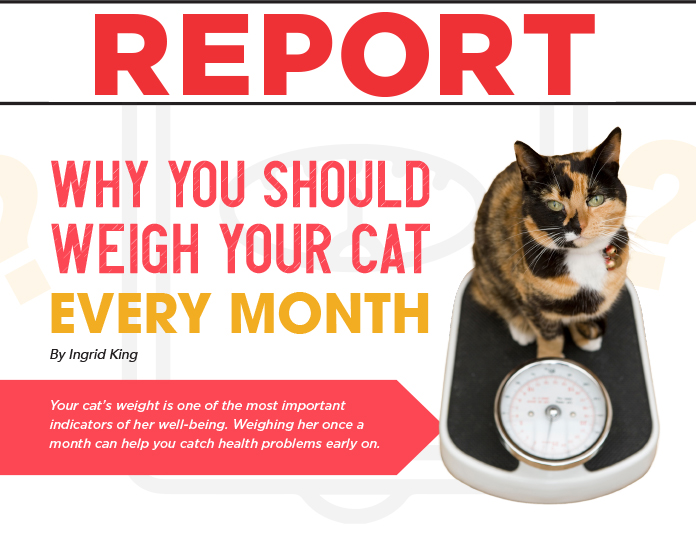
Did you know that your cats weight is one of the most important clues to her state of health? Weight loss or gain can be early warning sign of illness, but if it happens gradually it can be difficult to recognize. Annual or bi-annual weigh-ins at your cats wellness exam may not be enough to catch these changes, so weighing your cat once a month at home can help prevent problems from going undetected until theyre in more advanced stages.
WHY VISUALLY ASSESSING WEIGHT ISNT ENOUGH
You may have seen those charts that encourage you to monitor your cats weight by assessing body shape and muscle condition. While these charts are useful tools and work well to determine whether your young or middle-aged cat is at an ideal weight, and while muscle condition is an important indicator of body condition, they have their limitations, especially in older cats. You will find fat cats with low muscle condition scores, says feline veterinarian Dr. Elisabeth Colleran, and you will start feeling bones in cats that are still overweight if theyre starting to lose muscle mass.
 WEIGHT LOSS AS AN INDICATOR OF DISEASE
Nearly all chronic diseases that creep up on cats cause insidious weight loss, says Dr. Andrea Tasi, a holistic veterinarian. In fact, she considers weight the fourth vital sign. Temperature, pulse, and respiration are very valuable for assessing any patient in an acute situation, but for really tracking the chronic health status of a cat over time, there is nothing more valuable than weight.
Conditions such as diabetes, kidney disease, hyperthyroidism, gastrointestinal issues, and cancer all cause weight loss, often at a slow and gradual pace, so that by the time a cat parent notices it, the disease may already be in its advanced stages.
If you are weighing your cat every month, however, you will pick up on this trend long before your cat may show any other symptoms. A cat who is losing weight with no change to her diet or exercise levels requires veterinary attention as soon as possible.
Monitoring your cats weight is also important after youve received a diagnosis of illness from your veterinarian. Alerting your veterinarian to weight changes in between appointments will allow him or her to adjust treatment plans and medications or perform additional diagnostics if needed.
HOW TO WEIGH YOUR CAT
A common recommendation is to weigh yourself on a human scale, then weigh yourself while holding your cat and subtracting the difference. Another method that is often suggested is to weigh your cats carrier, then weigh it with the cat inside and again subtract the difference. However, neither of these will yield results that are accurate enough.
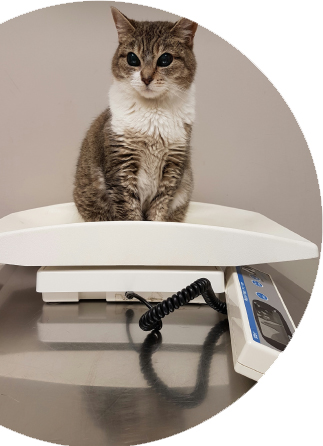
The best way to weigh your cat is to purchase an inexpensive digital scale designed for babies, available at many retail stores or online. These scales measure pounds and ounces
accurately and are easy to use. Since most cats will be suspicious if theyre lifted off the ground and onto a scale, the best thing to do is set the scale on a hard floor (it wont read accurately on carpet) and let your cat slowly and gradually get used to it before actually placing her on it. You dont want her to associate being weighed with something unpleasant, so be patient.
Weighing your cat regularly lets you notice the little losses or gains that you might otherwise not notice, says Dr. Tasi. By checking your kittys weight once a month and keeping a written record of it, you can track any changes over time and catch potential issues before they become serious problems.
[su_button url=”https://facebook.com/AnimalWellnessMagazine” target=”blank” style=”flat” background=”#ec1419″ color=”#ffffff” size=”8″ wide=”yes” center=”yes” radius=”0″ text_shadow=”0px 0px 0px #000000″]Visit our Facebook page for more great content![/su_button]