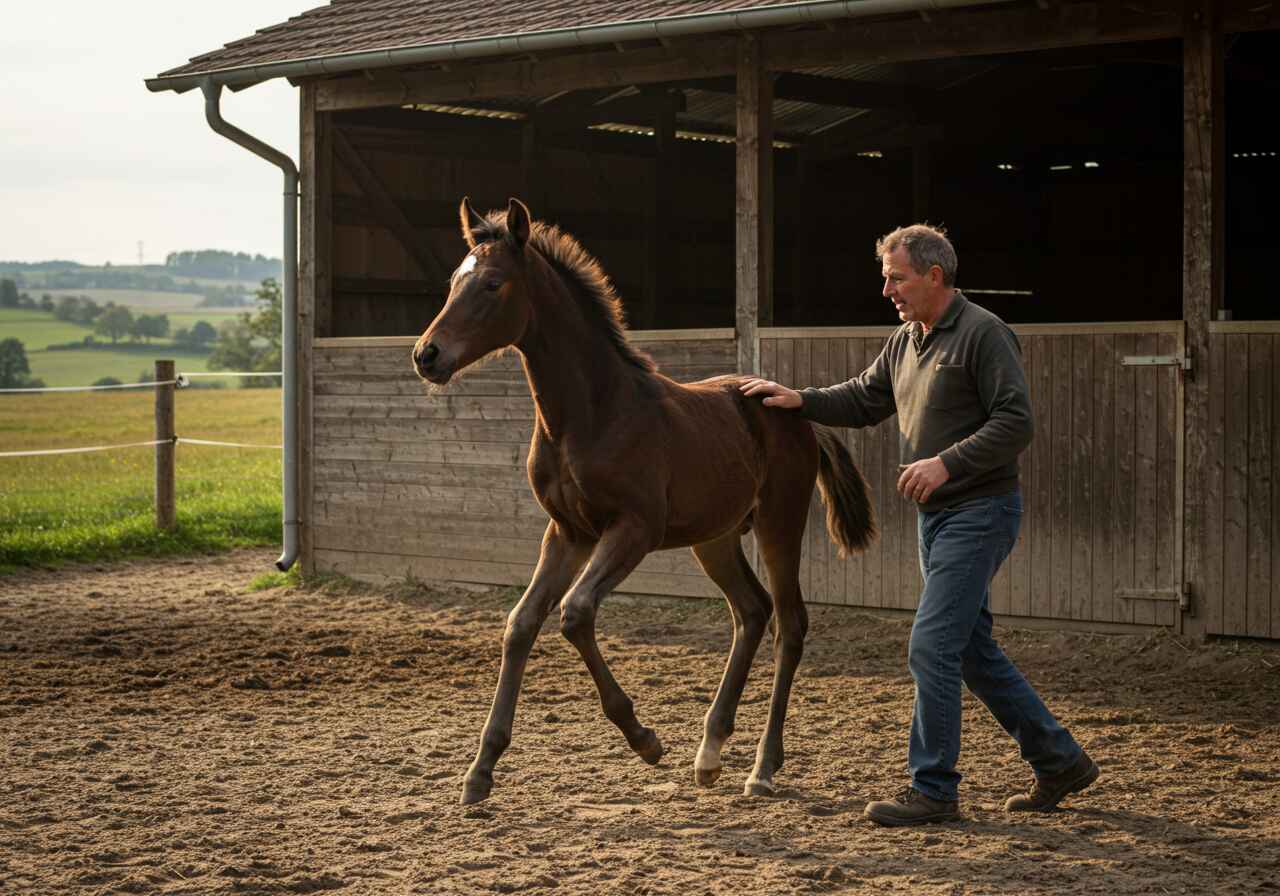
Training a foal starts early. A young horse learns fast. What you teach in the first few months shapes how the foal behaves as an adult. You do not need to rush. You only need to be consistent, kind, and patient.
This guide will walk you through simple steps to start training your foal. The language is clear. The process is easy to follow. The results build a safer, smarter horse.
Start With Trust
Trust is the basis of good training. If your foal fears you, learning stops. Begin by spending time near your foal. Do not force contact. Let the foal get used to your voice, smell, and movement.
Stand nearby. Speak softly. Move slowly. Let the foal come to you. This builds trust without fear.
Pet gently on the neck or withers. Avoid fast moves or loud sounds. Keep the mood calm. Your goal is for the foal to feel safe around people.
Handle Your Foal Daily
Start short sessions each day. Even five minutes helps. Touch the foal all over its body. This helps your foal accept handling later in life.
Touch the legs, belly, ears, and tail. At first, the foal may move away. Be calm. Wait. Try again. Soon, the foal will stand still.
Lift each hoof gently. Hold for a second. Put it down slowly. This prepares the foal for farrier work.
Also, practice brushing. Use a soft brush. Move it in short strokes. Praise the foal after each step. This builds a calm routine.
Introduce the Halter
A halter is one of the first tools a foal will wear. Do not rush this step. Let the foal sniff it. Touch the halter to the body. Rub it on the neck and cheek. Then, slide it on.
Do not yank or pull. Use treats or soft praise if needed. Keep the halter on for short times in the beginning. Then slowly increase the time.
Watch for rubbing or discomfort. Adjust the fit if needed. A foal should not fear the halter. It should mean good things, like praise and care.
Teach to Lead
Leading is a core skill. Begin in a safe, small area. Attach a short lead rope. Stand beside the foal, not in front.
Apply gentle pressure forward—reward even one step. Then stop. Let the foal think. Try again.
Never pull hard. Do not get upset. Small wins matter. ISupposethe foal moves forward, praise or give a scratch on the neck. Repeat often.
Practice stopping, turning, and backing up. Make it a game. Let the foal enjoy the learning.
Desensitize to Touch and Movement
Foals can be jumpy. That’s normal. Your job is to teach calmness. Use soft objects to touch the foal. Try ropes, plastic bags, or towels.
Rub them on the body. Let the foal sniff first. If the foal jumps, stay calm. Try again. Do not stop just because the foal is scared. Finish when the foal stands still.
You can also move around the foal. Walk in circles. Touch the back. Move arms up and down. The more the foal sees and hears, the braver it becomes.
Teach Boundaries and Respect
Foals are playful. Sometimes they bite or push. This must stop early. Teach respect with body language. Step into their space if they crowd you. Tap the shoulder or chest gently to ask for space.
Do not hit. Do not yell. Stay firm and clear. Reward good behavior. Correct small issues fast before they grow.
A respectful foal is easier to train later.
Introduce New Places
Once your foal is calm on a lead, explore new areas. Walk around the barn. Go to the pasture. Visit different stalls.
Let the foal learn that new places are safe. This prevents fear in the future. It also builds confidence.
Always lead with care. Stay alert. Let the foal stop and look. Do not rush. Patience now avoids stress later.
Practice Trailer Loading Early
You can teach trailer basics while the foal is young. Do not load fully yet. Just lead near the trailer. Let the foal sniff and look.
Place a treat or hay near the ramp. Walk near the ramp often. Let the foal get used to the space. Later, you can walk up the ramp together for short times.
This step saves time when the foal is older and needs to travel.
Set a Routine
Foals thrive on routine. Try to train at the same time each day. Keep your voice tone the same. Use the same tools and space when possible.
Predictability helps the foal feel safe. It also speeds up learning. Short and regular sessions work better than long ones once a week.
Know When to Stop
Always end on a good note. If the foal does something well, stop. Give praise. Walk away. That last moment sticks in their memory.
If the foal gets tired or upset, pause. Let them rest. Start again later. Do not fight. Training should feel like a win, not a war.
Monitor Health and Growth
Training only works if the foal feels well. Watch for signs of illness. Check the feet, skin, and eyes often. Make sure the foal eats and drinks well.
Growth stages may cause soreness or clumsiness. Go easy during growth spurts. Ask a vet if you see signs of pain or odd movement.
A healthy foal learns faster and behaves better.
Training a foal is just the start. If you want to go deeper into animal care and handling, you can check our online pet courses that are made for people who care about their pets. Here you’ll learn safe, clear, and kind methods that build trust and results. Whether you’re new or experienced, there’s a course for you.
FAQs:
When should I start training a foal?
You can begin basic training within the first week of life. Early lessons focus on gentle handling, building trust, and helping the foal get used to human touch. Keep sessions short, calm, and positive.
How long should foal training sessions be?
In the beginning, five to ten minutes is plenty. Young foals have short attention spans, so it’s better to keep lessons brief and repeat them regularly. As the foal matures, you can gradually extend the time.
What if my foal bites or kicks?
Stay calm and avoid reacting with anger. Step back to create space, then correct the behavior with a firm but gentle response. Never hit or yell—clear boundaries and consistency work much better.
Can I use treats during foal training?
Yes, but use them wisely. Treats are great for rewarding calm behavior or correct responses, but don’t rely on them too much. The goal is to teach, not bribe.
Is it okay to skip a day of training?
Yes. Missing a day won’t hurt, but consistency is key. Short, regular sessions help your foal feel safe and make it easier for them to remember lessons.
What does a foal training timeline look like for beginners?
Here’s a simple guide:
- Birth to 2 months: Gentle handling, grooming, and getting comfortable with human contact.
- 2–6 months: Introduce halter training and leading.
- 6–12 months: Practice tying, picking up feet, grooming, and basic groundwork.
Every foal is different, so adjust based on their maturity and temperament.
When should I start halter training a foal?
Many owners start halter training around 2–3 months old, when the foal is strong enough to handle it calmly. Some introduce it earlier with short, gentle sessions. The key is patience and gradual progress.
How do you train a foal to lead?
Begin in a small, safe area. Apply light pressure on the lead rope and release it as soon as the foal takes a step forward. Praise immediately. Keep lessons short and end on a positive note.
What equipment do I need for foal training?
Start simple: a well-fitted foal halter, a lightweight lead rope, and a safe enclosed space. A basic grooming kit is also useful to get them comfortable with handling. Avoid heavy or restrictive gear.
Are there good foal training books for beginners?
Yes. Many equine experts have written step-by-step guides on foal handling, groundwork, and positive reinforcement. These can be a great resource if you’re new to horse training.
Final Words:
Training a foal doesn’t have to feel overwhelming. Start with short, gentle sessions that focus on trust, consistency, and the basics like haltering and leading. Use simple equipment, stay patient, and always reward calm behavior. Over time, these small steps build the foundation for a confident, respectful horse and a strong bond between you both.