

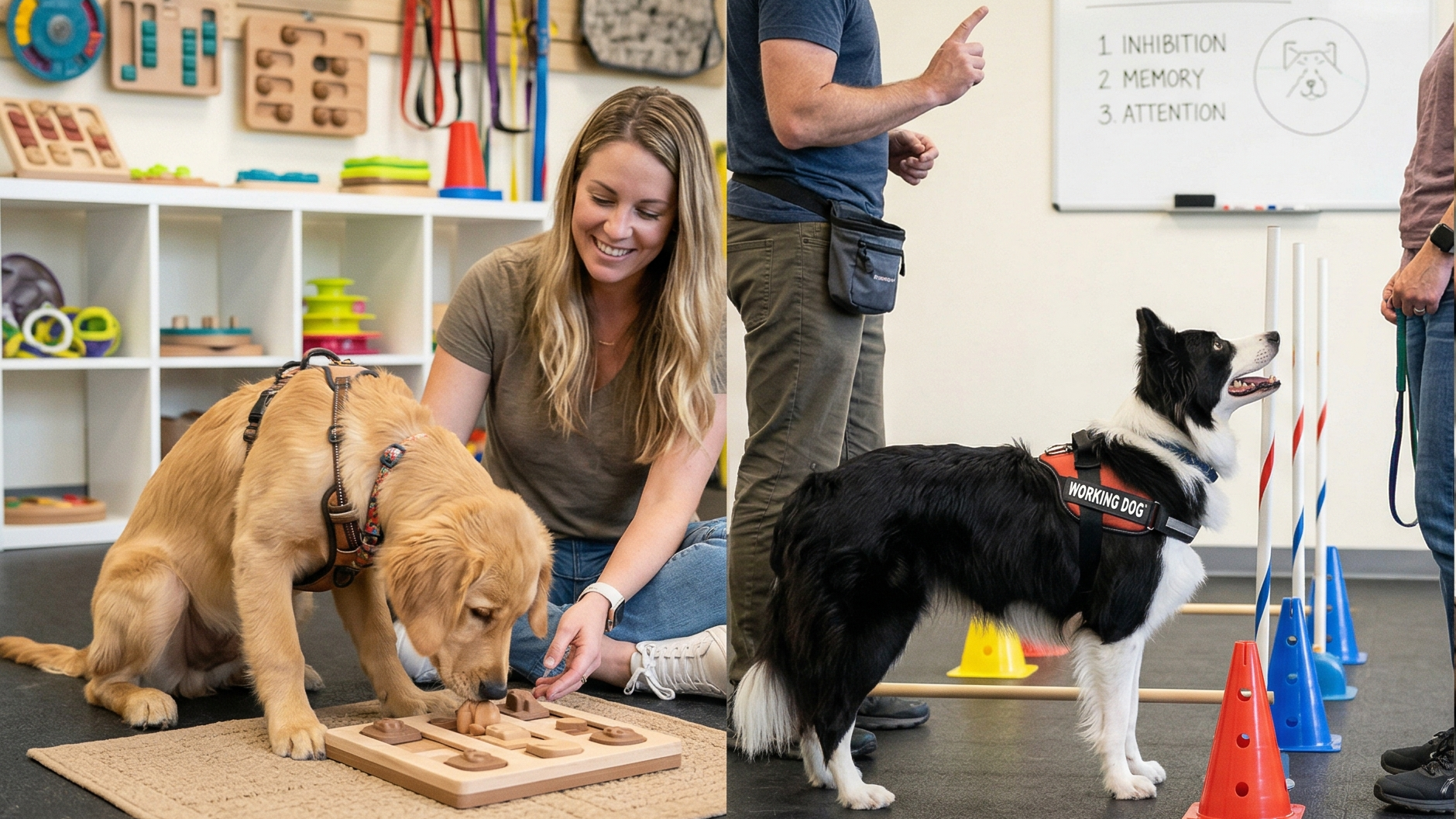
Dogs, like humans, rely on Executive Functions (EFs)—cognitive skills such as inhibition, working memory, and attention—to regulate their behavior. These abilities are critical for training, problem-solving, and adapting to complex environments. A recent study examined whether the Dog Executive Function Scale (DEFS), originally developed for adult dogs, could also be applied to juvenile (<1 year) and senior (>8 years) dogs. The findings provide valuable guidance for veterinary professionals working with dogs across all life stages.
Study Overview
- Tool Used: The Dog Executive Function Scale (DEFS), a behavioral rating questionnaire completed by owners.
- Aim: To determine whether EF components identified in adult dogs also apply to young and old dogs.
- Method: Confirmatory factor analysis of juvenile and senior dog samples.
Key Findings
- Consistency Across Ages: The DEFS structure was valid for young, adult, and old dogs, meaning EF can be assessed across the lifespan using the same scale.
- Lifespan Development:
- Working Memory & Attention: Showed a U-shaped trajectory—improving in early years, then declining with age.
- Inhibition: Displayed complex age-related patterns. For example, Delay Inhibition declined in older dogs, while Motor Regulation increased.
- Training Effects: Dogs with more training, and working dogs in particular, demonstrated stronger EF skills regardless of age.
- Working vs. Non-Working Dogs: Training history was especially important for non-working dogs, while working dogs consistently showed high EF due to their intensive training.
Implications for Veterinary Practice
- Behavioral Assessments: EF evaluation can help veterinarians better understand age-related changes in cognition and tailor advice for training, enrichment, and welfare.
- Training Recommendations: Encourage owners to engage in varied training activities throughout a dog’s life. Training supports EF development and maintenance, even in senior dogs.
- Working Dogs: Recognize that working dogs typically have enhanced EF due to structured training, which may influence their resilience to age-related decline.
- Owner Guidance: Educate pet owners that cognitive skills are not static—dogs benefit from lifelong mental stimulation, just as humans do.
Conclusion
This study confirms that executive functions in dogs can be reliably assessed across all life stages using the DEFS. While working memory and attention follow a predictable rise-and-fall pattern, inhibition shows more nuanced age-related changes. Importantly, training plays a crucial role in supporting EF, particularly for non-working dogs. For veterinary professionals, these findings highlight the importance of promoting ongoing training and enrichment as part of comprehensive canine care, ensuring dogs remain cognitively engaged and behaviorally regulated throughout their lives.