

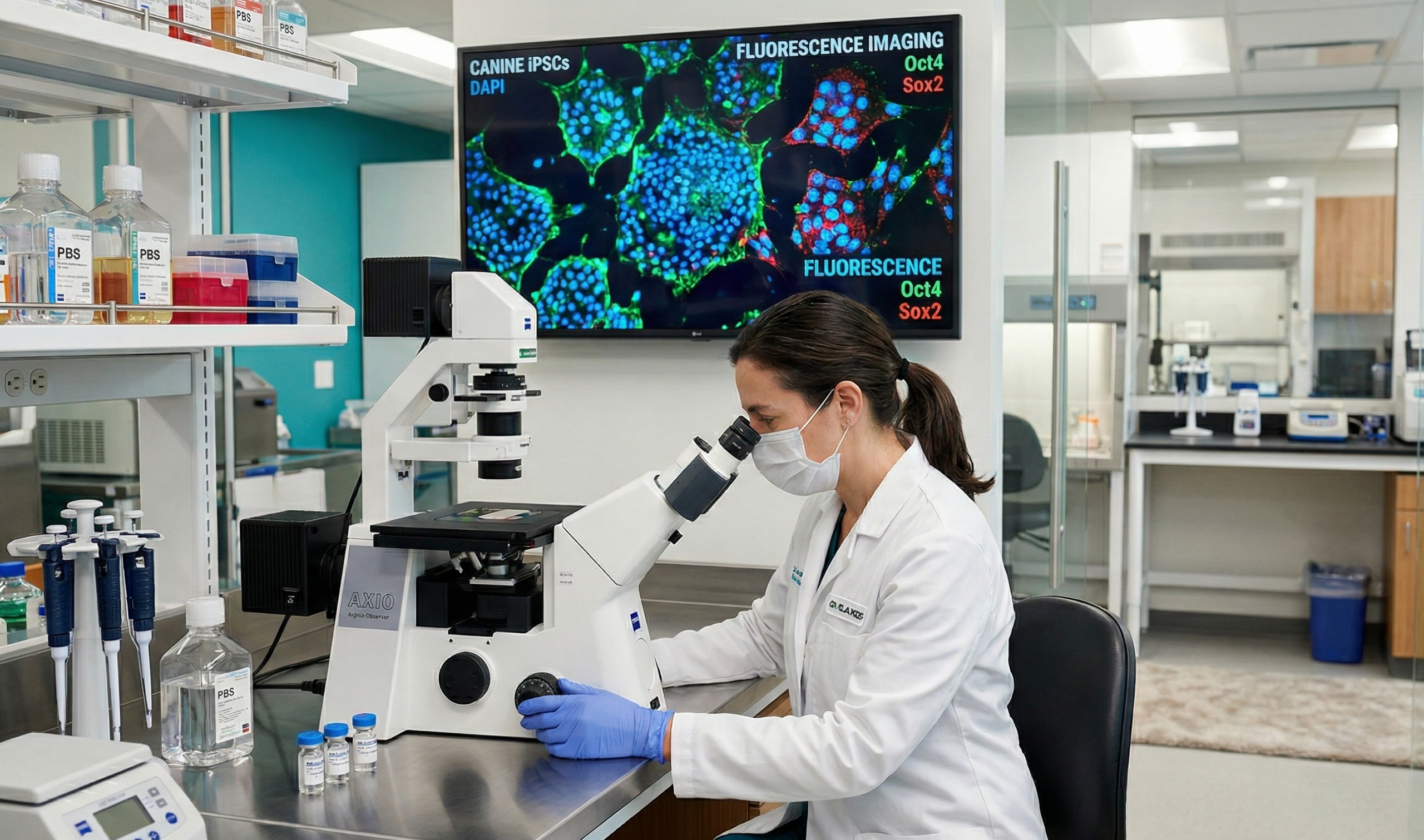
Veterinary professionals may soon have a powerful new tool in their therapeutic arsenal. Researchers publishing in Stem Cell Reports (October 2025) have shown that modifying culture conditions with targeted signaling pathway regulation enhances the stability and differentiation capacity of canine induced pluripotent stem cells (iPSCs). This breakthrough addresses one of the long-standing challenges in veterinary stem cell science: the limited ability of canine iPSCs to reliably generate diverse cell types for clinical use.
iPSCs hold promise for treating a wide range of conditions in companion animals, from spinal cord injuries and degenerative joint disease to cardiac and neurologic disorders. However, until now, canine iPSCs have struggled with inconsistent differentiation, limiting their translational potential. By refining the culture environment, the new approach improves pluripotency maintenance and expands the repertoire of cell types that can be generated. For veterinarians, this means the possibility of more robust regenerative therapies tailored to dogs — therapies that could one day parallel advances already being explored in human medicine.
The study found that adjusting pathways critical to pluripotency improved the stability of canine iPSCs in culture. Cells demonstrated greater capacity to differentiate into multiple lineages, including neural and mesodermal derivatives, while variability was reduced compared to previous methods. These improvements minimize inconsistencies that have historically hampered reproducibility in canine stem cell research.
Although the research remains preclinical, its implications are profound. Potential applications include spinal cord injury and degenerative myelopathy in neurology, cartilage and bone regeneration in osteoarthritis cases for orthopedics, and myocardial repair in canine heart disease for cardiology. Because dogs serve as translational models for human disease, these findings also strengthen the bridge between veterinary and human regenerative medicine.
Despite the promise, several hurdles remain before clinical adoption of canine iPSC regenerative therapy. Safety concerns must be addressed to ensure iPSC-derived therapies do not carry tumorigenic risks. Regulatory frameworks for veterinary stem cell therapies are also still evolving.


