

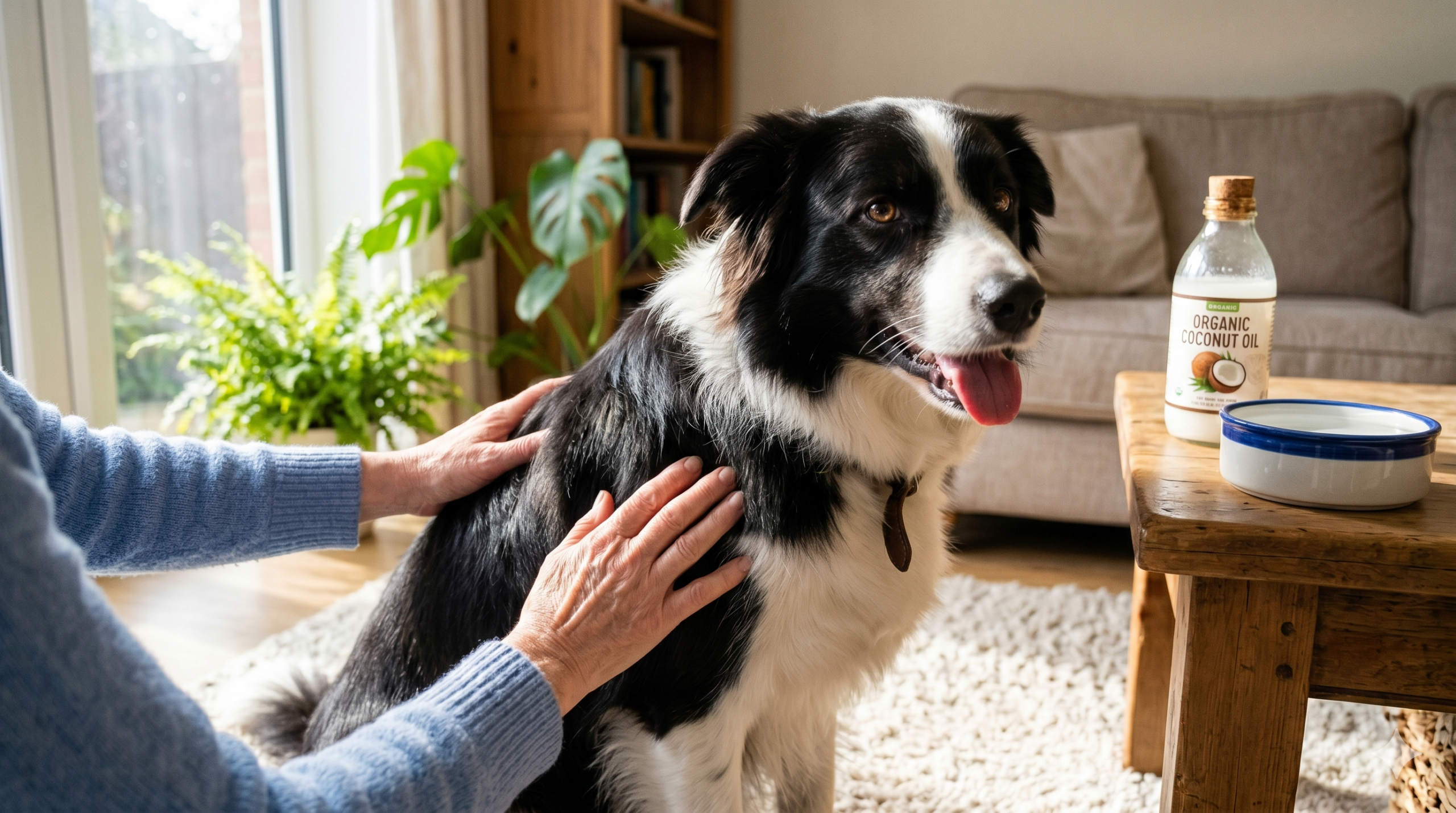
If you’ve noticed white flakes on your dog’s coat or furniture, you’re likely dealing with canine dandruff. While this condition is usually not serious, it can be uncomfortable for your furry companion and may signal underlying health issues that need attention.
Understanding Dandruff in Dogs
Dandruff appears as small, white or gray flakes of dead skin that shed from your dog’s coat. This happens when the skin becomes too dry or when skin cells regenerate faster than normal. Your dog might scratch more than usual, and their coat may look dull or feel rough to the touch.
Natural Approaches to Managing Dandruff
Coconut Oil: The fatty acids in coconut oil can help moisturize dry, flaky skin, which is often the root cause of dandruff. When skin is better hydrated, it produces fewer flakes. Whether applied topically or added to food in small amounts, it may help reduce the dryness that leads to dandruff.
Apple Cider Vinegar: When diluted and used as a rinse, it may help balance the skin’s pH levels. This can be beneficial because an imbalanced pH can contribute to flaky, dandruffy skin. However, it’s important to dilute it properly to avoid irritating the skin further.
Oatmeal: Colloidal oatmeal is particularly good at soothing irritated skin and reducing inflammation. While it’s excellent for itchiness, it also helps moisturize the skin, which can reduce flaking and dandruff. Oatmeal baths or shampoos containing oatmeal can be helpful for pets with dandruff.
Nutrition Matters: A healthy diet is your first line of defense. Foods rich in omega-3 and omega-6 fatty acids can significantly improve skin health. Consider adding fish oil supplements to your dog’s meals, but always check with your veterinarian first about proper dosing for your dog’s size.
Regular Grooming: Brushing your dog daily helps distribute natural oils throughout their coat and removes dead skin cells before they become visible flakes. This simple practice improves circulation to the skin and keeps the coat healthy.
Bathing Balance: While keeping your dog clean is important, over-bathing can strip away natural oils and worsen dandruff. Use gentle, moisturizing shampoos specifically formulated for dogs. Bathing once every 4-6 weeks is typically sufficient unless your veterinarian recommends otherwise.
Humidity Control: Dry air, especially during winter months, can contribute to flaky skin. Using a humidifier in your home can help maintain moisture in both your and your dog’s skin.
Hydration: Ensure your dog always has access to fresh, clean water. Proper hydration supports healthy skin from the inside out.
When to Seek Professional Help
While natural care can help manage mild dandruff, certain situations require veterinary attention. Contact your veterinarian if you notice excessive scratching, red or inflamed skin, hair loss, unpleasant odor, or if the dandruff doesn’t improve with home care.
Dandruff can sometimes indicate allergies, parasites, hormonal imbalances, or other medical conditions that need professional diagnosis and treatment. Your veterinarian can perform appropriate tests to identify the root cause and recommend the best treatment plan for your dog’s specific situation.