
A horse’s environment has a profound impact on physical health, emotional balance, and overall behavior. While nutrition and exercise are essential pieces of equine wellness, the barn environment itself can either support calm, balanced horses — or contribute to chronic stress and tension.
Because horses are prey animals with highly sensitive nervous systems, even small environmental stressors can accumulate over time. Noise, social isolation, inconsistent routines, limited turnout, and overstimulation can all affect digestion, sleep, immunity, and behavior.
Creating a low-stress barn environment doesn’t require expensive renovations or complicated management systems. Often, small changes rooted in equine behavior and natural living patterns can make the biggest difference.
Here are five practical ways to help your barn feel calmer, safer, and more supportive for your horses.
1. Support Nervous System Regulation
Horses constantly assess their surroundings for safety. When they feel secure, their nervous systems can settle into a relaxed state that supports digestion, recovery, learning, and sleep. When they feel uncertain or overstimulated, they remain in a heightened state of vigilance.
Signs that a horse may be struggling with chronic stress include:
- Stall weaving or pacing
- Excessive spooking
- Grinding teeth
- Tension during handling
- Difficulty focusing
- Poor sleep
- Digestive upset
- Increased reactivity
A calm environment starts with calm handling. Horses are extremely responsive to human body language, energy, and consistency. Slow movements, predictable interactions, and quiet communication can help horses feel safer and more grounded.
Environmental predictability also matters. Horses thrive when they know what to expect from feeding, turnout, and daily handling routines.
2. Prioritize Social Interaction
Horses are deeply social herd animals. In natural settings, they spend most of their lives interacting with companions through grooming, play, grazing, resting, and movement together.
Isolation is one of the most significant stressors for many horses.
Whenever possible, provide opportunities for safe social contact through:
- Group turnout
- Shared fence lines
- Compatible pasture mates
- Visual access to other horses
- Mutual grooming opportunities
Even horses that require individual turnout often benefit from being able to see and interact with neighboring horses.
Social interaction supports emotional regulation, reduces boredom, and can help minimize stereotypic behaviors such as cribbing, weaving, and stall walking.
Horses that feel socially secure are often more relaxed, confident, and emotionally balanced overall.
3. Increase Turnout and Environmental Enrichment
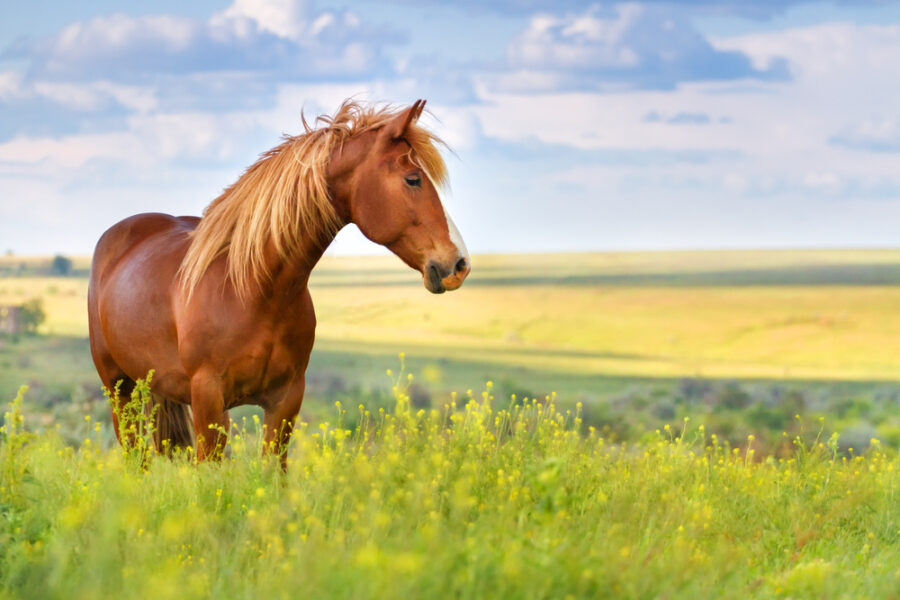
Movement is essential for both physical and mental health. Horses evolved to roam, graze, and explore throughout the day. Long periods of confinement can contribute to stress, stiffness, digestive disruption, and behavioral frustration.
Daily turnout allows horses to:
- Move naturally
- Engage in social behaviors
- Support healthy circulation
- Improve gut motility
- Reduce boredom
- Release pent-up energy
When full turnout is not possible, enrichment can help create a more stimulating environment. Simple enrichment ideas include:
- Slow feeders or hay nets
- Multiple feeding stations
- Safe toys or enrichment balls
- Grazing opportunities
- Varied terrain
- Hand grazing walks
- Obstacle exploration
Mental stimulation helps reduce frustration and encourages more natural behaviors.
Outdoor access, fresh air, and sunlight can also positively influence sleep quality and emotional health.
4. Reduce Noise and Environmental Stressors
Barns can become surprisingly overstimulating environments. Loud machinery, barking dogs, sudden movement, bright lighting, crowded aisles, and chaotic routines can all activate a horse’s stress response.
Because horses are highly sensitive to sound and movement, reducing environmental stressors can significantly improve relaxation.
Consider these strategies:
- Keep music and loud equipment at moderate levels
- Minimize yelling or abrupt handling
- Maintain good barn ventilation
- Avoid overcrowded spaces
- Use softer lighting when possible
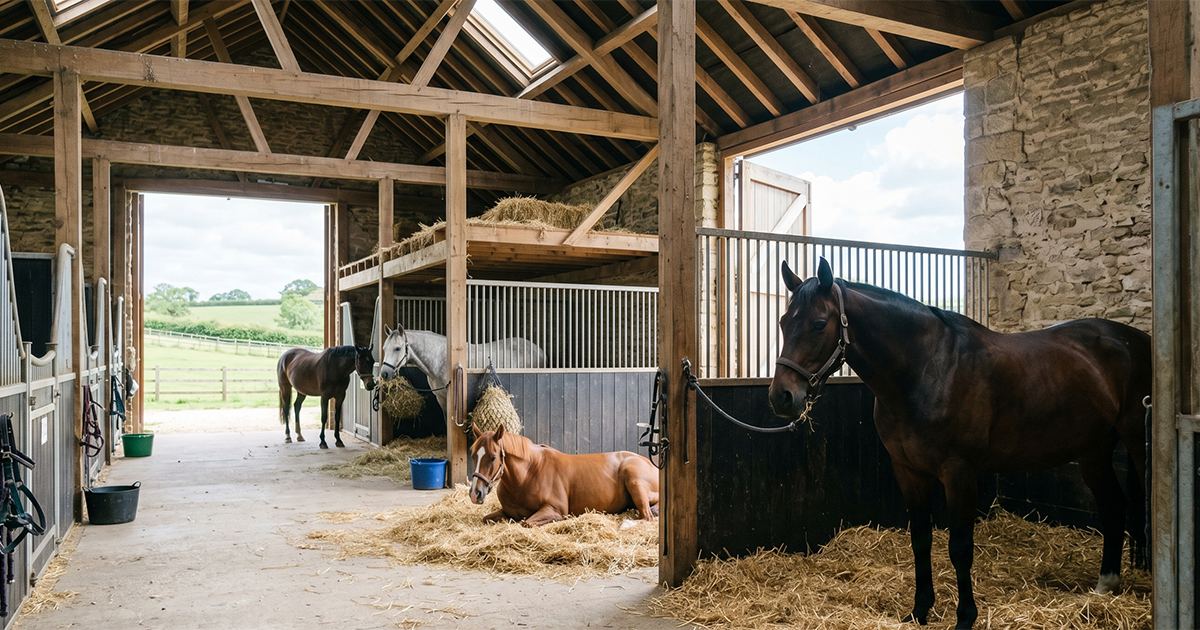
- Create quiet rest areas
- Introduce changes gradually
Pay attention to horses that appear tense during feeding times, busy lesson schedules, or competitions. Some horses are naturally more sensitive than others and may benefit from quieter spaces within the barn.
Adequate sleep is another often-overlooked factor. Horses need opportunities to fully rest and lie down comfortably. Excessive noise, constant disruptions, or social tension can interfere with healthy sleep cycles.
5. Maintain Consistent Stable Routines
Consistency helps horses feel safe. Sudden changes in feeding times, turnout schedules, exercise routines, or handlers can increase anxiety and uncertainty.
Stable routines support:
- Digestive health
- Emotional balance
- Predictable behavior
- Better sleep patterns
- Reduced cortisol levels
While occasional changes are unavoidable, maintaining regularity where possible helps create a more secure environment.
Helpful routines include:
- Consistent feeding schedules
- Regular turnout times
- Predictable exercise sessions
- Familiar handling practices
- Gradual transitions when changes occur
Horses often cope better with stress when their basic daily structure remains stable and predictable.
Creating a Barn That Supports Whole-Horse Wellness
A low-stress barn environment isn’t about perfection — it’s about understanding what horses naturally need in order to feel safe, comfortable, and emotionally balanced.
When horses have opportunities for movement, social connection, rest, predictability, and calm handling, their overall health often improves alongside their behavior and performance.
Small environmental changes can have a meaningful impact on stress levels, digestion, immunity, and emotional well-being. By creating a barn atmosphere that supports the horse’s nervous system rather than constantly challenging it, owners and caretakers can help horses thrive both mentally and physically.