

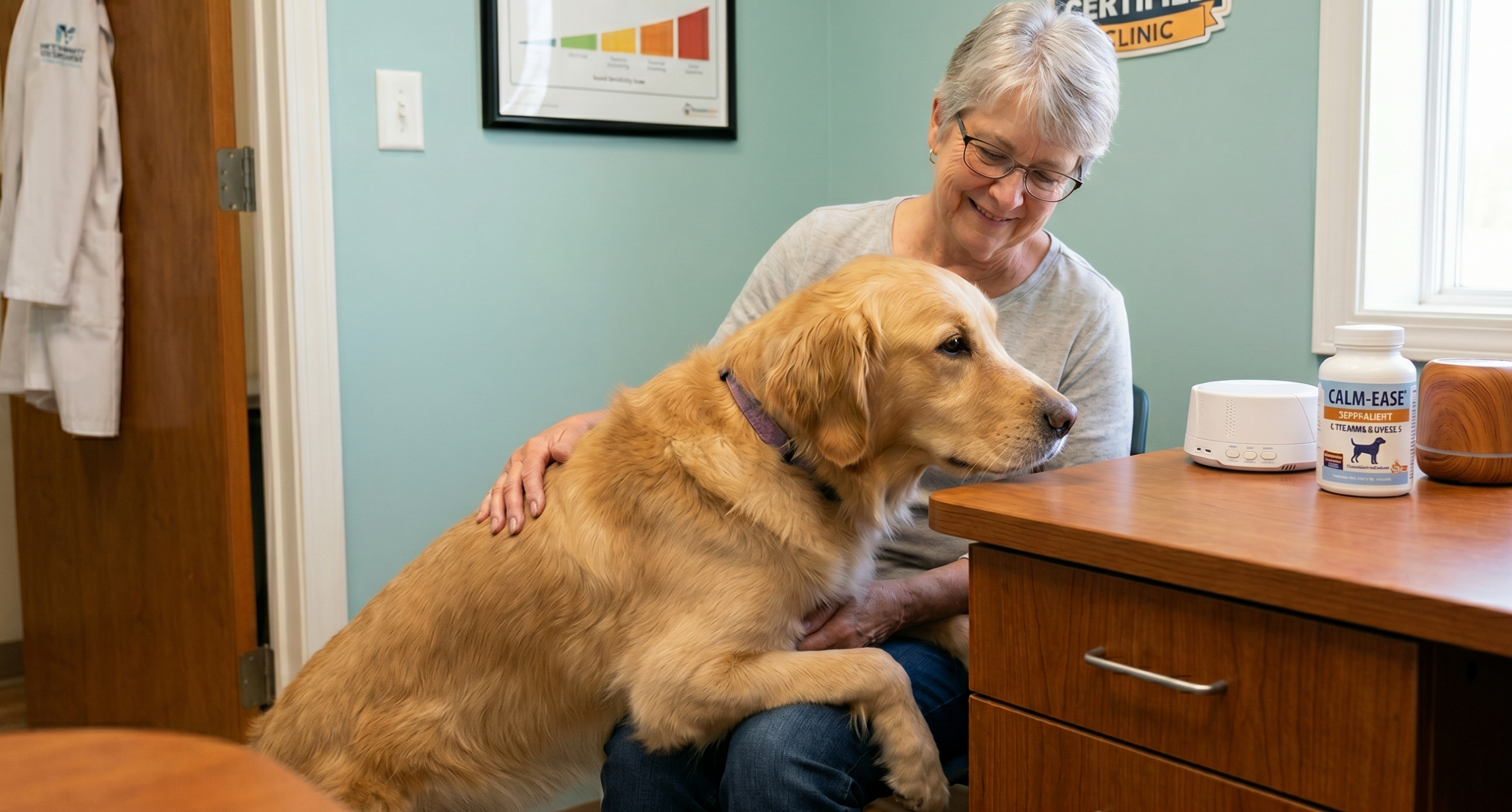
Sound sensitivity is one of the more common — and often underestimated — behavioral challenges seen in veterinary practice. Whether it’s fireworks, thunderstorms, traffic noise, or even a ringing phone, sound-reactive patients can experience real distress. The good news? An integrative approach that combines acoustic therapy, nutraceutical support, and structured desensitization can offer meaningful relief.
Understanding Sound Sensitivity
Sound-sensitive pets don’t simply get startled — they fail to recover from that initial stress response. Signs can include panting, trembling, hiding, excessive vocalization, destructive behavior, and even self-injury. Left unmanaged, repeated exposure to triggering sounds can worsen the fear response over time through a process called sensitization. Early intervention matters.
1. Acoustic Therapy: Setting the Environment
Acoustic therapy uses sound itself as a therapeutic tool. Clinically validated options like Through a Dog’s Ear bioacoustic music have been shown to reduce anxiety-related behaviors in dogs. These recordings use psychoacoustically designed classical music — simplified arrangements with slower tempos and lower tonal complexity — to promote a calmer physiological state.
In practice, acoustic therapy works best as a management layer, not a standalone fix. Recommend clients play calming music before an anticipated trigger event, not just during it. This helps the nervous system start from a more regulated baseline.
White noise machines can also help mask sudden environmental sounds, reducing the sharp acoustic contrasts that trigger fear responses.
2. Nutraceutical Support: Building a Calmer Foundation
Nutraceuticals are an excellent adjunct tool, particularly for clients who are hesitant about pharmaceutical intervention. Several options have a growing evidence base:
- L-theanine – An amino acid found in green tea that promotes relaxation without sedation. Products like Anxitane are formulated specifically for dogs and cats.
- Alpha-casozepine – A milk protein-derived peptide with GABA-modulating properties. Found in products like Zylkene, it has shown benefit in noise-phobic dogs.
- Melatonin – Has anecdotal support for noise phobia, particularly storm-related anxiety. While large-scale studies in veterinary patients remain limited, it is generally considered safe.
- Omega-3 fatty acids – Emerging research supports the role of omega-3 in supporting neurological health and reducing inflammatory processes tied to anxiety.
It’s important to remind clients that nutraceuticals take time to build efficacy — they are not fast-acting rescue options.
3. Desensitization and Counter-Conditioning Protocols
This remains the gold standard for long-term behavior change. Systematic desensitization involves gradually exposing the pet to recorded sounds at a very low volume — well below the threshold that triggers a fear response — while pairing that exposure with something positive, such as high-value treats or play.
Key steps include:
- Identify the trigger sounds and obtain quality recordings
- Establish a sub-threshold starting volume where the pet shows no visible stress
- Pair the sound with positive reinforcement consistently
- Gradually increase volume over weeks or months, never rushing past the pet’s comfort level
- Avoid flooding — never expose the pet to full-intensity sounds during training
Bringing It All Together
The most effective treatment plans layer all three approaches. Acoustic therapy creates a calmer daily environment. Nutraceuticals reduce baseline anxiety, making the nervous system more receptive to learning. Desensitization protocols address the root fear response directly. When indicated, pharmaceutical support can be added — always under veterinary supervision.
Every patient is different. A thorough behavioral history and individualized treatment plan are essential.