
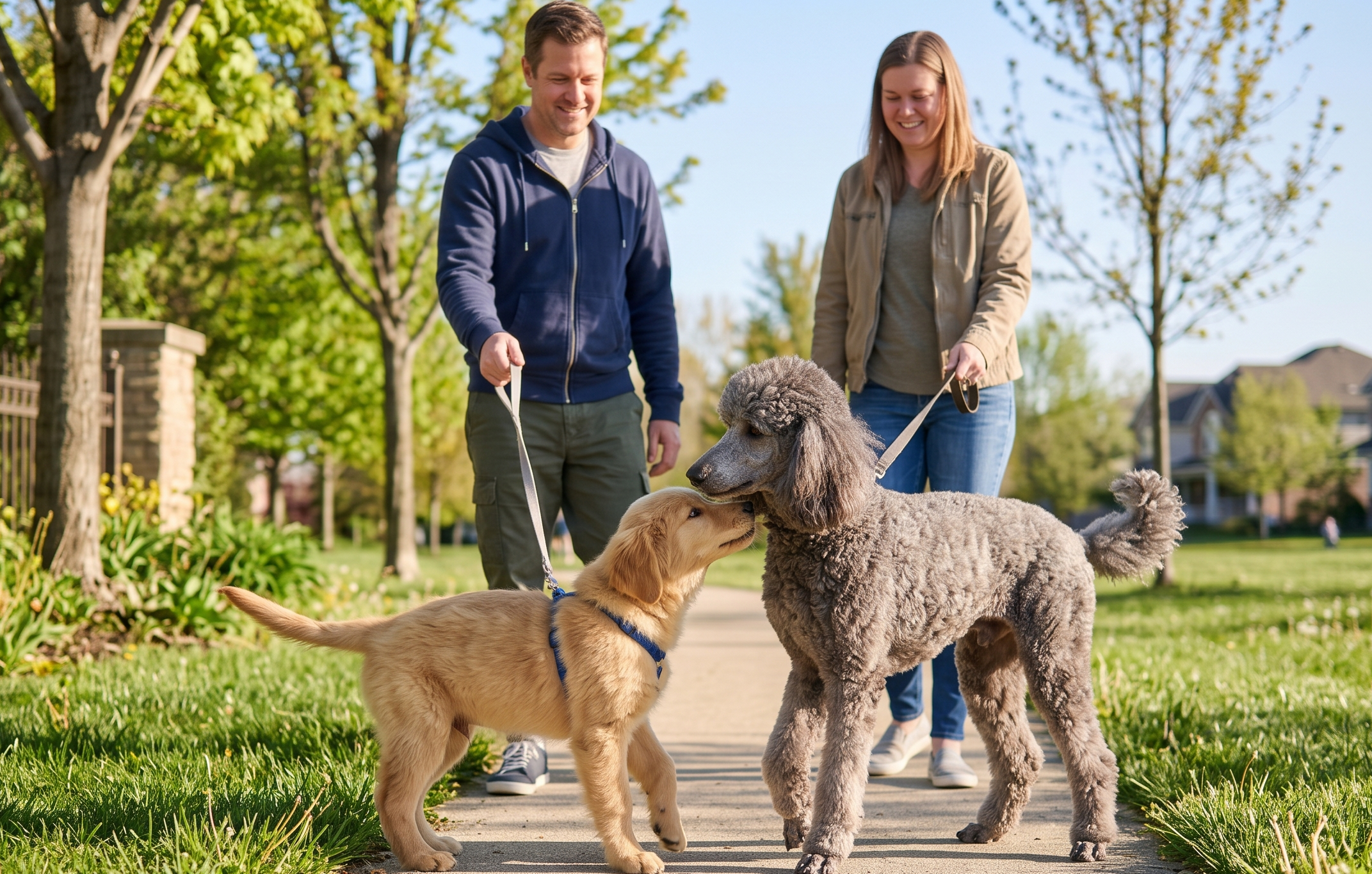
If you have a dog, you’ve probably heard the word “socialization.” But what does it really mean, and why does it matter so much? Simply put, socialization is the process of helping your dog feel comfortable and confident around other dogs, people, and new experiences. When this process goes well early in life, it sets the stage for a happy, well-adjusted dog. When it doesn’t, the challenges can be significant — for both you and your dog.
The Critical Window
Dogs have a key socialization window that typically falls between 3 and 14 weeks of age. During this time, a puppy’s brain is like a sponge, soaking up information about the world around them. Positive experiences during this period help puppies learn that new people, animals, sounds, and environments are safe and not something to fear.
When a dog misses out on these early experiences, they may grow up feeling unsure or frightened by everyday situations. This fear can show up in some pretty noticeable ways.
Signs Your Dog May Have Socialization Gaps
Dogs that weren’t properly socialized early in life often show what’s called reactive behavior. This means they overreact to normal situations that a well-socialized dog would take in stride. You might notice your dog:
- Barking, lunging, or growling at other dogs or strangers
- Cowering or hiding when meeting new people
- Becoming tense or fearful in busy or crowded spaces
- Struggling on leashed walks when other dogs are nearby
It’s important to understand that a reactive dog is not necessarily an aggressive dog. Most reactive dogs are simply scared. However, if left unaddressed, reactivity can sometimes develop into aggression, which is why early action is so important.
What You Can Do
The good news is that even if your dog missed out on early socialization, there are steps you can take to help them build confidence.
Start slow. Avoid throwing your dog into overwhelming situations. Instead, expose them gradually to their triggers from a safe distance. As they grow more comfortable, you can slowly decrease that distance over time.
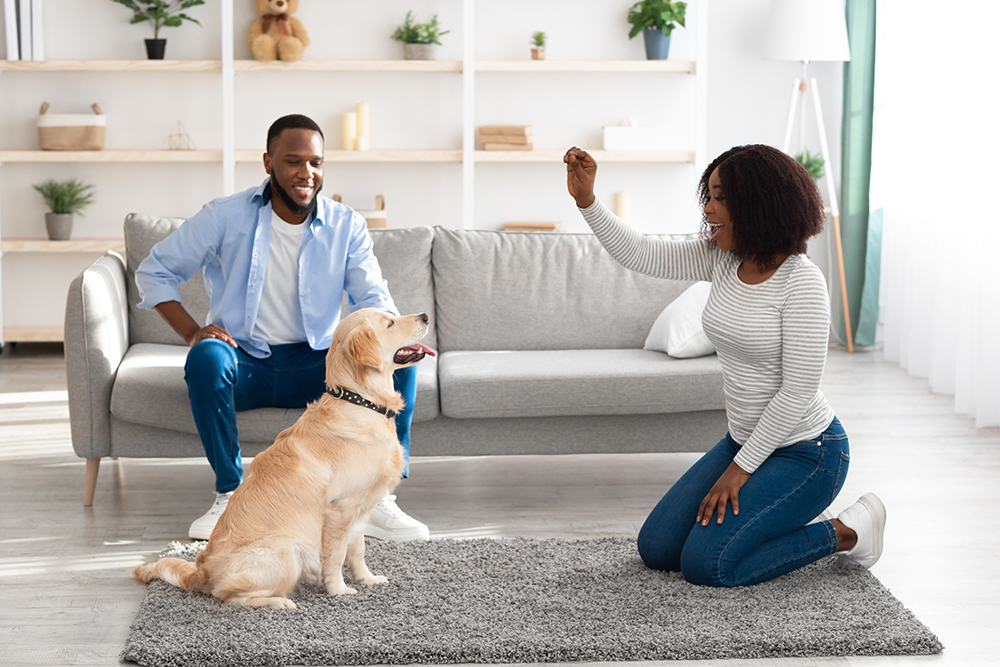
Use positive reinforcement. Reward your dog with treats, praise, or toys when they stay calm around something that usually scares them. Over time, they’ll begin to associate that scary thing with something good.
Be your dog’s advocate. Not every dog needs to be friends with every person or animal they meet. It’s perfectly okay to ask strangers to give your dog space.
Seek professional help. A certified dog trainer or veterinary behaviorist can create a customized plan for your dog’s specific needs.
Socialization challenges are common, but they are manageable with patience, consistency, and the right guidance. If your dog is struggling, don’t wait — reach out to your veterinarian for advice and a referral to a qualified professional. Your dog deserves to feel safe in their world, and with your support, they can get there.