

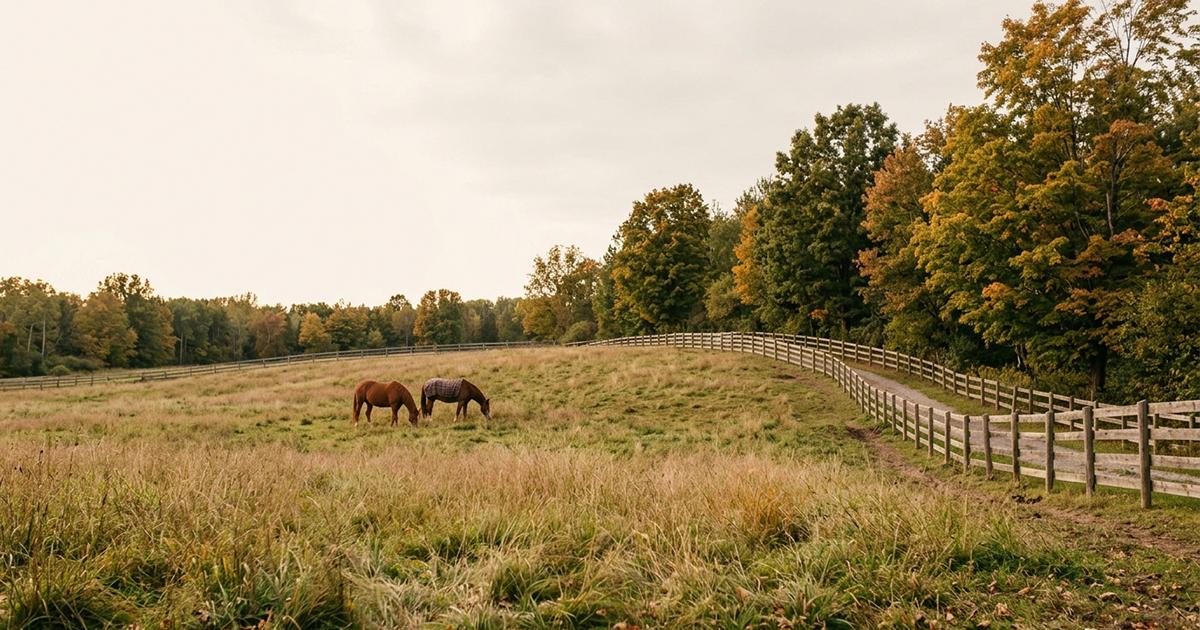
As summer begins to fade, your horse’s pasture is entering an important transition period. Cooler temperatures, shorter days, changing rainfall patterns and frost can all affect how grasses grow—and what they provide nutritionally.
Fall is also an ideal time to look at the bigger picture. Rather than simply trying to keep pasture green for as long as possible, thoughtful management can help the soil recover, strengthen desirable forage species, reduce weeds naturally and prepare the land for the following growing season.
For horse owners interested in sustainable, low-input management, fall pasture preparation is less about doing more and more about working with the natural cycles of the land.
Understand How Fall Changes Pasture Grass
Pasture doesn’t remain nutritionally consistent throughout the year. As temperatures cool and plants mature, their growth slows and their nutritional profile changes.
One important consideration is non-structural carbohydrates (NSCs), which include sugars and fructans. Cool-season grasses can accumulate more sugar during periods of cold weather, frost or other environmental stress. After a killing frost, freezing can temporarily lock sugars within the plant, potentially increasing sugar concentrations.
This is particularly important for horses that are sensitive to dietary sugar or prone to metabolic concerns. Fall grass should not automatically be considered “safer” simply because it is less lush than spring grass.
Pay attention to:
- Frost and freezing temperatures
- Drought or other plant stress
- Recent rainfall
- Grass maturity
- Overgrazed areas
- The amount of time your horse spends grazing
If you have a horse that requires careful management of sugar intake, consider having pasture or forage analyzed rather than relying on appearance alone. Your veterinarian or equine nutrition professional can also help determine an appropriate grazing strategy.
Give the Soil Time to Recover
Healthy pasture begins beneath the surface.
By the end of summer, areas around gates, waterers, feeding stations and favourite grazing spots may show signs of compaction or thinning. Before adding seed or amendments, determine what the soil actually needs.
A soil test can provide information about pH and nutrient levels and help prevent unnecessary applications. Penn State Extension specifically recommends soil testing before applying lime or fertilizer because blindly adding amendments can be wasteful and environmentally damaging.
Fall is a good opportunity to:
- Take soil samples
- Identify compacted areas
- Evaluate drainage
- Reduce traffic in damaged areas
- Add appropriate soil amendments based on test results
- Allow heavily grazed paddocks to rest
- Repair fencing and high-traffic areas
Don’t overlook the value of simply resting the land. Pasture plants need time to replenish energy reserves and rebuild their root systems.
Adjust Your Rotational Grazing Strategy
Your grazing system may need to change as fall growth slows.
A paddock that recovered quickly in spring may require significantly more time to regrow in autumn. University of Minnesota Extension notes that fall pasture recovery may take around four weeks, although actual recovery time depends on weather, soil, forage species, stocking density and pasture condition.
Instead of following a rigid calendar, observe the plants.
Move horses before desirable grasses are grazed too short, and give paddocks enough time to recover before bringing horses back. If grass growth can’t keep up with grazing pressure, use a sacrifice area or dry lot and provide hay while the pasture rests.
This is particularly important after periods of drought or excessive summer grazing. Continuing to graze stressed pasture can weaken plants and leave more bare soil available for opportunistic weeds.
Rotational grazing also provides environmental benefits by reducing prolonged hoof traffic, protecting ground cover and helping distribute grazing pressure more evenly.
Manage Weeds Naturally
A pasture full of weeds is often a symptom rather than the original problem.
Weeds take advantage of bare soil, weak forage stands, compaction, poor fertility and overgrazing. Improving the conditions that allow desirable grasses to thrive is therefore one of the most effective long-term weed-management strategies.
Before reaching for a chemical solution, consider an integrated approach:
Mow Before Weeds Set Seed
Regular mowing can prevent many annual and biennial weeds from producing seeds. Timing is important—ideally, mow before flowering and seed production.
Avoid mowing the entire pasture excessively short, however. Maintaining adequate grass cover protects the soil and allows desirable plants to compete.
Improve Forage Competition
Dense, healthy forage is one of your best natural defenses against weeds. Address soil fertility, grazing pressure and bare patches rather than treating weeds as an isolated problem.
Identify Toxic Plants
Not every weed is simply an aesthetic nuisance. Some pasture plants can be poisonous to horses.
Learn which toxic plants are common in your region and remove or manage them appropriately. If you are uncertain about a plant, have it positively identified before allowing horses access to it.
Use Grazing Management as a Tool
Rotating horses and allowing adequate rest can reduce selective overgrazing. Horses naturally prefer certain plants and areas, which can eventually weaken desirable species if they have continuous access to the same pasture.
Natural weed management doesn’t mean ignoring serious weed problems. It means addressing the underlying pasture conditions first and using the least invasive effective approach whenever possible.
Consider Fall Overseeding and Pasture Regeneration
Fall can be an excellent time to improve thin pasture stands.
Late-summer and early-fall seeding can take advantage of cooler temperatures, moisture and reduced competition from some annual weeds. For example, University of Minnesota Extension identifies late summer to early fall as an important window for pasture seeding in its region. Exact timing and forage choices should be adjusted for your local climate.
Before overseeding, determine:
- Which grasses and legumes are already present
- Which species perform well in your climate
- Whether the soil pH is appropriate
- Whether nutrients are limiting growth
- How much bare or thin ground needs to be filled
- Whether horses can be kept off the seeded area while it establishes
Potential pasture species include options such as orchardgrass, timothy and smooth bromegrass, but the best mixture depends on your soil, climate, drainage and horses’ nutritional needs.
Overseeding can be particularly useful when you have a generally healthy pasture with isolated thin areas. It doesn’t necessarily require completely renovating the field.
Don’t Forget Parasite Management
Pasture management and parasite management are closely connected, but natural management does not mean ignoring parasite control.
Regular manure removal, appropriate pasture rotation and avoiding excessive stocking can help reduce parasite exposure. Rotating grazing areas can also interrupt portions of parasite life cycles.
Rather than automatically deworming on a fixed schedule, work with your veterinarian to establish a parasite-control program appropriate for your horses and region. Fecal egg counts can help determine which horses are shedding more parasite eggs and whether additional treatment is warranted.
Pasture hygiene also matters. Remove manure from high-use areas when practical, and avoid creating heavily contaminated grazing zones.
Balance Nutrition as Pasture Quality Changes
As pasture growth declines, hay will gradually become a more important part of the horse’s diet.
This transition should be gradual rather than abrupt. Sudden changes in forage type or availability can disrupt the digestive system, so introduce changes thoughtfully and monitor your horse’s condition. Equine Wellness has also highlighted the importance of gradually transitioning horses when pasture availability changes in fall and winter.
Consider having your hay analyzed so you know what it contributes in terms of:
- Protein
- Energy
- Sugar and starch
- Fiber
- Minerals
From there, you can determine whether your horse needs additional nutritional support.
Remember that not every horse needs the same feeding strategy. A hard-working horse, an easy keeper and a horse requiring careful sugar management may have very different nutritional needs even when they share the same pasture.
Build a More Sustainable Pasture System
Healthy pasture management can benefit more than your horse.
A well-managed pasture can help reduce erosion, improve soil structure, support plant diversity and reduce nutrient runoff. Keeping living ground cover in place protects soil from wind and water erosion while allowing plant roots to contribute organic matter below ground.
Consider incorporating sustainable practices such as:
- Rotational grazing
- Sacrifice areas for wet or stressed conditions
- Native or regionally appropriate plant species where suitable
- Strategic tree and shade planting
- Reduced soil disturbance
- Composting or responsible manure management
- Protecting waterways from direct livestock access
- Maintaining vegetation along drainage areas
- Avoiding unnecessary fertilizer applications
- Overseeding thin areas rather than completely renovating healthy pasture
Even small changes can make a difference.
For example, a sacrifice area can prevent horses from destroying pasture during periods when the soil is saturated or the plants are dormant. This protects the productive areas of the farm while giving the land a chance to recover.
Let Fall Be a Season of Observation
Preparing pasture for fall doesn’t have to mean undertaking a massive renovation project.
Walk your fields. Look at the grass. Notice bare areas, weed populations, manure distribution, drainage and high-traffic zones. Pay attention to how quickly each paddock recovers after grazing.
Then make decisions based on what the land is telling you.
Fall is an opportunity to slow down, repair what has been stressed and prepare for the next growing season. By combining soil health, thoughtful grazing, natural weed management, strategic overseeding and appropriate nutrition, you can create a pasture system that supports both your horse and the land for years to come.
A healthy pasture isn’t simply a field full of grass. It’s a living ecosystem—and managing it with that perspective can make your horse-keeping practices healthier, more sustainable and more resilient.