
How Can You Get Better at Reading Your Dog’s Food Label?
Standing in the pet food aisle can feel a little overwhelming. One bag says “natural,” another says “premium,” and a third features a beautiful photo of fresh meat and vegetables. But what actually matters once you turn the bag around?
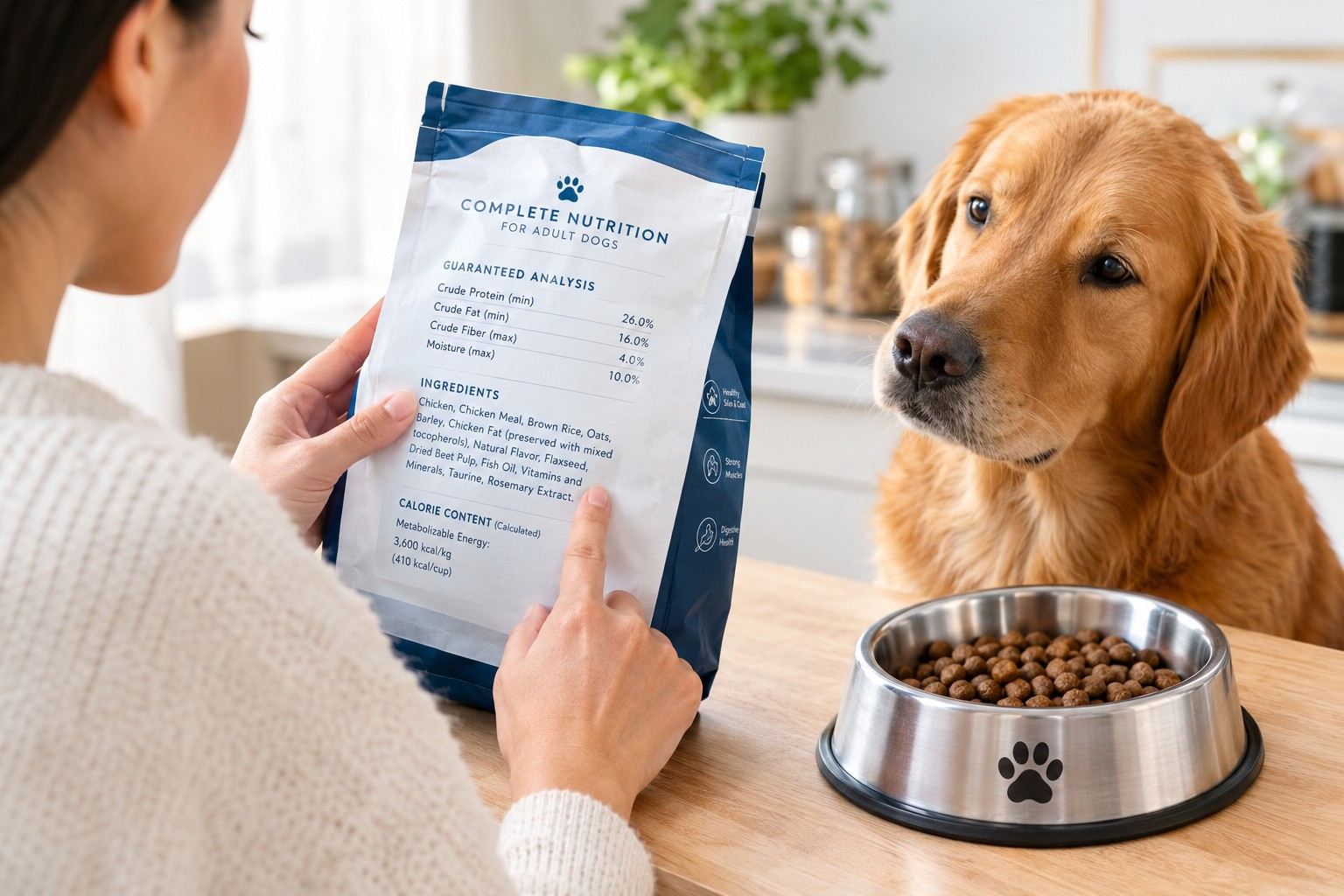
Learning how to read a pet food label can help you look past the marketing and better understand what you’re putting in your dog’s bowl.
What should you look for on a pet food label?
TL;DR: Start with the ingredient list, then look at the guaranteed analysis, serving information, and the language used to describe the food. Ingredient lists are arranged by weight, but that doesn’t tell the whole story, especially when comparing foods with different moisture levels.
Want to feel more confident choosing food for your dog? The 11 Tips to Understand Pet Food Labels course can help you become a more informed label reader and make sense of the details that are easy to overlook.
What does the ingredient list actually tell you?
The ingredient list is one of the first places to look when comparing pet foods. Ingredients are listed by weight, so the first few ingredients can give you a useful starting point. But there’s a catch.
Fresh meat contains a lot of water, which affects its weight before processing. Ingredients can also be divided into different forms, such as different grain or starch ingredients, which can make the list harder to interpret at a glance.
That’s why reading the entire list matters more than simply checking which ingredient appears first.
Are pet food marketing terms always meaningful?
Words like “natural,” “premium,” “holistic,” and “human grade” can sound reassuring. They may also leave you with more questions than answers.
Some marketing terms have specific definitions or guidelines, while others may have little regulatory meaning. AWA’s pet food education materials encourage pet parents to look beyond the front of the package and pay attention to the actual nutritional and ingredient information.
In other words, a pretty package isn’t enough.
How can you compare different types of dog food?
Comparing kibble, canned food, fresh food, or other diets can get confusing because they don’t all contain the same amount of moisture.
The guaranteed analysis on a label gives nutrient percentages on an “as fed” basis. Since canned and fresh foods generally contain much more water than kibble, comparing those percentages directly can give you a misleading picture.
Dry matter calculations offer a better way to compare nutrient levels between foods with different moisture contents.
You don’t need to become a nutrition expert overnight. You just need to know which numbers deserve a closer look.
What else should dog parents check before buying?
Look beyond the ingredient list. Consider how the food is preserved, whether added sugars or artificial colors appear, and whether the company provides clear information about its ingredients and sourcing. AWA’s educational content also encourages pet parents to ask where ingredients come from and how transparent a food company is about its suppliers.
These details can help you ask better questions before choosing what goes into your dog’s bowl.
And that’s really the goal: becoming a more informed pet parent.
What will you learn from the 11 Tips to Understand Pet Food Labels course?
Reading a pet food label gets easier once you know what you’re looking at. The 11 Tips to Understand Pet Food Labels course is designed to help pet owners build that skill, so terms, ingredient lists, and nutritional information feel less confusing.
Instead of automatically choosing the bag with the most appealing claims, you’ll have a better foundation for evaluating what you’re buying and asking smarter questions about your dog’s food.
Take Our Course: 11 Tips to Understand Pet Food Labels
If you want to feel more confident reading your dog’s food label, the 11 Tips to Understand Pet Food Labels course offers a closer look at the details that can be easy to miss. It’s designed to help pet owners better understand ingredient lists, label terminology, and the information manufacturers provide, so you can make more informed choices about your pet’s food.
Frequently Asked Questions
What should I look at first on a dog food label?
Start with the ingredient list, then look at the guaranteed analysis and other nutritional information. Reading the entire label gives you a better picture than focusing on a single ingredient or marketing claim.
Does the first ingredient always tell me which food is best?
No. Ingredient order is useful, but it doesn’t tell you everything about a food. Moisture content, the way ingredients are listed, and the food’s overall nutritional information also matter.
Are “natural” and “premium” reliable indicators of food quality?
Not necessarily. Marketing language can make a product sound appealing, but it’s worth looking beyond the front of the package and reviewing the actual label information.
Can pet owners learn to compare different dog foods themselves?
Absolutely. Once you understand how ingredient lists, guaranteed analysis, moisture, and label terminology work, comparing different foods becomes much easier. Learning what to look for can also help you ask more useful questions when choosing food for your dog.