Can Essential Oils Support a Dog During End-of-Life Care?
When a beloved dog reaches the end of life, comfort becomes the priority. Pet parents may start looking beyond everyday care and wonder whether gentle options, including essential oils, have a place in an end-of-life routine.
Used thoughtfully, aromatherapy may be one part of a larger comfort-focused plan. It should never replace veterinary care, pain management, or other treatments your dog needs.
TL;DR: End-of-life care is about helping a dog feel as comfortable, calm, and supported as possible. Essential oils may be considered as one complementary option, but they require careful selection and use around animals. If you’d like to learn more about using essential oils thoughtfully during this stage, explore Animal Wellness Academy’s 7 Essential Oils for End-of-Life Care course.
What Does End-of-Life Care Really Mean for Dogs?
End-of-life care isn’t about finding one solution that fixes everything.
It’s about paying attention to the individual dog and responding to what he needs as his condition changes. That may include veterinary pain management, nutritional support, mobility assistance, a quiet resting area, emotional reassurance, and other comfort measures.
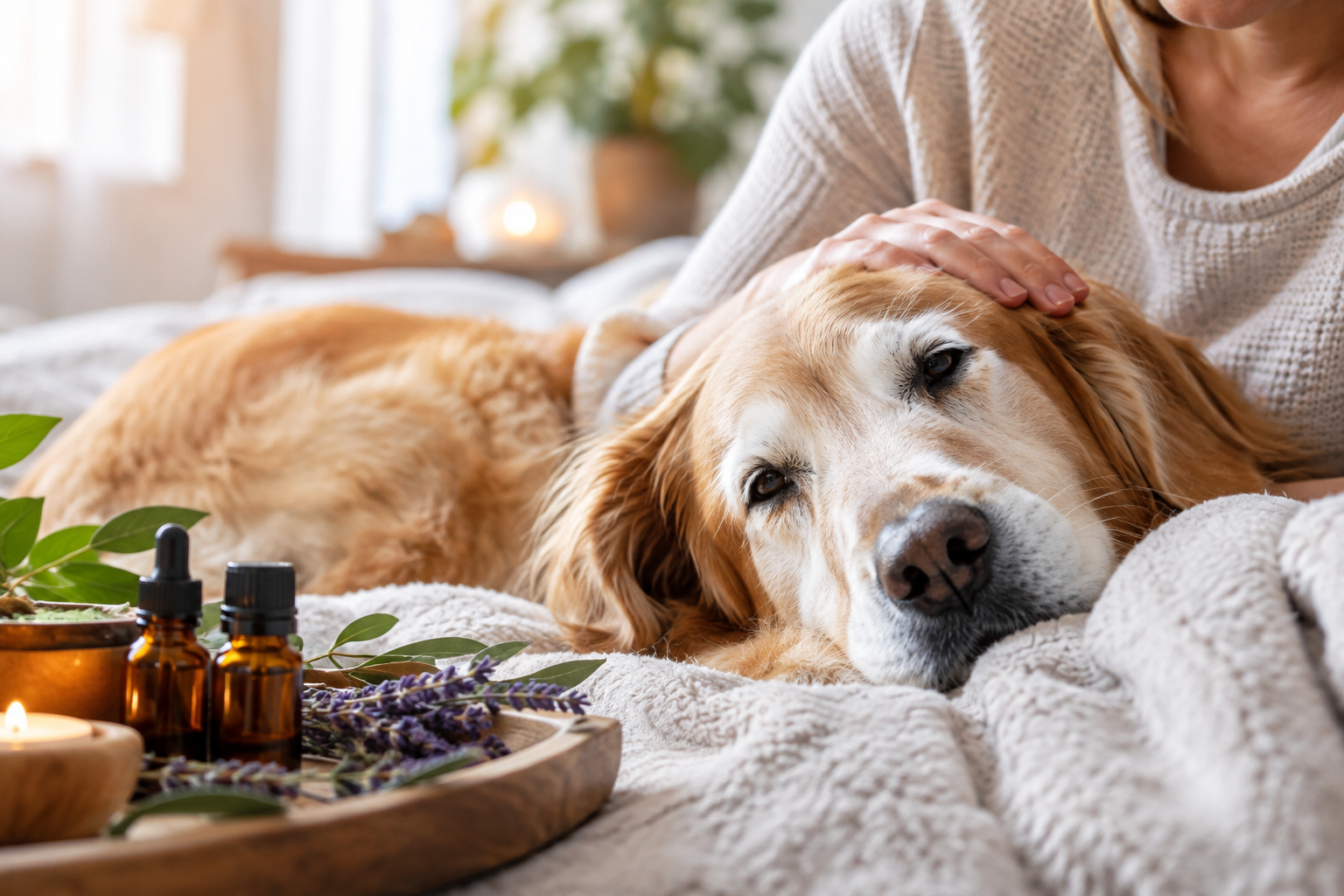
Sometimes the simplest things matter most. A familiar blanket. Your hand resting nearby. Less noise in the room.
For some families, complementary approaches may also become part of the conversation with their veterinary team.
Can Essential Oils Be Part of a Dog’s Comfort Routine?
They may be, but caution matters.
Dogs process many substances differently from people, and essential oils are highly concentrated. An oil that seems gentle to a person isn’t automatically appropriate for a dog. Route of exposure, concentration, the individual animal, existing health conditions, medications, and even the way the oil is used can all matter.
That’s why learning the basics before trying aromatherapy is so important.
A responsible approach starts with knowledge, not guesswork.
What Should Dog Parents Know Before Using Essential Oils?
First, don’t assume that “natural” means risk-free.
Essential oils should be selected and used with the animal’s needs in mind. Direct application, ingestion, and diffusion can all involve different considerations. A dog with respiratory problems, advanced illness, medication needs, or other health concerns may require extra caution.
Your veterinarian should remain part of the care team, particularly when your dog has a serious or terminal condition.
The goal is comfort. If something causes distress, irritation, breathing changes, or other concerning reactions, stop using it and seek veterinary guidance.
How Can Learning More Help During This Difficult Time?
End-of-life care can leave pet parents with a long list of questions and very little time to find reliable answers.
What can I safely try? What should I avoid? Could an aromatic approach fit into my dog’s existing care? How do I make the environment more peaceful?
Learning about essential oils specifically for this stage of life can give you a better foundation for those conversations.
Animal Wellness Academy’s course, 7 Essential Oils for End-of-Life Care, is designed to help pet owners explore this subject in a focused way. It offers an opportunity to learn more about essential oils and their potential role in supporting an animal during end-of-life care, rather than trying to sort through general aromatherapy advice on your own.
Knowledge won’t make saying goodbye easier.
But knowing how to care for your dog thoughtfully can make the time you have together feel a little more manageable.
Take Our Course: 7 Essential Oils for End-of-Life Care
If you’re caring for a senior or seriously ill dog and want to learn more about complementary approaches to end-of-life care, this 7 Essential Oils for End of Life Care course offers a focused introduction to essential oils and how they may fit into a thoughtful comfort-care plan.
Frequently Asked Questions
Can essential oils help dogs at the end of life?
Essential oils may be considered as a complementary part of an individual dog’s comfort routine, but they should not replace veterinary care or prescribed treatments.
Are essential oils safe for every dog?
No. Safety depends on the individual dog, the oil, concentration, method of use, health status, and other factors. Dogs with serious health conditions may need additional precautions.
Can I put essential oils directly on my dog?
Don’t assume direct application is safe. Essential oils are concentrated, and topical use should only be considered with appropriate guidance for the individual animal.
Should I talk to my veterinarian first?
Yes, especially if your dog has a serious illness, takes medication, or is receiving hospice or palliative care. Your veterinarian can help you determine which complementary options are appropriate alongside your dog’s existing care.