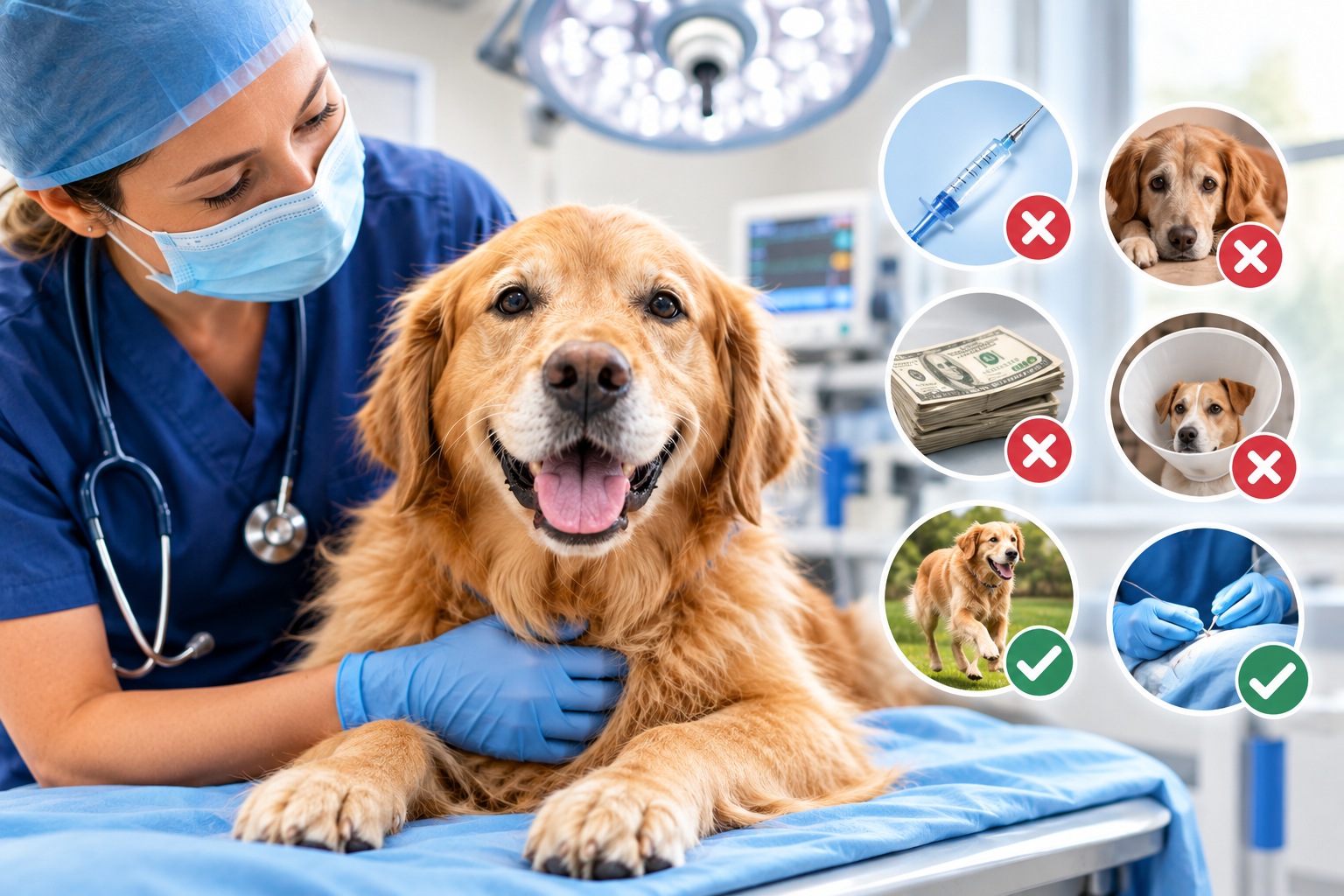
5 Myths About Dog Surgery Every Dog Parent Should Know
Hearing that your dog needs surgery can turn an ordinary day into a stressful one. Suddenly, you’re thinking about anesthesia, recovery, pain, cost, and whether surgery is really the best choice.
It’s also easy to come across conflicting advice. One person says surgery is too risky. Another says dogs recover quickly. Someone else insists there must be a natural alternative.
So, what should dog parents actually believe?
TL;DR: Dog surgery can be an important part of treating injuries, disease, or other health problems, but many common beliefs about surgery are too broad to be useful. Learning what’s true, what depends on your dog’s individual situation, and what questions to ask your veterinarian can help you make more informed decisions. If you want to learn more, check out Animal Wellness Academy’s 5 Myths About Dog Surgery course for practical guidance you can use when discussing surgical care for your dog.
What are some common myths about dog surgery?
Myth #1: Surgery should always be the first option
Not necessarily.
The right treatment depends on what is happening with your dog, how serious the condition is, and what options are appropriate for that particular case. Some problems may be managed without surgery, while others may require an operation to give the dog the best chance of recovery.
That’s why asking, “Does my dog really need surgery?” is only the beginning. A better conversation includes questions about the diagnosis, alternatives, expected outcome, risks, and what could happen if treatment is delayed.
Myth #2: Older dogs can’t handle surgery
Age matters, but it doesn’t tell the whole story.
An older dog may have other health considerations that affect anesthesia or recovery. At the same time, being a senior doesn’t automatically mean surgery is unsafe or inappropriate.
Your veterinarian may recommend pre-surgical testing to get a clearer picture of your dog’s overall health before deciding how to proceed.
Myth #3: Dogs always have a long, difficult recovery
Recovery varies.
A young, otherwise healthy dog having one type of procedure may have a very different recovery experience from a senior dog undergoing a more complicated operation. The procedure itself, your dog’s health, and the aftercare plan all matter.
Following the veterinary team’s instructions is especially important during recovery. Activity restrictions, medications, wound care, and follow-up appointments can all play a role.
Myth #4: If a surgery is common, there’s nothing to worry about
A procedure being common doesn’t mean every dog has the same experience.
Every surgical case deserves individual attention. Your dog’s medical history, current medications, age, overall health, and the specific procedure should all be considered.
If something about the proposed surgery doesn’t make sense to you, ask. You’re allowed to understand what is being recommended for your dog.
Myth #5: Dog parents should simply accept whatever they’re told
Trusting your veterinarian matters. So does being an informed pet parent.
You can ask what the diagnosis means, why surgery is being recommended, what other options may exist, how recovery is expected to go, and what warning signs to watch for afterward.
Those questions aren’t about challenging your veterinarian. They help you understand the decision and prepare to care for your dog.
Why does understanding dog surgery matter?
Surgery is a serious decision, but fear and misinformation don’t make that decision easier.
Knowing the basics can help you have a more productive conversation with your veterinary team. It can also help you recognize when an internet claim sounds too absolute.
For dog parents, the goal isn’t to become a veterinary surgeon. It’s to understand enough to ask better questions and make decisions with your dog’s individual needs in mind.
Take Our Course: 5 Myths About Dog Surgery
If you want to feel more prepared when surgery becomes part of your dog’s care, 5 Myths About Dog Surgery can help you sort fact from common misconceptions and better understand the conversations surrounding surgical treatment.
Frequently Asked Questions
Is surgery always necessary for dogs?
No. Whether surgery is appropriate depends on the diagnosis, severity of the problem, your dog’s health, and available treatment options. Your veterinarian can explain the choices for your dog.
Can older dogs have surgery?
Yes, many older dogs undergo surgery. Age alone does not determine whether a dog is a suitable surgical candidate. Overall health and the specific procedure are also important.
How long does a dog take to recover from surgery?
There is no single recovery timeline. It depends on the procedure, your dog’s health, and how recovery progresses. Your veterinary team should provide specific aftercare instructions.