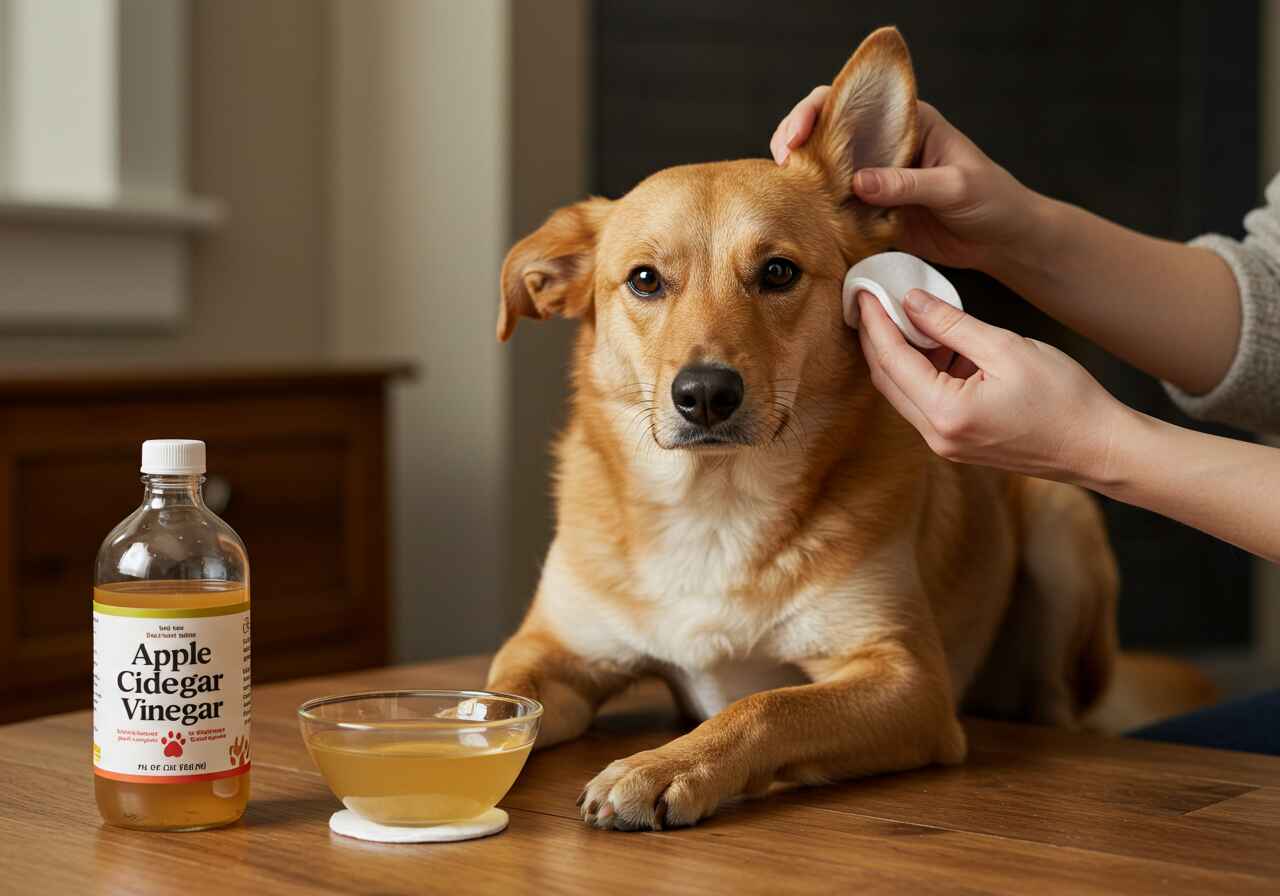
If you’ve ever searched for natural remedies to clean your dog’s ears, chances are you’ve come across apple cider vinegar. It’s a favorite among dog owners for its gentle yet effective cleaning properties and its ability to support ear health without harsh chemicals.
But before you reach for that bottle, it’s important to know how to use apple cider vinegar for dogs’ ears safely. Using it the wrong way can do more harm than good. In this guide, we’ll explore how apple cider vinegar works, how to dilute it correctly, how often to use it, and when to avoid it altogether.
Why Ear Care Matters for Dogs
Dogs rely on their ears not just for hearing but also for balance. The shape of a dog’s ear canal makes it easy for wax, debris, and moisture to get trapped. If that buildup isn’t removed, it creates the perfect environment for yeast, bacteria, and mites to grow.
The result can be itchy, irritated ears and painful infections. Regular cleaning is an essential part of your dog’s grooming routine. And when used properly, diluted apple cider vinegar for dogs’ ears can be a safe, natural option to help maintain ear health and prevent issues before they start.
What Makes Apple Cider Vinegar Effective for Dog Ear Care
Apple cider vinegar (often shortened to ACV) is made by fermenting apples into acetic acid. This mild acid has antibacterial, antifungal, and antiseptic properties, which is why ACV has been used for centuries as a natural cleaner. For dogs’ ears, apple cider vinegar can:
- Balance ear pH: Healthy ears are slightly acidic, which discourages yeast and bacteria from multiplying.
- Loosen wax and debris: The acidity helps break down buildup, making it easier to wipe away.
- Fight yeast overgrowth: Many pet owners use apple cider vinegar for dogs’ ears yeast problems as part of a prevention plan.
- Soothe minor irritation: When diluted, it can calm mild itching or discomfort.
Not all apple cider vinegar is the same. Many dog owners prefer Braggs apple cider vinegar for dogs’ ears because it’s raw, organic, and contains the “mother” — beneficial enzymes and bacteria that add to its natural properties.
When Apple Cider Vinegar Is Safe to Use — and When It’s Not
Apple cider vinegar can be helpful, but only in the right circumstances. It should never be used if your dog has an ear infection, open sores, or damaged skin inside the ear. The acid can sting, irritate inflamed tissue, and even cause serious harm if the eardrum is ruptured.
Here’s how to tell if it’s safe:
- Your dog’s ears are a little waxy or dirty but not red or swollen.
- There’s no foul odor, pus, or thick discharge.
- Your dog isn’t constantly scratching or shaking their head.
If you see redness, swelling, or your dog shows signs of pain, skip the vinegar and call your vet. It’s also best to get a professional diagnosis if you’re unsure whether it’s a yeast infection, mites, or bacteria causing the problem.
How to Dilute Apple Cider Vinegar for Dogs’ Ears
One of the most common questions owners ask is how to dilute apple cider vinegar for dogs’ ears. Undiluted vinegar is too strong and can irritate the skin, so dilution is key.
Here’s a safe recipe to follow:
- Mix 1 part apple cider vinegar with 1 part filtered water.
- For sensitive dogs, use 1 part vinegar to 2 parts water.
This creates a gentle cleaning solution that’s safe for most dogs. The water and apple cider vinegar for dogs’ ears combo helps loosen wax and balance pH without causing irritation.
How to Use Apple Cider Vinegar for Dogs’ Ears (Step-by-Step)
Once you’ve prepared your diluted solution, follow these steps to clean your dog’s ears safely:
- Inspect the ears first. Look for signs of redness, swelling, or discharge. If you see any, stop and call your vet.
- Warm the solution. Cold liquid in the ear can be uncomfortable. Room temperature is ideal.
- Soak a cotton ball or soft gauze. Dip it into the vinegar solution and squeeze out excess liquid.
- Wipe the visible parts. Gently clean the inside of the ear flap and the outer part of the ear canal.
- Avoid going too deep. Only clean what you can see. Never insert anything deep into your dog’s ear.
- Let your dog shake it out. Shaking helps loosen debris. Wipe away anything that comes out.
This method of how to use apple cider vinegar for dogs’ ears is safe for routine maintenance. Always reward your dog afterward with praise or a treat so they associate ear cleaning with a positive experience.
How Often Should You Use Apple Cider Vinegar for Dogs’ Ears?
Another common question is apple cider vinegar for dogs’ ears how often is safe. For most dogs, once every 1 to 2 weeks is enough. Overcleaning can dry out the ear canal and disrupt its natural balance, making infections more likely. If your dog swims often, you might clean their ears more frequently to prevent moisture-related problems. But if you notice any irritation, reduce how often you use the vinegar solution.
Apple Cider Vinegar for Yeast Infections
Yeast thrives in warm, moist, and alkaline environments. Apple cider vinegar helps by lowering the pH in the ear canal, creating a less hospitable place for yeast to grow. Many pet owners use apple cider vinegar for dogs’ ears yeast prevention as part of a regular care routine.
However, if a yeast infection is already present — especially if there’s thick discharge or a sour smell — vinegar alone won’t solve it. You’ll need antifungal treatment from your vet. Once the infection clears, diluted vinegar can help maintain balance and reduce the chances of it returning.
Using Coconut Oil and Apple Cider Vinegar for Dogs’ Ears
Another natural combination is coconut oil and apple cider vinegar for dogs’ ears. Coconut oil is known for its antimicrobial and soothing properties. It can moisturize dry skin and help prevent irritation after cleaning.
You can clean with diluted apple cider vinegar first, then apply a small amount of melted coconut oil to the outer ear flap with a cotton ball. This helps condition the skin and adds an extra layer of protection. Always use coconut oil sparingly, as too much can trap debris.
Green Tea and Apple Cider Vinegar for Dogs’ Ears
Some pet owners like to combine green tea and apple cider vinegar for dogs’ ears for extra soothing benefits. Green tea is rich in antioxidants and has natural anti-inflammatory properties.
To make a gentle rinse, brew a cup of green tea and let it cool. Mix it with an equal part of apple cider vinegar and water. This creates a milder solution that’s especially good for sensitive ears. Again, only use it if your dog’s ears are healthy and free of infection.
Braggs Apple Cider Vinegar for Dogs’ Ears: Why It’s Popular
When shopping for vinegar, many dog owners reach for Braggs apple cider vinegar for dogs’ ears. Braggs is raw, organic, and unfiltered, meaning it contains the “mother,” a combination of beneficial bacteria and enzymes. These natural components may offer added antimicrobial and soothing properties compared to filtered vinegars. While any high-quality, raw apple cider vinegar will work, Braggs is a trusted choice for many pet owners.
Risks and Precautions to Keep in Mind
Apple cider vinegar is natural, but it’s not risk-free. Here are a few safety tips to follow:
- Never use vinegar in infected, inflamed, or damaged ears.
- Always dilute it before applying.
- Stop immediately if your dog shows signs of discomfort, redness, or increased scratching.
- Avoid overcleaning. Too much cleaning can irritate the ear canal.
- Consult your vet before trying any home remedy if your dog has a history of ear problems.
When to See a Veterinarian
Home remedies are best for routine cleaning and prevention. If your dog shows signs of an ear infection — such as foul odor, persistent scratching, head shaking, swelling, or discharge — it’s time to see your vet. Some infections need prescription medications to clear up completely. Your vet can also rule out underlying causes like allergies, mites, or foreign objects that might be contributing to the problem.
Keep Learning About Dog Health
Ear care is just one part of keeping your dog healthy and happy. From nutrition and training to natural remedies, there’s always more to learn. If you want to deepen your understanding of canine care, check out these online dog courses designed to help dog owners make informed, confident decisions about their pets’ well-being.
Final Thoughts:
Apple cider vinegar can be a safe, effective, and affordable way to support your dog’s ear health — if used correctly. Proper dilution, gentle cleaning, and careful observation are the keys to success. It can help prevent minor issues, balance ear pH, and keep yeast at bay. But it’s not a replacement for veterinary care. Always listen to your dog’s body language and consult your vet if you’re unsure.
By including apple cider vinegar as part of a regular ear care routine, you can keep your dog’s ears clean, comfortable, and infection-free — and give them the happy, healthy life they deserve.