Technology is rapidly transforming the equine world, and wearable devices are becoming one of the most exciting tools for monitoring horse health and performance. From tracking heart rate during exercise to identifying subtle movement changes before visible lameness appears, wearable technology is helping owners, trainers, and veterinarians gather valuable insights in real time.
While wearable tech should never replace hands-on observation or veterinary care, it can provide early warnings and objective data that support better decision-making. As artificial intelligence and biometric monitoring continue to evolve, these devices may become an increasingly important part of proactive equine wellness.
Heart Rate Monitors
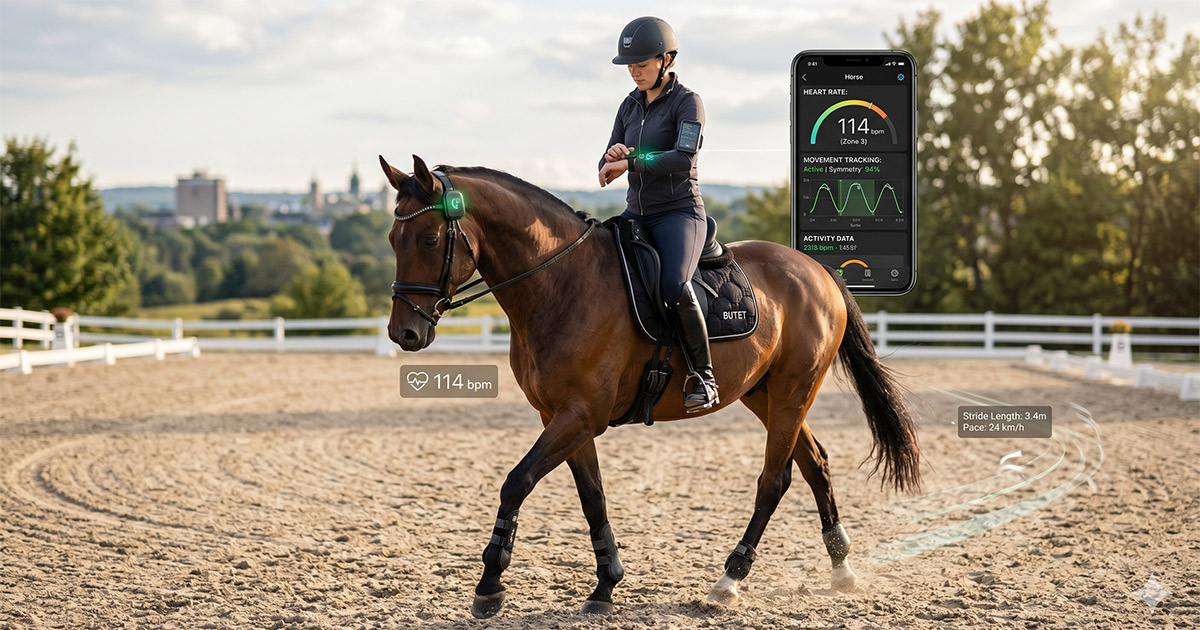
Heart rate monitoring has long been used in human athletics, and equine athletes are now benefiting from similar technology. Wearable sensors can measure heart rate during training, recovery, transportation, or turnout, helping owners better understand how a horse responds to stress and exercise.
Elevated heart rates during light work may indicate fatigue, pain, dehydration, overheating, or illness. Recovery rates after exercise can also provide insight into cardiovascular fitness and conditioning progress.
Modern systems can now sync with smartphone apps and training platforms, allowing riders and trainers to analyze trends over time rather than relying solely on observation. Some wearable systems even provide real-time alerts when readings fall outside normal ranges.
Sleep Tracking
Sleep is a growing area of interest in equine wellness research. Horses require both standing rest and periods of REM sleep while lying down, and disruptions in sleep patterns can affect behavior, immune function, recovery, and performance.
Wearable devices equipped with motion sensors can track lying time, restlessness, and overnight movement patterns. These insights may help identify environmental stress, pain, discomfort, or changes in routine that interfere with quality rest.
For performance horses, monitoring sleep and recovery may become as important as monitoring workload. Similar to human athletes, proper recovery plays a critical role in long-term soundness and mental well-being.
Movement Analysis
One of the most valuable applications of wearable tech is movement analysis. Sensors attached to the horse can track stride length, gait symmetry, cadence, speed, and overall movement efficiency.
This data can help riders:
- Monitor conditioning progress
- Evaluate training effectiveness
- Detect asymmetries
- Track rehabilitation progress
- Compare performance over time
Wearable motion analysis systems are especially useful because subtle gait irregularities are not always visible to the human eye. Objective data gives trainers and veterinarians another layer of information when evaluating performance or recovery.
Several modern systems now allow data sharing between owners, trainers, physiotherapists, and veterinarians, improving collaboration and long-term care planning.
Early Lameness Detection
Early intervention is one of the biggest advantages wearable technology may offer. Tiny changes in gait symmetry, stride timing, or activity levels can sometimes appear before overt lameness becomes visible.
Detecting these subtle shifts early may help prevent more serious injuries by allowing owners to:
- Reduce workload sooner
- Investigate discomfort earlier
- Adjust training programs
- Seek veterinary evaluation before compensation patterns worsen
Some wearable systems are already being explored for continuous health monitoring, including tracking temperature, respiration, and abnormal movement patterns that may signal illness or discomfort.
While wearable devices are not diagnostic tools, they can serve as valuable early-warning systems that encourage faster veterinary involvement when something changes.
The Future of Equine AI Technology
Artificial intelligence is likely to play a major role in the next generation of equine wellness technology. As devices collect more biometric and movement data, AI systems may become better at identifying patterns associated with stress, injury risk, illness, or recovery needs.
Future possibilities may include:
- Predictive injury analysis
- Automated wellness alerts
- Personalized conditioning recommendations
- Remote veterinary monitoring
- Real-time behavior analysis
- Smart barn integration
The goal is not to replace experienced horse owners or veterinarians, but to provide additional tools that support earlier detection and more informed care decisions.
As wearable technology becomes more accurate, affordable, and accessible, it may help shift equine wellness toward a more preventative and data-informed approach.
At the same time, balance remains important. Technology works best when combined with skilled horsemanship, careful observation, and a strong understanding of the individual horse. No device can replace the value of knowing your horse’s normal behavior, movement, and personality.
Wearable tech may not be the future of equine wellness entirely — but it is quickly becoming part of it.