
A look at traditional and non-traditional complementary approaches to treating hyperthyroidism in cats.
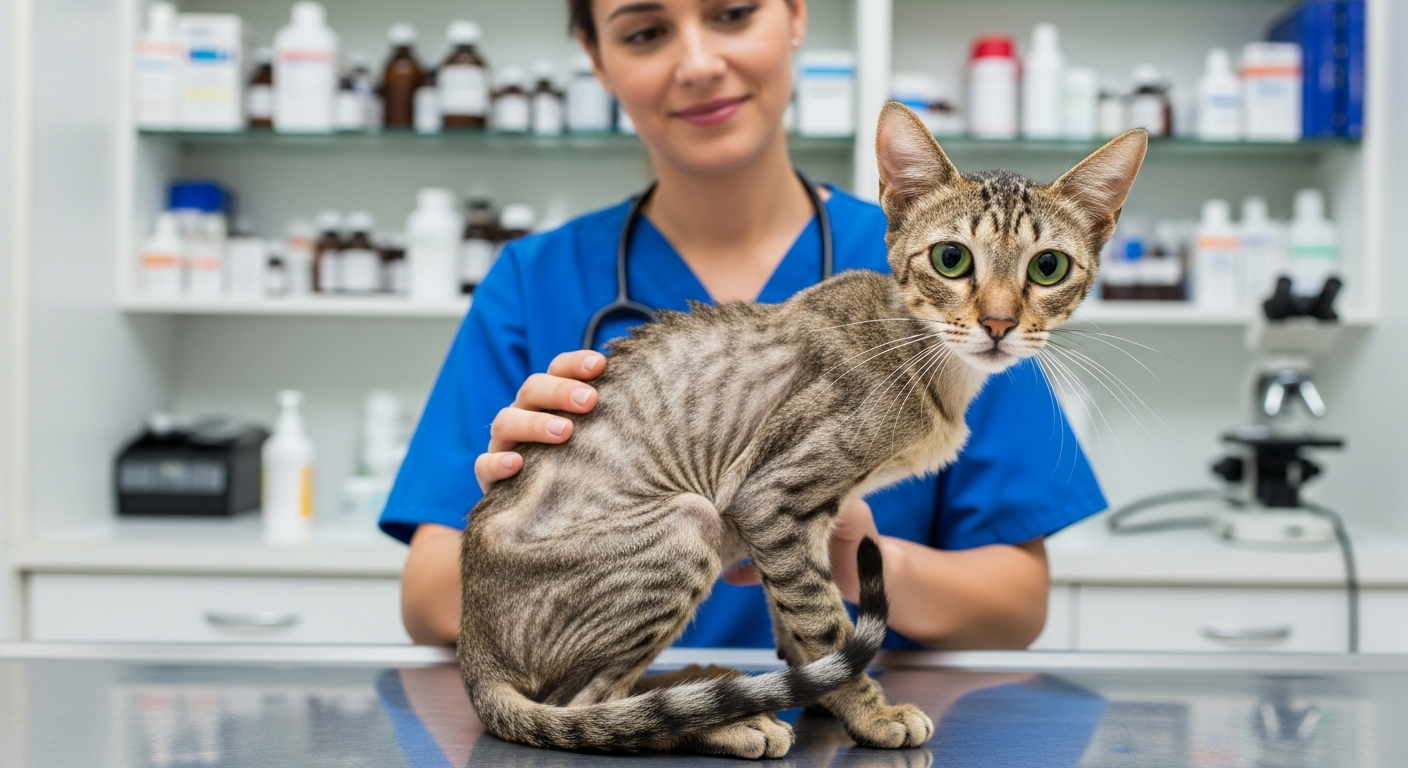
Feline hyperthyroidism is the most common endocrine disorder in cats, primarily affecting middle-aged and senior felines. It results from excessive thyroid hormone (T3 and T4) production, usually due to benign adenomatous hyperplasia of the thyroid gland. Clinical signs include weight loss, polyphagia, polydipsia, hyperactivity, tachycardia, hypertension, and gastrointestinal disturbances such as vomiting and diarrhea.
Conventional treatments include radioactive iodine (I-131), thyroidectomy, and antithyroid medications such as methimazole. However, many pet owners and veterinarians seek complementary therapies to manage the condition alongside or in place of conventional treatments. This article explores both traditional and non-traditional complementary therapies, analyzing their efficacy and scientific support from peer-reviewed research.
Traditional complementary therapies for feline hyperthyroidism
- Dietary management
Dietary therapy, particularly iodine-restricted diets, is a well-established complementary approach for feline hyperthyroidism.
Hills™ Prescription Diet y/d is formulated to limit iodine intake, thereby reducing thyroid hormone synthesis. A study by Van der Kooij et al (2014) demonstrated that an iodine-restricted diet effectively reduced T4 levels in hyperthyroid cats, maintaining euthyroidism in most cases.
While this diet is a viable non-invasive option, its success depends on strict adherence, as any iodine-containing food can negate its effects. It also does not take into consideration concurrent disease like renal insufficiency, which many of these cats may be plagued, necessitating additional nutrient requirements.
- Nutritional supplements
- L-Carnitine: Some studies suggest L-carnitine may support muscle mass and reduce weight loss in hyperthyroid cats, as it plays a role in mitochondrial energy metabolism.
- Omega-3 fatty acids: Supplementing with Omega-3s may reduce systemic inflammation and support cardiovascular health, which is often compromised in hyperthyroid cats (Peterson et al, 2021).
- Standard Process Feline Whole Body Support: This supplement provides multisystem nutritional support with an emphasis on the endocrine system.
- Standard Process Feline Renal Support: Provides balanced cellular nutrition for all aspects of urinary system function, and helps support natural rehabilitation of the kidneys.
- Standard Process Feline Cardiac Support: Provides nutrients that support optimal cardiac function and normal function of muscle cells.
- Standard Process Feline Immune System Support: Provides nutritional and biochemical support for healthy immune cells and tissues.
- Herbal medicine and Traditional Chinese Veterinary Medicine (TCVM)
Herbal therapy is widely used in holistic veterinary practice, often in conjunction with conventional treatments.
- Bugleweed (Lycopus spp.): An herb traditionally used in European and Chinese medicine for hyperthyroidism, Bugleweed has been investigated for its ability to inhibit thyroid hormone release. A study by Auf’mkolk et al (1985) found that Lycopus europaeus reduces T4 levels by inhibiting iodine uptake and thyroxine secretion.
- Rehmannia (Rehmannia glutinosa): A staple in TCVM, this herb is believed to support adrenal and kidney function. While feline-specific research is limited, studies in human and rodent models suggest potential benefits in managing hypermetabolism.
- Astragalus (Astragalus membranaceus): This herb is often used in TCVM to support immune function and overall vitality in aging animals. Though not directly affecting thyroid hormones, it may mitigate secondary effects of hyperthyroidism, such as muscle wasting and immune suppression (Yance, 2013).
Non-traditional complementary therapies for feline hyperthyroidism
- Homeopathy
Homeopathy remains controversial due to its reliance on extreme dilutions of biologically active substances. However, some holistic veterinarians use it for hyperthyroidism, despite limited scientific support. Common homeopathic remedies include:
Iodium: Used for cases of weight loss with excessive hunger.
Lycopus Virginicus: Similar to its herbal counterpart, this remedy is believed to reduce thyroid overactivity.
Phosphorus: Often prescribed for cats with cardiac symptoms secondary to hyperthyroidism.
While anecdotal evidence exists, a systematic review by Mathie et al (2014) found limited high-quality evidence supporting homeopathy for endocrine disorders.
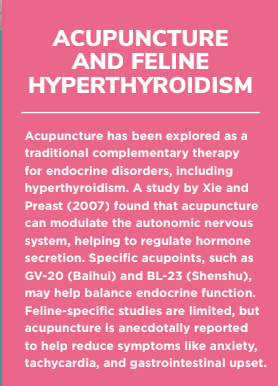
- Essential oils and aromatherapy
Essential oils, while commonly used in human complementary medicine, must be used cautiously in cats due to their unique hepatic metabolism.
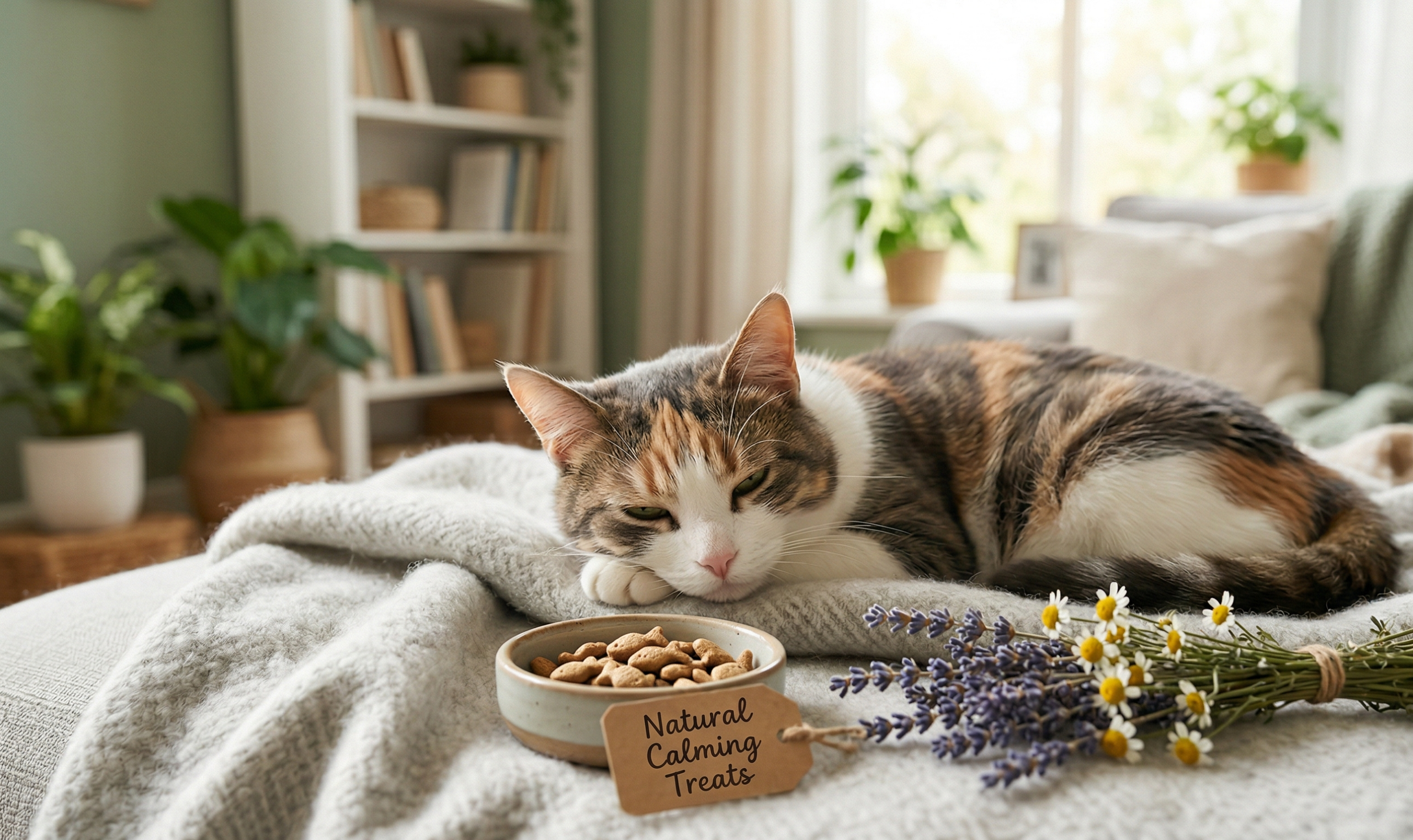
Lavender (Lavandula angustifolia) and chamomile (Matricaria chamomilla) have calming properties, which may help alleviate anxiety and restlessness in hyperthyroid cats. A study by Yim et al (2014) found that inhalation of lavender reduced cortisol levels in humans, though veterinary-specific studies are lacking.
Important: Cats have a reduced ability to metabolize certain compounds found in essential oils, particularly phenols and terpenes. Essential oils should be used under veterinary supervision.
- Reiki
Reiki, a Japanese energy healing practice, is used by some holistic veterinarians to promote relaxation and overall well-being in hyperthyroid cats. While scientific validation is minimal, Reiki practitioners claim it helps reduce stress, which may indirectly benefit hyperthyroid cats by lowering sympathetic nervous system activity.
- Cannabinoid therapy
Cannabidiol (CBD) is gaining popularity in veterinary medicine for its potential anti-inflammatory and anxiolytic effects.
Mechanisms in hyperthyroid cats
- Anti-anxiety effects: Hyperthyroid cats often exhibit restlessness and anxiety. CBD interacts with the endocannabinoid system, potentially promoting calmness (Silver, 2019).
- Cardiovascular support: Some studies suggest CBD may have mild cardioprotective effects, though its impact on hyperthyroid-related hypertension is unclear.
Research on CBD use in hyperthyroid cats is limited. A study by Gamble et al (2018) found it was well-tolerated in dogs but noted potential drug interactions, emphasizing the need for veterinary oversight.
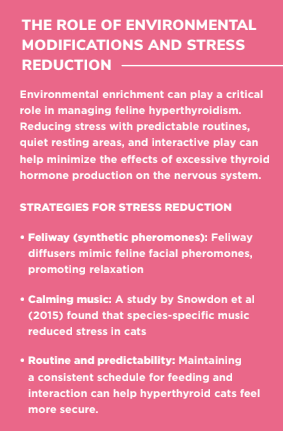
Conclusion
Complementary therapies for feline hyperthyroidism range from well-researched approaches, such as iodine-restricted diets and herbal medicine, to less conventional modalities, including Reiki and CBD therapy. While many of these therapies show promise, they should be used in conjunction with veterinary supervision and evidence-based medicine. More rigorous clinical trials are needed to validate the efficacy of non-traditional approaches.
Veterinarians and pet owners must work together to develop individualized treatment plans, integrating both conventional and complementary therapies to optimize the health and quality of life of hyperthyroid cats.