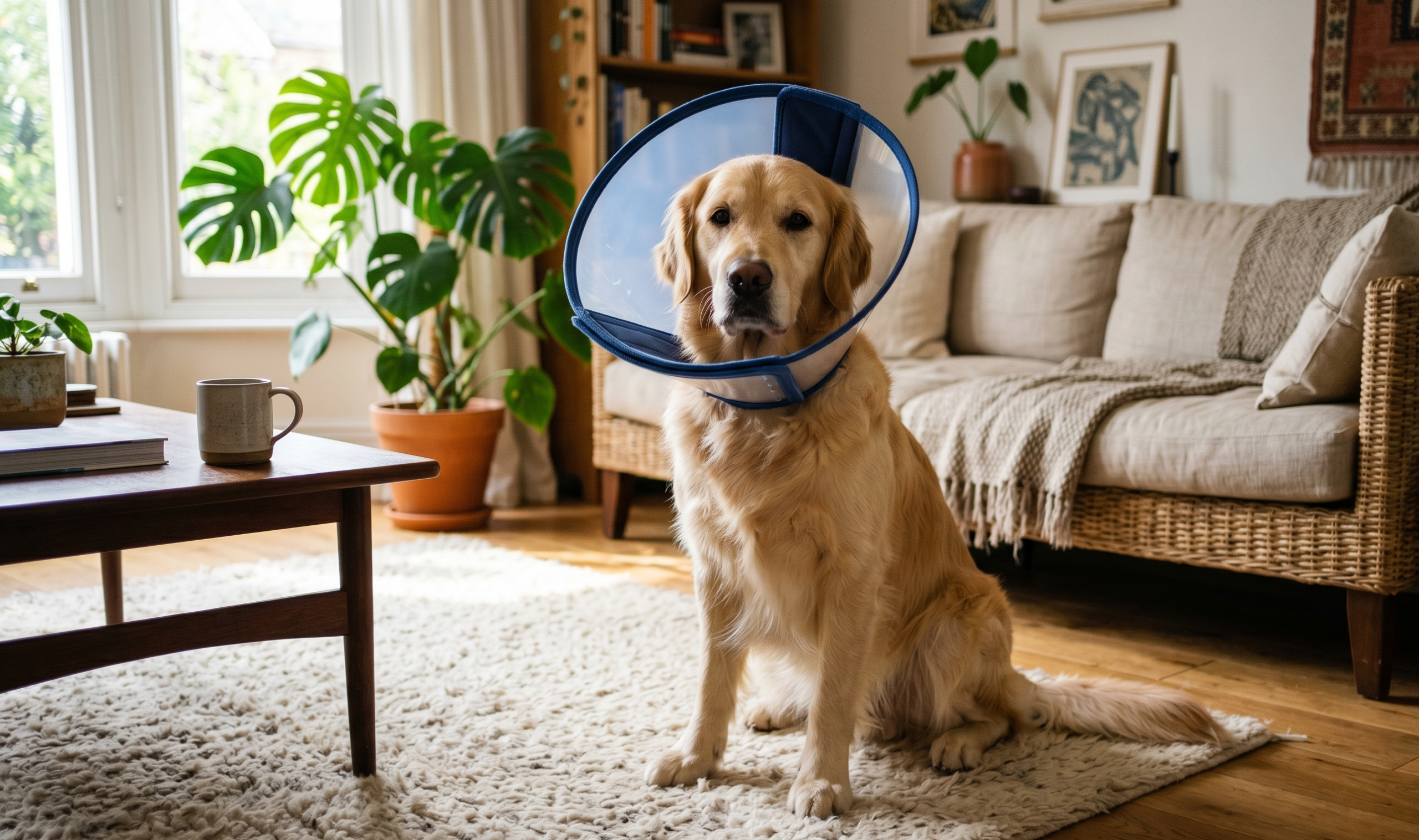
When your furry friend needs to recover from surgery, heal from an injury, or stop licking a wound, your veterinarian might recommend a cone collar. These protective devices come in several types, and knowing which one to choose can make the recovery process easier for both you and your dog.
The Traditional Plastic Cone (E-Collar)
The classic cone-shaped collar, also called an Elizabethan collar or E-collar, is the most common type. Made from hard plastic, it extends beyond your dog’s nose to prevent them from reaching wounds, stitches, or irritated areas. While effective, some dogs find these collars challenging because they can bump into doorways and furniture.
Soft Cone Collars
These collars work like traditional cones but are made from flexible, padded materials. They’re more comfortable for dogs who need to rest and won’t cause damage if your dog bumps into things. Soft cones are great for calm dogs but may not work as well for determined chewers who might bend the collar to reach their wounds.
Inflatable Donut Collars
Looking similar to a travel pillow, these collars fit around your dog’s neck like a cushioned ring. They’re comfortable for eating, drinking, and sleeping. However, they don’t work well for protecting wounds on the paws or tail since flexible dogs can still reach these areas.
Recovery Suits and Body Wraps
These fabric garments cover your dog’s torso, protecting surgical sites on the chest, abdomen, or back. They’re comfortable and don’t restrict your dog’s vision or movement. However, they need regular changing and aren’t suitable for all types of wounds.
When to Use Cone Collars
Your veterinarian will typically recommend a cone collar after:
- Spay or neuter surgery
- Other surgical procedures
- Skin infections or hot spots
- Ear infections requiring treatment
- Any situation where licking could delay healing
How Long Should They Wear It?
Most dogs need to wear their cone collar for 7-14 days, but always follow your veterinarian’s specific instructions. Remove it only when you can directly supervise your dog, and put it back on before leaving them alone.
Important Reminders
Every dog responds differently to cone collars. Monitor your dog closely during the first few hours to ensure they can eat, drink, and move safely. If your dog seems extremely stressed or cannot perform basic activities, contact your veterinarian immediately for alternatives.
Remember, while cone collars might seem uncomfortable, they’re essential for proper healing. Always consult with your veterinarian to determine which type of cone collar works best for your dog’s specific situation and temperament.