Cornell University’s College of Veterinary Medicine (CVM), in partnership with the K. Lisa Yang Center for Wildlife Health (CYCWH), has launched a pioneering four‑year residency in wildlife population health. Approved by the American College of Zoological Medicine (ACZM), the program is one of only three wildlife‑focused residencies in North America, designed to prepare veterinarians for the complex challenges of free‑ranging wildlife health.
The residency emphasizes a dual focus: clinical medicine and population‑level management. Graduates will be eligible for ACZM board certification, positioning them to lead in a field where animal, human and environmental health are deeply interconnected.
Residents gain extensive clinical training at the Janet L. Swanson Wildlife Hospital, which treats more than 2,500 wild animals annually, including raptors, foxes, and turtles. This hands‑on experience is complemented by collaborations with the University’s Hospital for Animals, licensed wildlife rehabilitators, and specialists in aquatic animal health, pollinator health, and wildlife pathology.
The program offers diverse rotations that reflect the breadth of wildlife population health. Through the New York State Wildlife Health Program, residents participate in disease surveillance and population management. At the Animal Health Diagnostic Center, they investigate wildlife diseases and contribute to diagnostics that inform global conservation. Additional training includes aquatic animal health investigations and pollinator health through Dr. Robin Radcliffe’s intensive Honeybee Health and Conservation course.
Each resident completes a capstone research project culminating in peer‑reviewed publications and a Master of Professional Studies in natural resources and the environment. Fieldwork opportunities with state, federal, and international partners reinforce the program’s One Health perspective, integrating wildlife, ecosystem, and public health.
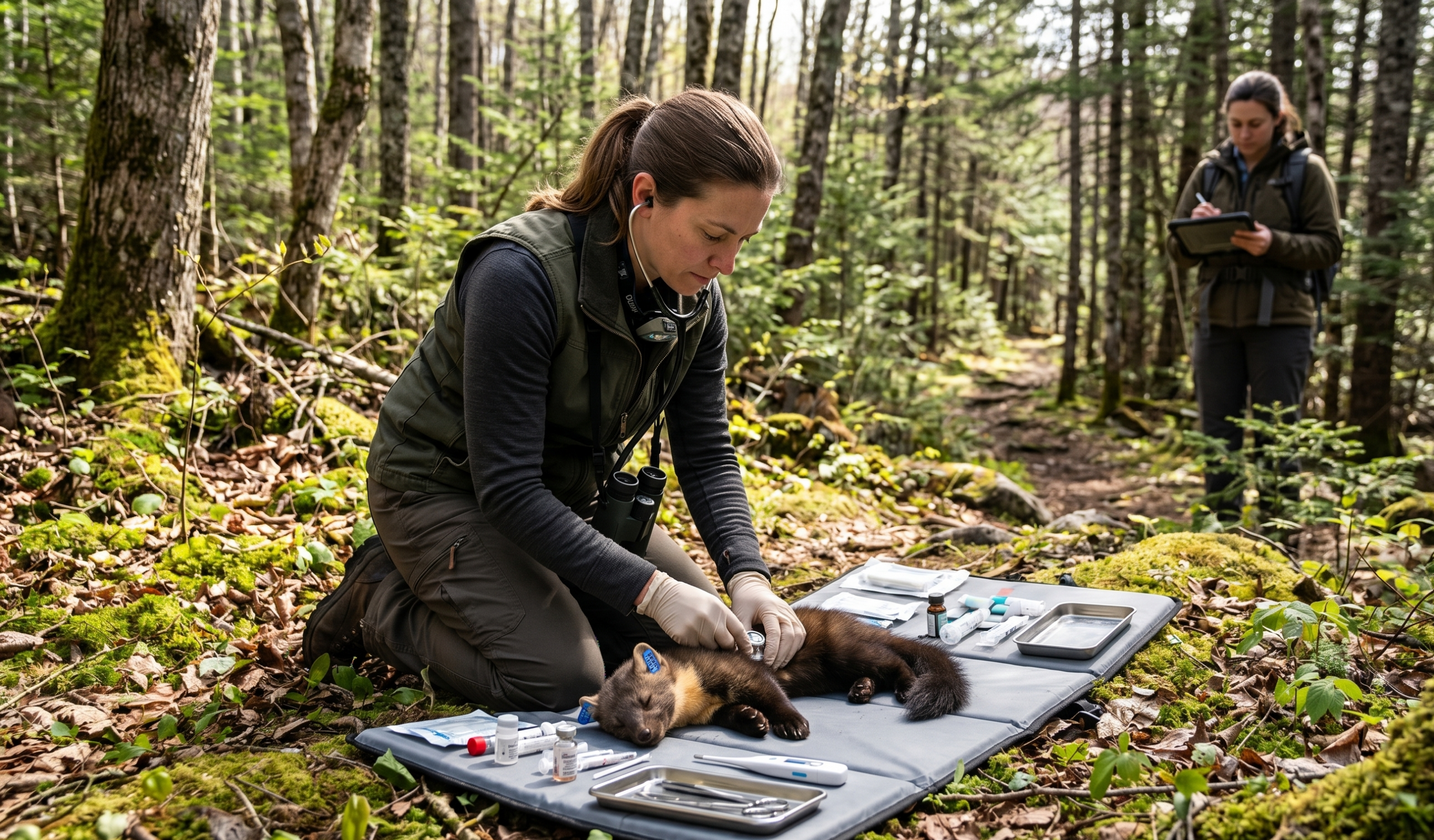
The program’s first resident, Dr. Taylor Haefs, DVM, MPH, is already engaged in a disease‑monitoring project on American martens in New York’s Adirondacks. Working with Dr. Jenny Bloodgood of the Cornell Wildlife Health Lab, Haefs is helping establish baseline health data critical for conservation decisions.
Bloodgood notes: “Wildlife everywhere is under growing pressure, from climate change and habitat loss to emerging diseases. Our goal is to train wildlife veterinarians who can meet those challenges with both scientific rigor and compassion.”