
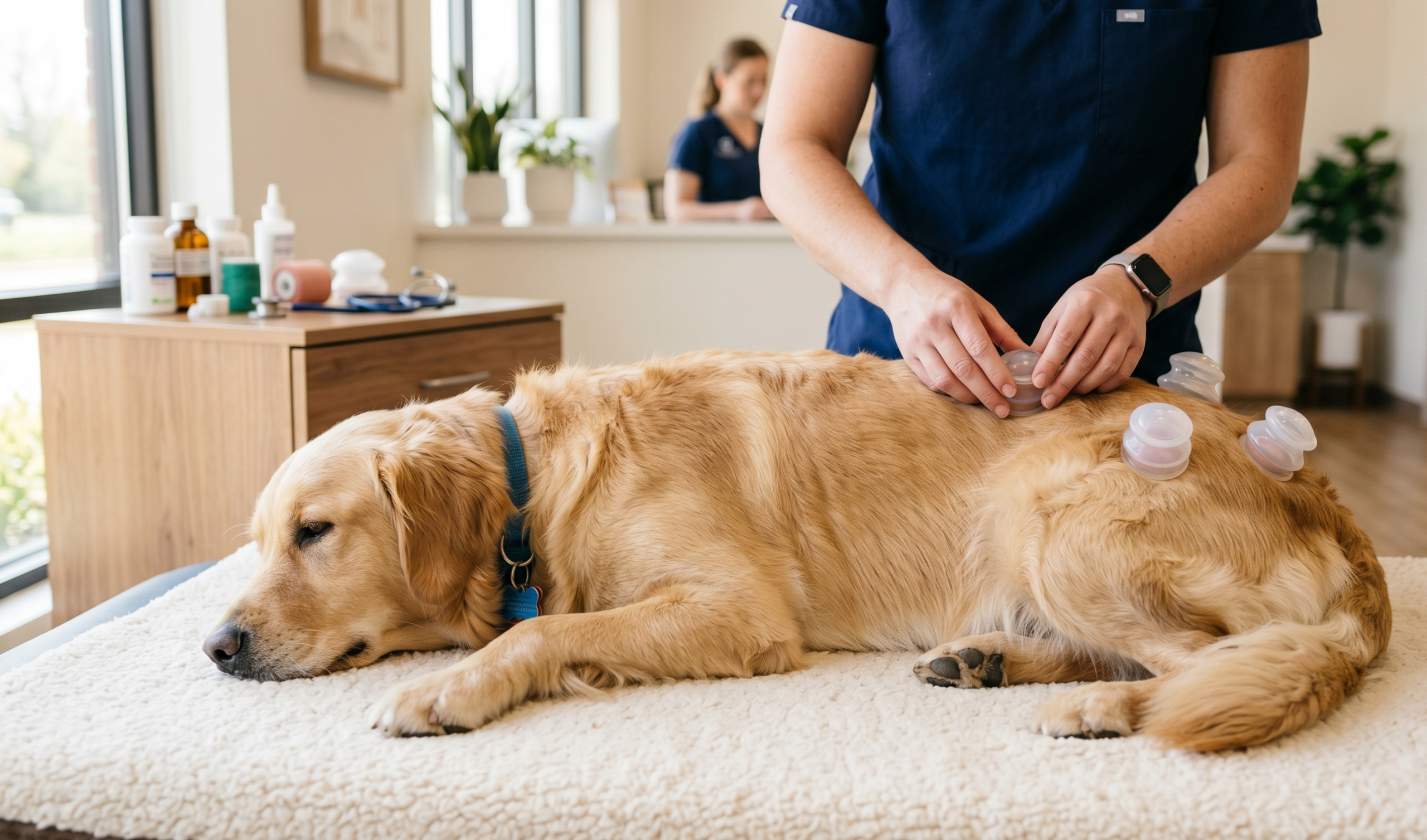
If you’ve heard about cupping therapy for dogs, you might be curious about this ancient practice that’s making its way into veterinary care. Let’s explore what cupping is and how it might benefit your furry companion.
What Is Cupping for Dogs?
Cupping is an alternative therapy that’s been used in human medicine for thousands of years. Recently, veterinarians have adapted this technique for canine care. The practice involves placing special cups on your dog’s skin to create gentle suction. This suction is believed to increase blood flow to specific areas of the body.
How Does It Work?
During a cupping session, a trained veterinary professional places silicone or glass cups on your dog’s body. The therapist creates suction either by heating the air inside the cup or using a pump. This suction pulls the skin slightly upward into the cup.
The suction creates a decompressing effect on the soft tissues inside the cup, while the area around the rim experiences gentle pressure. This process draws fresh blood to the site and encourages lymphatic fluid movement, which helps dissolve internal scar tissue or “adhesions.” By expanding the space between various tissue layers, this therapy ultimately helps your dog move more freely and comfortably.
Sessions typically last between 10 to 20 minutes, and the cups may be left in one spot or moved around during treatment.
Potential Benefits
Canine cupping therapy may help with several conditions. These include muscle tension, pain relief, improved circulation, and faster recovery from injuries. Some canine parents report their dogs seem more relaxed after cupping sessions. The therapy might also help reduce inflammation and support the healing process after strenuous activity or surgery.
Is It Safe?
When performed by a trained veterinary professional or certified animal rehabilitation specialist, cupping is generally considered safe for dogs. However, it’s not suitable for every situation. Dogs with skin conditions, open wounds, or certain health problems may not be good candidates for this therapy.
What to Consider
Before trying cupping therapy for your four-legged friend, there are important factors to consider. First, this treatment should complement, not replace, traditional veterinary care. Always discuss new therapies with your veterinarian before starting them. Make sure the person performing the cupping has proper training and certification in animal rehabilitation or veterinary care.
Watch your dog during sessions to ensure they’re comfortable. Most dogs tolerate cupping well, but every animal is different. Some dogs might find the sensation strange at first.
If you’re interested in exploring this option for your canine companion, please consult with your veterinarian first. They can evaluate whether cupping might be appropriate for your dog’s specific situation and recommend qualified professionals in your area.
Remember, your veterinarian is your best resource for making informed decisions about your dog’s health and wellness.