Discover how hyaluronic acid can enhance your diagnostic capabilities and treatment options for degenerative joint disease.
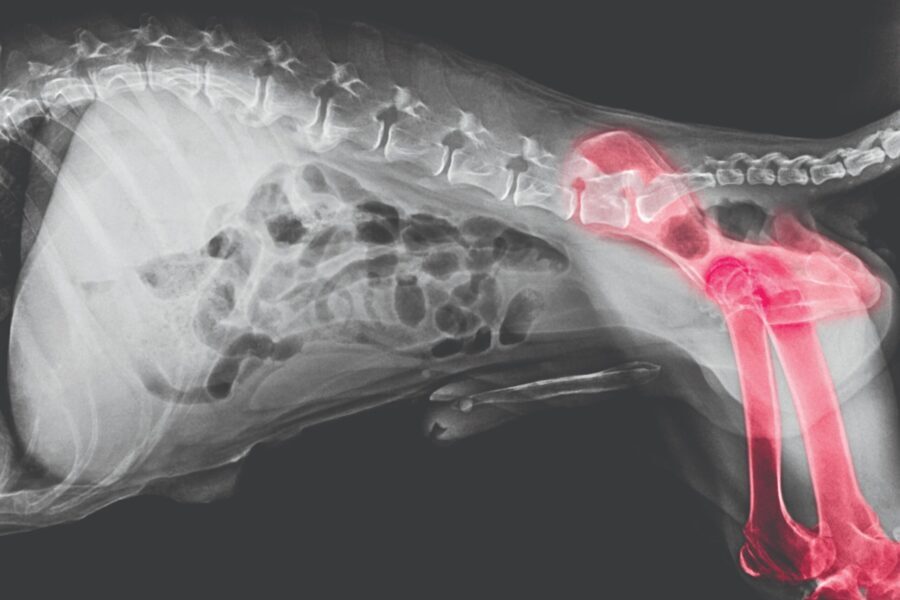
Degenerative joint disease (DJD) in companion animals will account for a significant number of visits from canine and feline patients. In fact, osteoarthritis alone affects as many as 90% of dogs older than eight and cats older than 12. While traditional diagnostics exist to identify DJD, they have limitations, require late-stage disease, and can be cost prohibitive. Fortunately, hyaluronic acid has emerged as a novel biomarker you can use to diagnose DJD with confidence. What’s more, VDI’s Test & Treat approach can help you identify DJD in the early stages and devise treatment options on a case-by-case basis.
Traditional Diagnostics for Degenerative Joint Disease
DJD encompasses multiple joint problems, including osteoarthritis, intervertebral disk disease, degenerative myelopathy, and immune-mediated polyarthritis. As such, there are a multitude of diagnostics used to identify it, including:
- Orthopedic exams
- Survey radiographs
- Pain/mobility scoring
- MRI
- Force plates
- Arthrocentesis
- Synovial fluid analysis
- Complete blood counts
- Thermal imaging
However, these methods aren’t always effective at diagnosing DJD, especially in the early stages when clinical signs are yet to appear, and early enough to offer the most treatment options. Further, not all pet parents have the budget for extensive testing. And this is where the hyaluronic acid blood test through VDI Laboratory comes in.
Hyaluronic Acid Blood Testing Can Identify the Early Stages of DJD
Synovial fluid, which contains hyaluronic acid, is essential for joint function, acting as a lubricant and shock absorber within synovial joints. In cases of DJD, the extracellular matrix degrades due to inflammation, bone loss, oxidative stress, and synovitis. As the synovial membrane becomes inflamed and porous, hyaluronic acid begins to leak. As such, elevated serum HA (sHA) levels in the blood are a novel biomarker indicating degenerative joint disease, especially in the early stages. Common applications for sHA testing include:
- Dogs and cats over five years old
- Breeds with a genetic predisposition
- Large and giant breed dogs
- Active, sporting, and working dogs
- Animals showing early signs or behavior changes indicative of degenerative joint disease
[adsanity align=’alignnone’ id=36254]
A Case Study Demonstrating the Efficacy of sHA Testing
Dr. Lucretia Greear, DVM, is the owner of Woodhaven Animal Hospital. A client brought in a six-year-old canine who participated in agility sports because he had hesitated going over the A-frame during a training session. After imaging and radiographs returned normal results, Dr. Greear suggested sHA testing, which came back positive.
“Had I not known about this and done this test, I wouldn’t have been able to start to make any changes and intervene with degenerative joint disease,” said Dr. Greear. Thanks to the positive result, she was able to prescribe HA supplementation. Within two weeks, the client reported the dog was back to his regular training regimen.
DJD Testing Made Easy with VDI
VDI specializes in diagnostic testing that makes disease identification easier for veterinarians and more cost-effective for clients. With their serum hyaluronic acid blood test, you can identify degenerative joint disease in the early stages, often before conventional methods would be able to diagnose it. What’s more, their Test & Treat approach offers customized treatment recommendations that can help you slow the progression of DJD, improve outcomes, and enhance the quality of life for patients.
Watch a webinar with VDI chief technology officer Randy Ringold to review case studies and learn more.