Crate training is one of the most effective tools in dog training. Whether you’ve brought home a new puppy or want to help an adult dog feel more secure, a crate can offer structure, comfort, and safety. Many dog owners think using a crate is mean or restrictive. But in truth, when used properly, it becomes a dog’s personal space, a den where they feel calm and protected.
This guide will help you understand crate training in simple steps. You’ll learn how to introduce the crate, when to use it, and how to avoid common mistakes. With time and patience, crate training can work for dogs of all ages.
What Is Crate Training?
Crate training teaches your dog to see the crate as a safe and relaxing place—dogs naturally like enclosed spaces. A crate mimics a den, giving them a spot to rest, sleep, and stay safe. It’s not a punishment tool. It’s a helpful way to guide your dog through house training, reduce anxiety, and create healthy boundaries.
You can use a crate for puppies learning potty habits or adult dogs that need a routine. It also helps prevent chewing, barking, and other unwanted behaviors when your dog is alone.
Benefits of Crate Training
Crate training has many clear benefits for both dogs and owners:
- Helps with potty training – Dogs avoid going to the bathroom where they sleep. A crate encourages control and routine.
- Reduces destructive behavior – When unsupervised, dogs may chew furniture or get into unsafe things. A crate keeps them safe.
- Creates a calm space – Dogs often feel overwhelmed. A crate offers them a quiet space to relax.
- Makes travel easier – Crate-trained dogs feel less stressed during car rides or vet visits.
- Improves sleep routine – Dogs trained in crates often sleep better and stay on schedule.
When introduced correctly, the crate becomes your dog’s comfort zone—not a cage.
Choosing the Right Crate
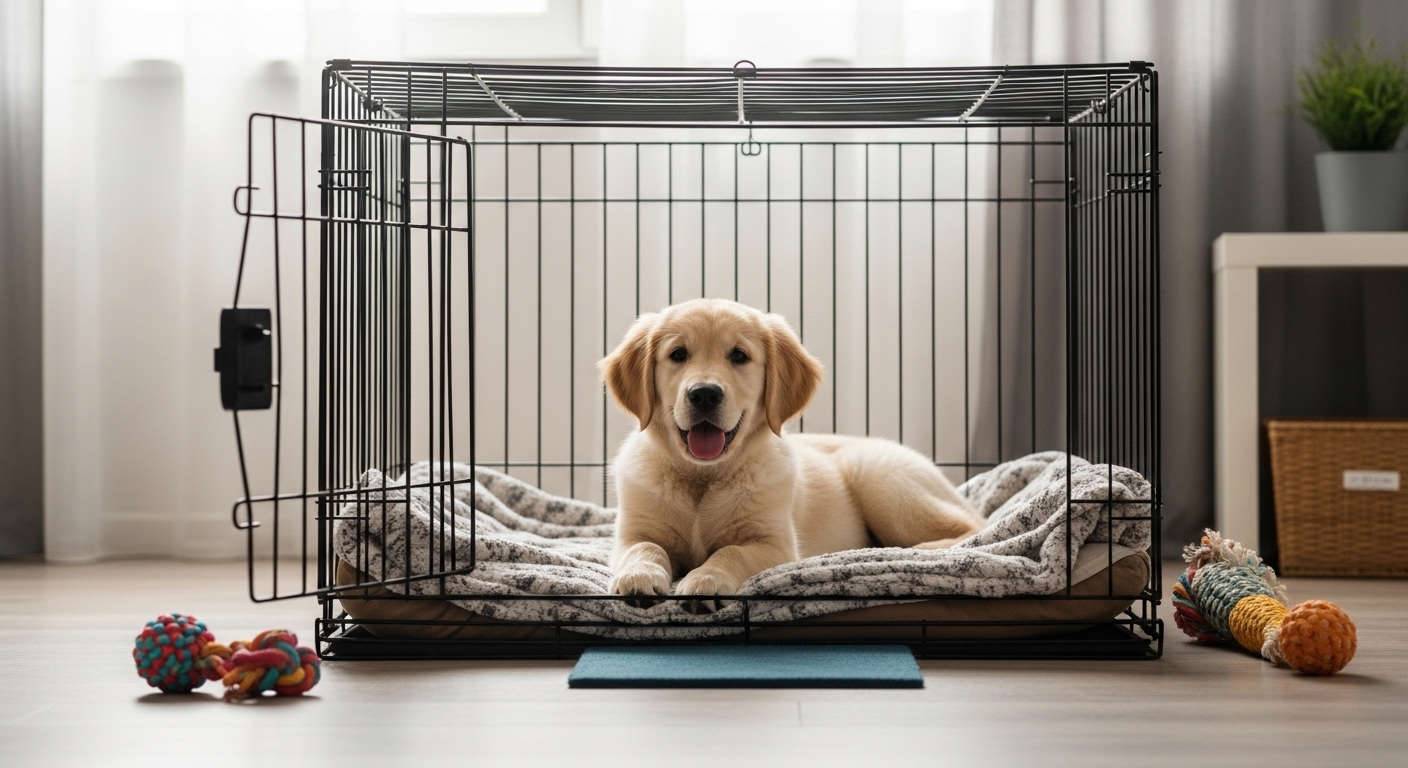
Before training begins, pick the right crate for your dog’s size and needs. Crates come in different materials, such as wire, plastic, or soft fabric.
Here are some things to consider:
- Size: Your dog should be able to stand up, turn around, and lie down comfortably. A crate that’s too small is uncomfortable. One that’s too large can delay potty training.
- Material: Wire crates allow better airflow and visibility. Plastic containers are more enclosed and can help anxious dogs feel more secure.
- Dividers: For puppies, use crates with dividers so the space grows as your dog does.
Once you have the right crate, place it in a quiet but commonly used room. Avoid isolating your dog or putting the crate in a noisy area.
Step-by-Step Crate Training for Puppies
Training a puppy requires patience, routine, and short sessions. Here’s a simple plan to follow:
Step 1: Introduce the Crate
Leave the crate door open and place treats or toys inside. Let your puppy explore it on their own. Do not push or force them to go in. Let it happen naturally.
Use a soft voice. Praise your puppy for going near or inside the crate. Make the crate feel like a fun, safe spot. Put a soft blanket or bed inside to make it cozy.
Step 2: Feed Meals Inside
Once your puppy enters the crate comfortably, begin feeding meals in there. Place the food bowl near the front at first. Then slowly move it further inside. This builds a positive connection between the crate and happy moments like eating.
Step 3: Close the Door for Short Periods
After your puppy eats or enters the crate, gently close the door for a few minutes. Stay nearby. Praise them if they stay calm. Then open the door and let them out. Keep sessions short, only 5 to 10 minutes at first.
Gradually increase the time with the door closed. Keep it peaceful and stress-free. Avoid making a big deal when opening or closing the crate.
Step 4: Use the Crate for Naps and Nighttime
Puppies need sleep and structure. Use the crate during naps and bedtime. Place the crate near your bed at night to help them feel secure. If they whine, wait a moment before responding to avoid rewarding noise.
Take your puppy out for potty breaks regularly. Over time, your puppy will learn that nighttime means rest, not play.
Crate Training for Adult Dogs
Crate training an adult dog follows the same steps as training a puppy, but it may take longer—especially if the dog has never used a crate before.
Start slowly. Let your dog explore the crate without pressure. Use treats, toys, and praise. Repeat short sessions several times a day. Let your dog go in and out freely at first.
Be patient. Adult dogs may have past fears or habits. Always use positive reinforcement. Never yell or punish your dog if they resist. Respect their pace, and stay consistent.
Common Mistakes to Avoid
While crate training can be simple, many people make small mistakes that delay progress. Avoid these:
- Using the crate as punishment – This causes fear. The crate should never be linked to bad behavior.
- Leaving the dog in too long – Crates are for short breaks, not full days. Puppies should only stay in for a few hours at a time. Adult dogs should not be crated all day.
- Rushing the process – Training takes time. Don’t expect your dog to love the crate in one day.
- Lack of rewards – Skipping treats and praise can reduce your dog’s motivation to use the crate.
Correct use builds trust. Wrong use creates stress.
Tips for Success
Here are some simple tips to make crate training smoother:
- Keep sessions short in the beginning.
- Make crate time a part of your dog’s daily routine.
- Use soft music or white noise to help calm your dog inside the crate.
- Provide a safe chew toy inside the crate.
- Always remove your dog’s collar when they’re inside to avoid choking risks.
- Be calm during crate time. Your dog will follow your energy.
Final Words
Crate training doesn’t have to be hard. With patience, a clear routine, and positive feedback, you can help your dog learn to love their crate. Whether you’re working with a new puppy or an older dog, the process is the same: go slow, stay positive, and repeat often.
Your dog will soon understand that the crate is their special place. It’s a safe zone, a sleeping den, and a helpful tool for a happy life. When done right, crate training leads to a calmer dog and a more peaceful home.
Learn More About Dog Training That Works
Want to go beyond the basics and build stronger habits with your dog?
Visit Animal Wellness Academy for dog-friendly training courses that are easy to follow. Get science-backed advice, step-by-step videos, and expert guidance all from home. Take your next step in training for your pet dogs today with Animal Wellness Academy.
FAQs About Crate Training
Is crate training safe for dogs?
Yes, crate training is safe when done correctly. It should be a positive, calm experience—not punishment. Always limit crate time and provide breaks.
How long can a dog stay in a crate?
Puppies should only be in the crate for 1–3 hours at a time. Adult dogs can stay for up to 4–6 hours, but not all day. Always include exercise and bathroom breaks.
What if my dog cries in the crate?
Some whining is typical at first. Wait a few minutes before responding. If it continues, check for needs like hunger or a potty break. Don’t give in too fast, or they’ll learn to cry for attention.
Can I crate train an older dog?
Yes. Adult dogs can be crate trained, too. It might take more time and patience, but it works using the same steps: slow introductions, praise, and consistency.
Should I put toys or blankets in the crate?
Yes, as long as they are safe and soft. A chew-safe toy and a clean blanket can help your dog relax and feel at home inside the crate.