Brachycephalic Obstructive Airway Syndrome (BOAS) remains one of the most pressing welfare concerns in brachycephalic breeds, particularly British bulldogs. Traditional management strategies often involve surgical intervention, which, while effective, carries inherent risks and recovery challenges. Recent investigations into a novel muscle-toning therapeutic have opened the door to a less invasive alternative that could significantly improve quality of life for affected dogs.
Study Design and Methodology
A therapeutic compound was developed combining a muscle-toning protein (tetanus toxin) with an antibody decoy mechanism. This formulation was designed to enhance local muscle tone even in the presence of neutralising antibodies, a limitation often encountered in similar approaches.
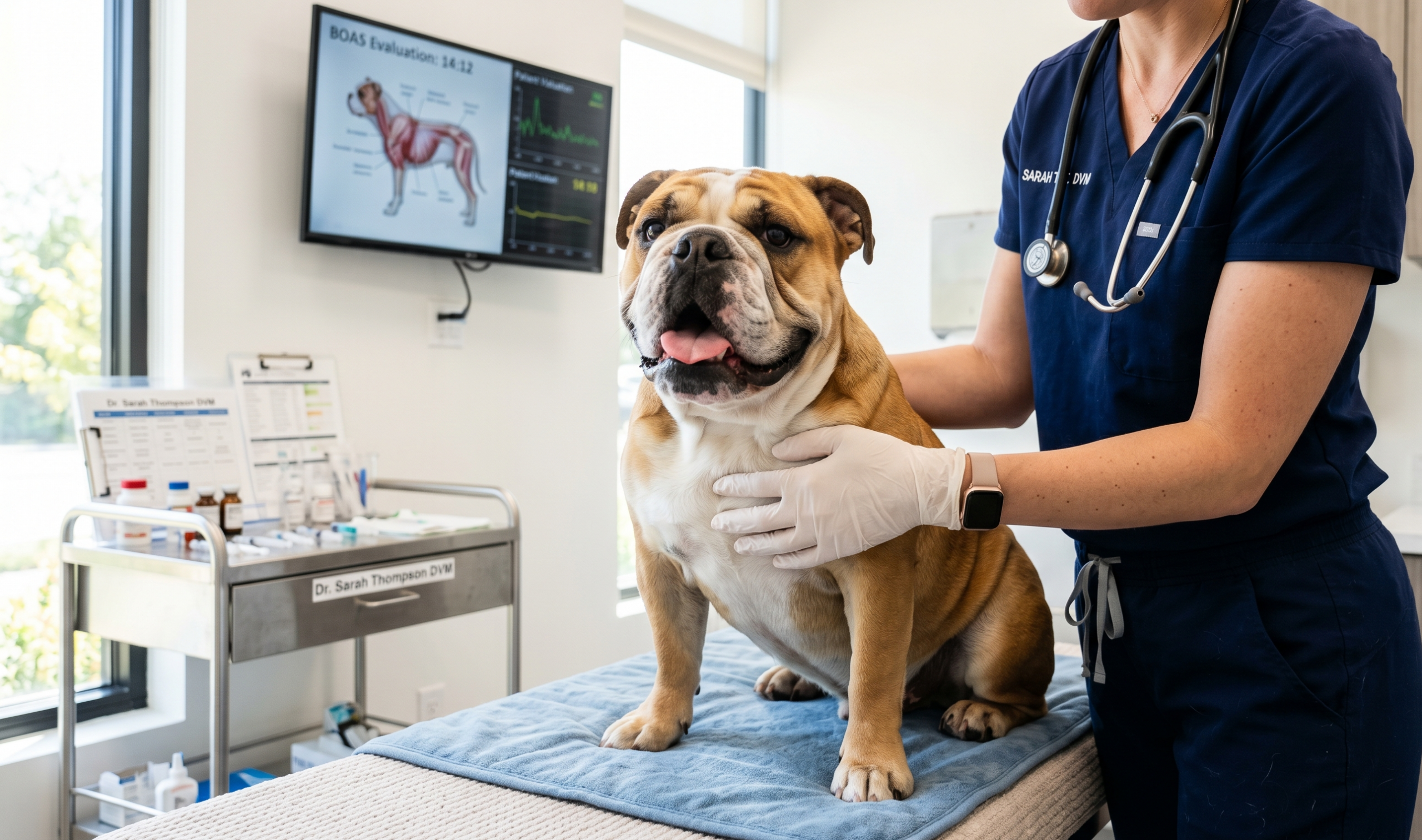
Six British bulldogs, aged 4 to 8 years and diagnosed with grade 2 or 3 BOAS, were enrolled. Under sedation, each dog received bilateral injections into the rostral geniohyoid muscle. Respiratory function was assessed using the Respiratory Functional Grading (RFG) scale, following a standardized three-minute trot test. Evaluations were conducted at multiple intervals until improvements diminished back to baseline.
Key Findings
All six bulldogs demonstrated measurable improvement, with each dog improving by at least one grade on the RFG scale. Statistical analysis using non-parametric methods (Friedman χ² with Durbin-Conover post-hoc tests) confirmed that BOAS severity scores were significantly reduced compared to placebo (p < 0.001).
The duration of improvement varied, lasting between 20 and 53 weeks post-treatment. This suggests that the therapeutic not only provides clinically meaningful relief but also sustains its effect for several months, reducing the need for repeated interventions within short timeframes.
One noted complication was feeding difficulty, observed for up to 5 ½ weeks when injections were placed outside the intended rostral geniohyoid target. This highlights the importance of precise anatomical placement to avoid adverse effects.
Clinical Implications
For veterinary professionals, these findings are highly relevant. The therapeutic offers:
- Reduced invasiveness compared to surgical correction.
- Extended duration of efficacy, with improvements lasting several months.
- Well-tolerated outcomes, provided injections are accurately placed.
While further studies with larger cohorts are warranted to validate these results, the initial data suggest that this approach could represent a paradigm shift in BOAS management. By targeting muscle tone directly, clinicians may be able to alleviate airway obstruction without resorting to surgery, thereby improving patient welfare and reducing procedural risks.
Conclusion
This novel muscle-toning therapeutic demonstrates promising potential as a safe, effective, and less invasive treatment option for British bulldogs suffering from BOAS. With improvements sustained for up to a year in some cases, it could become a valuable addition to the clinical toolkit for managing brachycephalic airway disease.