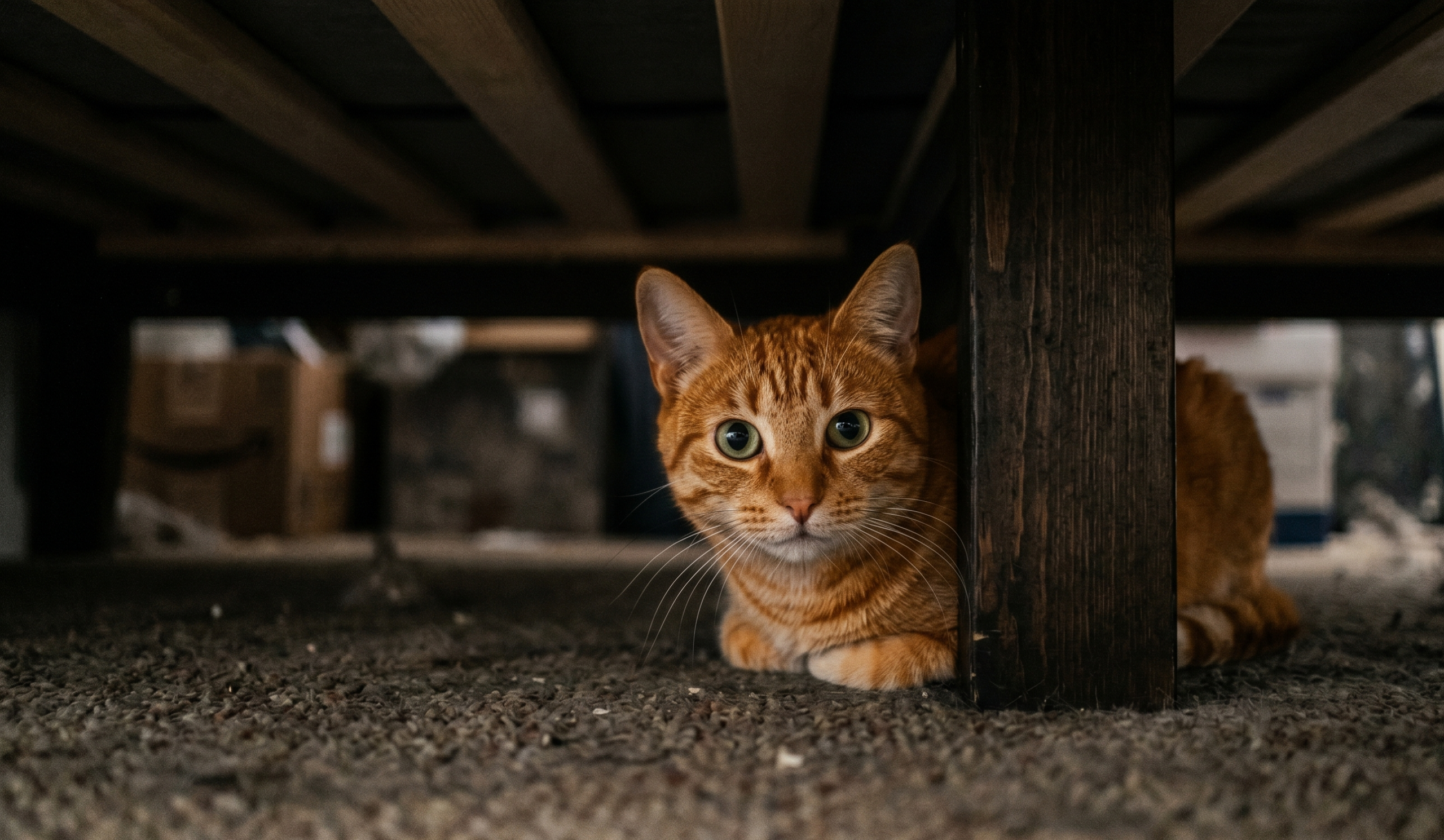
Cats are masters at hiding their discomfort. Unlike dogs who might whimper or seek attention when feeling unwell, cats often do the opposite—they retreat to quiet spaces and avoid interaction. This hiding behavior is feline social withdrawal and it is one of the most important warning signs that something might be wrong with your feline companion.
Why Cats Hide When They’re Not Feeling Well
In the wild, cats are both predators and prey animals. This means they’ve learned to hide any signs of weakness that could make them vulnerable. When your cat feels sick or uncomfortable, their instinct tells them to find a safe, secluded spot where they can rest without being bothered. You might find them under beds, in closets, behind furniture, or in other unusual places they don’t normally frequent.
Common reasons for hiding include pain, illness, anxiety, stress, or fear. Medical conditions like urinary problems, digestive issues, dental pain, or infections can all trigger this withdrawal behavior. Changes in the household, such as new people, loud noises, or even rearranged furniture, can also cause stress-related hiding.
Recognizing the Warning Signs
Along with hiding, watch for other concerning behaviors. Your cat might stop eating or drinking, avoid using the litter box, or show changes in their normal routines. They may become less vocal or refuse to interact with family members they usually enjoy being around. Some cats might also show physical signs like trembling, excessive panting, or changes in their breathing patterns.
Practical Approaches to Help Your Cat
Create a calm environment. Reduce household noise and activity around your cat’s hiding spot. Give them space but check on them regularly to monitor their condition.
Ensure access to essentials. Place fresh water, food, and a clean litter box near their hiding location. Sometimes cats won’t emerge even when they need these basic necessities.
Maintain routine. Keep feeding times, play sessions, and daily activities as consistent as possible. Predictability helps reduce stress and anxiety.
Monitor closely. Keep track of how long the hiding behavior lasts and note any other symptoms. Take pictures or videos if you notice anything unusual—this information will be valuable for your veterinarian.
Seek professional help promptly. If your cat has been hiding for more than 24 hours, shows any signs of distress, or refuses food and water, contact your veterinarian immediately. What seems like simple hiding could indicate a serious medical condition requiring urgent attention.
Remember, you know your cat best. Trust your instincts—if something feels wrong, it probably is. Your veterinarian can perform a thorough examination to determine the underlying cause of feline social withdrawal and recommend appropriate treatment to get your cat feeling better and back to their normal, social self.