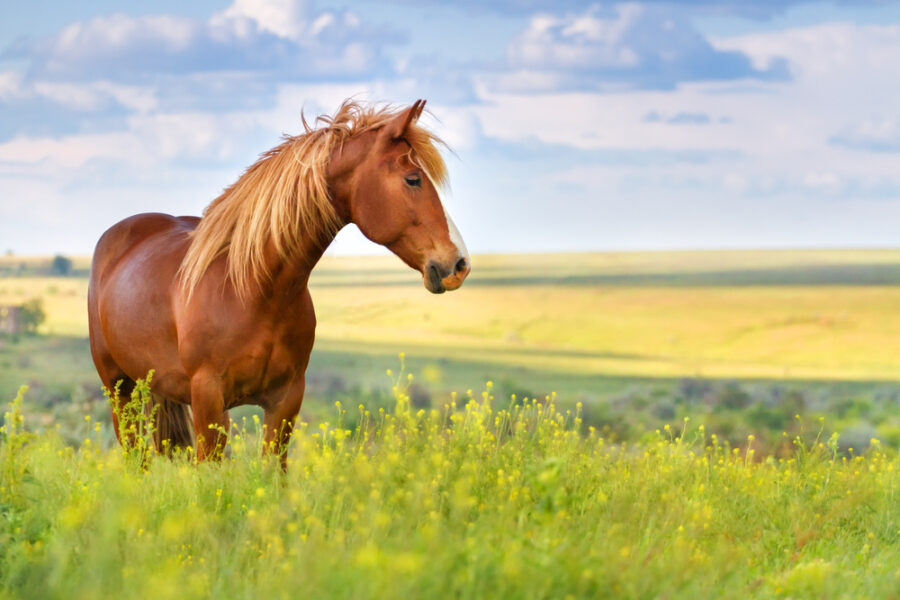
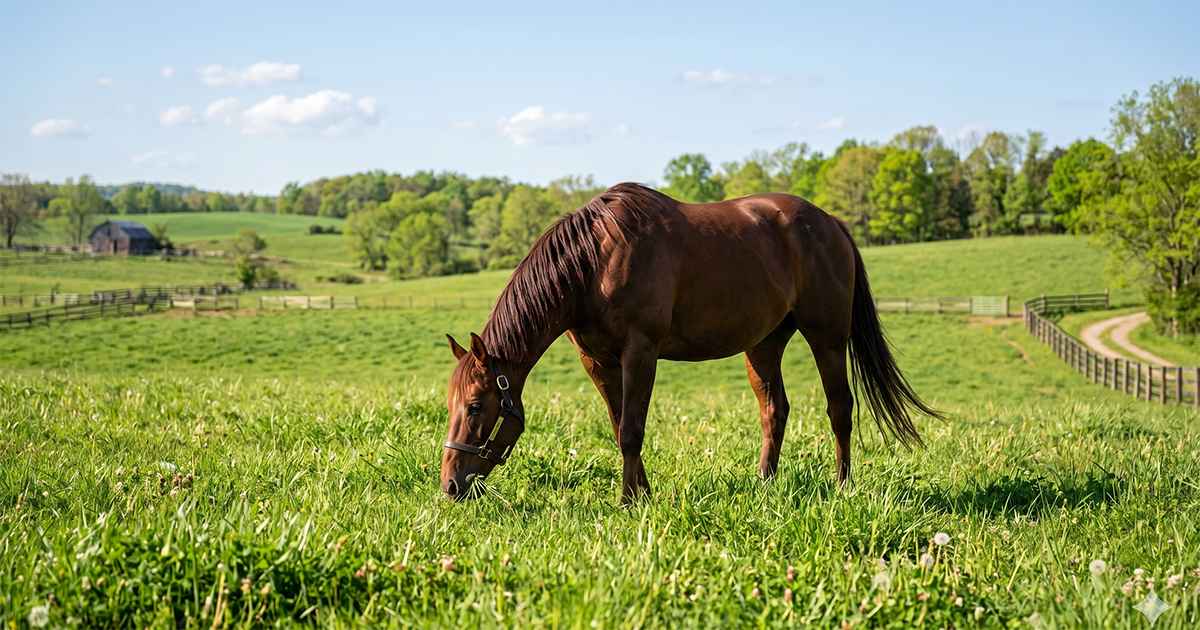
As winter fades and spring pastures begin to flourish, horse owners often notice changes in their horses’ energy, appetite, manure consistency, and overall behavior. While lush grass may seem like the perfect natural food source, sudden pasture changes can significantly impact the equine gut microbiome — the complex community of microorganisms living within the digestive tract.
Understanding how seasonal pasture changes influence the hindgut can help prevent digestive upset, metabolic stress, and long-term health concerns.
Spring Grass and Sugar Levels
Spring grass grows rapidly due to increased sunlight, moisture, and cooler nighttime temperatures. During this growth phase, grasses often contain elevated levels of non-structural carbohydrates (NSCs), including sugars and fructans.
These sugars are highly fermentable. When horses consume large amounts too quickly — especially after a winter diet of dry hay — the digestive system may struggle to adapt. Horses evolved to graze continuously on fibrous forage, not sudden surges of sugar-rich pasture.
Cool-season grasses can become particularly high in sugars during sunny days followed by cold nights because the plant continues producing sugars but cannot use them efficiently for growth. This creates an environment where horses may ingest far more rapidly fermentable carbohydrates than their hindgut is prepared to process.
The Role of Hindgut Fermentation
The equine hindgut functions as a fermentation chamber populated by billions of beneficial microbes, including bacteria, fungi, and protozoa. These microbes break down fiber and produce volatile fatty acids, which provide a major source of energy for the horse.
When the diet changes abruptly, the microbial population shifts as well. Excess sugars and starches entering the hindgut can encourage the growth of lactic-acid-producing bacteria while reducing populations of fiber-digesting microbes. This imbalance may lower hindgut pH and contribute to microbial disruption, sometimes referred to as dysbiosis.
A disrupted hindgut environment can affect nutrient absorption, immune function, hydration, and even behavior. In more severe cases, rapid fermentation and microbial die-off may increase the risk of digestive upset, loose manure, gas accumulation, colic, or laminitis.
Gradual dietary transitions are essential because the microbiome requires time to adapt to new forage conditions.
Signs of Microbiome Imbalance
Horses experiencing gut imbalance from pasture changes may display subtle or obvious symptoms. Common signs include:
- Loose manure or mild diarrhea
- Increased gas or bloating
- Changes in appetite
- Sensitivity or irritability under saddle
- Reduced performance or energy fluctuations
- Hoof soreness or increased digital pulses
- Mild colic symptoms
- Dull coat condition
- Weight fluctuations
Some horses are more vulnerable than others, particularly easy keepers, horses with metabolic concerns, seniors, or horses with a history of laminitis.
Even behavioral changes can sometimes be linked to digestive discomfort and inflammation associated with microbiome disruption.
Natural Ways to Support the Equine Microbiome
Supporting the microbiome during pasture transitions focuses on stability, fiber intake, and gradual adaptation.
1. Introduce Pasture Slowly
Allow horses limited grazing time initially and increase turnout gradually over several weeks. This gives hindgut microbes time to adjust to changing carbohydrate levels.
2. Prioritize Forage
Feeding hay before turnout can help reduce rapid sugar intake and slow grazing behavior. Continuous access to appropriate forage also supports microbial stability.
3. Reduce Sudden Feed Changes
Avoid changing concentrates, supplements, or forage sources at the same time pasture conditions are shifting.
4. Encourage Movement and Hydration
Regular exercise and adequate water intake support healthy digestion and gut motility.
5. Consider Targeted Digestive Support
Certain nutritional ingredients may help support hindgut balance during stressful dietary transitions.
Probiotics vs. Prebiotics
The terms probiotics and prebiotics are often used interchangeably, but they serve different functions within the digestive system.
Probiotics
Probiotics are live beneficial microorganisms intended to support microbial balance within the gut. Common probiotic strains used in equine supplements may include Lactobacillus species, Bifidobacterium, Enterococcus, and Saccharomyces yeast cultures.
These supplements may be particularly useful during periods of stress, travel, antibiotic use, or dietary transition.
Prebiotics
Prebiotics are non-digestible fibers and compounds that nourish existing beneficial microbes already living in the hindgut. Ingredients such as yeast derivatives, fructooligosaccharides (FOS), mannan oligosaccharides (MOS), beet pulp, and certain plant fibers can help beneficial bacteria thrive.
Many equine nutritionists consider prebiotics especially valuable because they help support the horse’s native microbial ecosystem rather than introducing new organisms.
In many cases, products combining both probiotics and prebiotics — often called synbiotics — may offer broader digestive support.
Supporting Gut Health Through Seasonal Change
Pasture changes are a natural part of horse management, but they can place significant stress on the digestive system if transitions happen too quickly. By understanding how spring grass affects hindgut fermentation and microbial balance, horse owners can make informed feeding decisions that support digestive stability and overall wellness.
A healthy microbiome contributes not only to digestion, but also immune health, metabolism, behavior, and performance. Careful pasture management, forage-first feeding strategies, and targeted digestive support can help horses transition safely into grazing season while maintaining a healthier gut environment.