

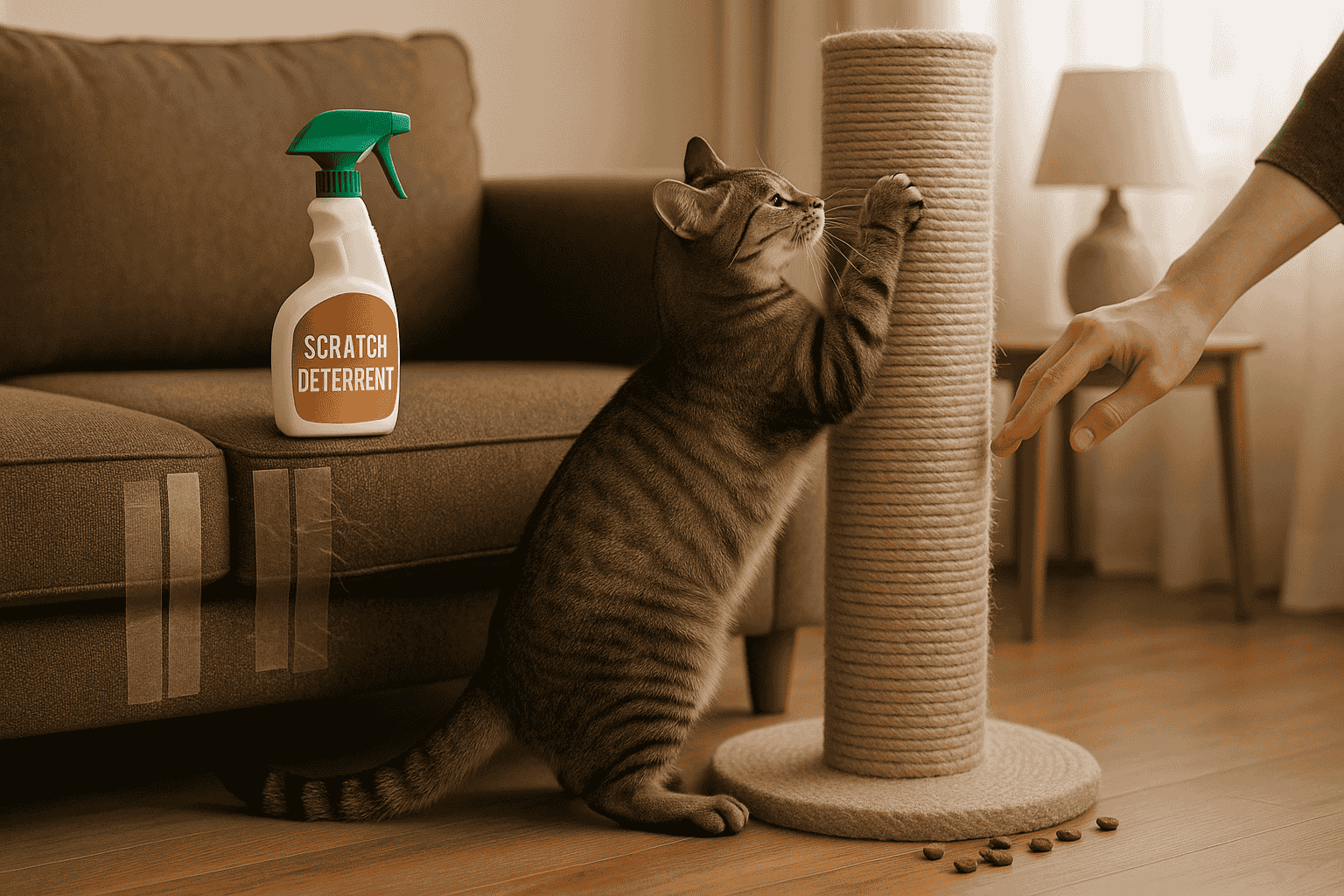
Cats love to scratch. It’s natural for them. But when your cat starts using your couch as a scratching post, it can be frustrating. The good news is, you can train your cat to scratch the right things without yelling, punishing, or losing your favorite furniture.
This straightforward guide will help you understand why cats scratch and provide simple solutions to address the issue. Let’s begin.
Why Do Cats Scratch?
Before solving the problem, you need to understand why cats scratch. It’s not bad behavior, it’s instinct.
Here are the main reasons:
- Marking territory: Cats have scent glands in their paws. Scratching helps them mark their space.
- Claw care: Scratching removes old layers from their claws and keeps them sharp.
- Stretching: Scratching allows them to stretch their muscles and feel good.
When you understand the reason behind scratching, you can give your cat a better way to do it.
1. Give Them a Better Scratching Option
If your cat is scratching the sofa, that means they need a better place to scratch.
Here’s what to look for in a good scratching post:
- Right material: Cats prefer materials such as sisal, cardboard, or rough fabric. Avoid soft or slippery materials.
- Tall and strong: A good scratching post should be at least 2 to 3 feet tall, allowing your cat to stretch fully. It should be steady and not fall over.
- Different styles: Some cats like vertical posts, others prefer horizontal or slanted ones. Try different types to see what your cat likes best.
Place the new scratching post near the area where your cat already scratches. Once they start using it, you can slowly move it to a better spot.
2. Make Your Furniture Less Attractive
You don’t have to shout or scare your cat. Instead, make your furniture less fun to scratch.
Try these simple tricks:
- Double-sided tape: Cats tend to avoid sticky surfaces.
- Aluminum foil: The sound and texture can be bothersome to many cats.
- Citrus spray: Cats usually dislike citrus smells. Spray a small amount on the area, but test first to ensure it doesn’t damage the fabric.
These ideas can help prevent your cat from returning to the same spot.
3. Use Positive Reinforcement
Cats learn best with praise and rewards, not punishment.
Here’s how to train them:
- When your cat scratches the wrong place, gently say “No” and move them to the scratching post.
- When they use the post, give them a treat or gentle praise.
- Do this again and again. It takes time, but it works.
You can also rub a bit of catnip on the scratching post to encourage them.
4. Keep Their Claws Trimmed
Trimming your cat’s claws helps reduce damage to your furniture and other belongings. It also keeps their feet healthy.
Follow these tips to keep your cat from scratching household furniture.
- Use special cat nail clippers.
- Only trim the sharp tip of each claw. Avoid the pink part, which contains nerves and blood vessels.
- Be gentle, and give a small reward after trimming.
If you’re unsure how to trim, ask your veterinarian to demonstrate the technique.
5. Try Soft Nail Caps
If your cat still scratches the wrong things, soft nail caps can help. These are small covers glued over your cat’s trimmed claws.
They are:
- Safe and painless
- Easy to apply at home or with a groomer
- Helpful for reducing damage while training continues
They usually last for about 4 to 6 weeks.
6. Protect Your Furniture When You’re Away
Cats often scratch when you’re not watching. To prevent damage when you’re not home:
- Close the doors to rooms with valuable furniture
- Use covers or thick blankets to protect the surface
- Place temporary cardboard scratchers near the furniture
These small steps can make a big difference.
7. Be Patient and Stay Consistent
Cats don’t learn overnight. Some take a few days, others take a few weeks. Be patient and stay consistent.
- Always guide them to the correct place
- Reward them every time they do it right
- Don’t give up
With time, your cat will learn what’s allowed and what’s not.
If you’re looking to understand your cat’s habits better and want step-by-step guidance on building a stronger bond through positive training, visit Animal Wellness Academy.
Our expert-created resources are designed to help you solve everyday behavior challenges using gentle, proven techniques. Whether you’re new to cat ownership or looking to expand your skills, our courses and articles are here to support you and your cat every step of the way.
Frequently Asked Questions:
How long does it take to train a cat to stop scratching furniture?
Every cat is different, but most cats start improving within two to four weeks if you stay consistent with training and redirection.
What type of scratching post is best for cats?
Cats usually prefer posts made of sisal fabric, cardboard, or rough wood. The post should be tall enough for them to stretch and stable enough not to tip over.
Can I stop my cat from scratching?
No, scratching is a natural behavior. The goal is not to stop scratching, but to redirect it to acceptable items, such as posts or pads.
Is it safe to use soft nail caps on cats?
Yes, soft nail caps are safe when applied correctly. They are painless and help reduce furniture damage during training.
Should I punish my cat for scratching the wrong thing?
No. Punishing your cat can make it fearful or anxious. Use gentle redirection, praise, and treats to teach better habits.
Final Thoughts
You don’t have to choose between a happy cat and clean furniture. With the right scratching post, gentle training, and a little patience, you can have both. Your cat gets what they need. Your furniture stays safe. And your home becomes a peaceful space for both of you.