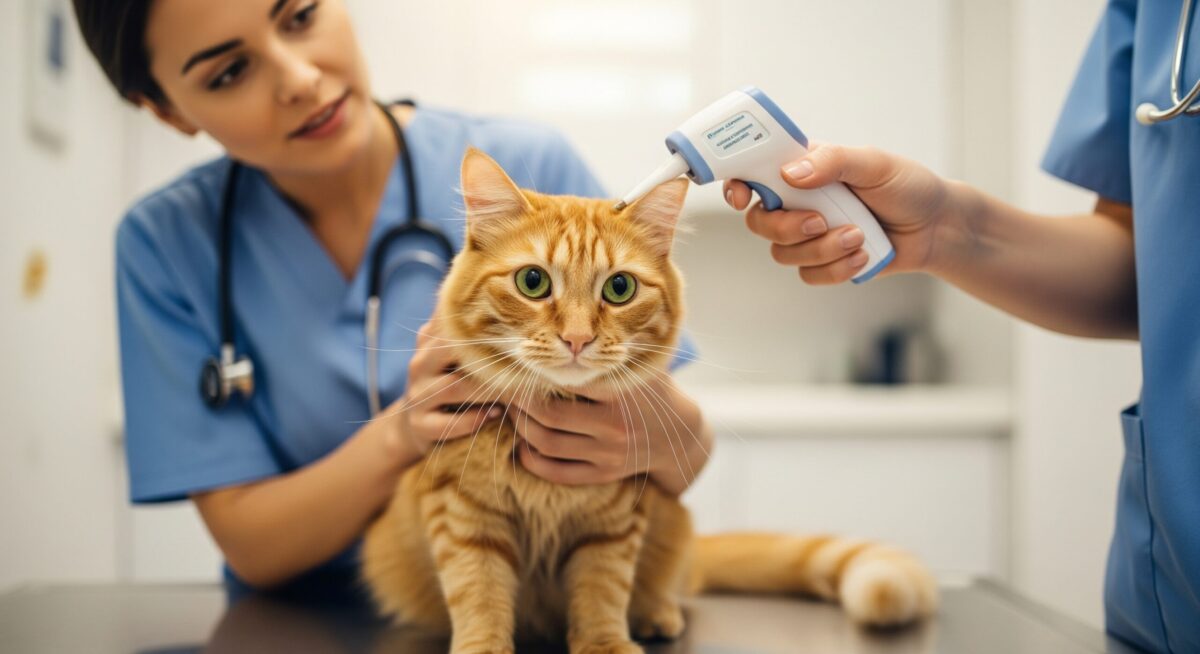
Measuring rectal temperature in cats often leads to discomfort and stress. Veterinary professionals recognize the importance of accurate temperature readings. Unfortunately, traditional methods can provoke anxiety in feline patients. This discomfort can hinder effective examinations and treatment decisions. Finding a less invasive alternative becomes essential for improving feline welfare.
The Study Overview
Recent research evaluated non-contact infrared thermometry in cats as a viable alternative. A total of 95 cats participated, categorized into three age groups. Group I included 20 kittens aged 2–6 months. Group II comprised 34 young cats aged 7–24 months. Group III contained 41 adult cats over 24 months. This comprehensive study aimed to assess temperature correlations among different measurement methods.
Key Findings on Temperature Readings
The study revealed significant findings regarding temperature measurements. The mean rectal temperature averaged around 38 °C. This reading surpassed both ocular temperature and auricular pinna temperature significantly. No notable differences appeared between rectal and perineal temperatures. Additionally, body temperatures showed no variance across the age groups. These findings suggest that alternative measurement methods yield reliable results.
Ambient Temperature Influence
Ambient temperature significantly influenced ocular and auricular readings. Ocular temperature showed a difference with a p-value of less than 0.05. Auricular temperature demonstrated an even stronger influence, with a p-value of less than 0.0001. Recognizing these factors is critical when interpreting temperature data. In contrast, perineal infrared temperatures maintained strong correlation with rectal measurements, proving stable across different environments.
The Advantages of Non-Contact Methods
Non-contact infrared thermometry offers numerous benefits for veterinary professionals. This method reduces stress for feline patients, allowing for a more relaxed examination experience. Perineal infrared temperatures present a promising alternative to rectal measurements. Their strong correlation with rectal temperatures enhances their credibility. This innovative approach contributes to a more humane practice, prioritizing feline comfort.
Embracing non-contact infrared thermometry in cats can transform feline temperature monitoring. As professionals, we should look to prioritize the well-being of our patients. Implementing non-invasive techniques fosters trust and cooperation during examinations. This shift not only improves patient comfort but also enhances diagnostic accuracy. Adopting these methods is another step for veterinary professionals to elevate the standard of care for their patients.