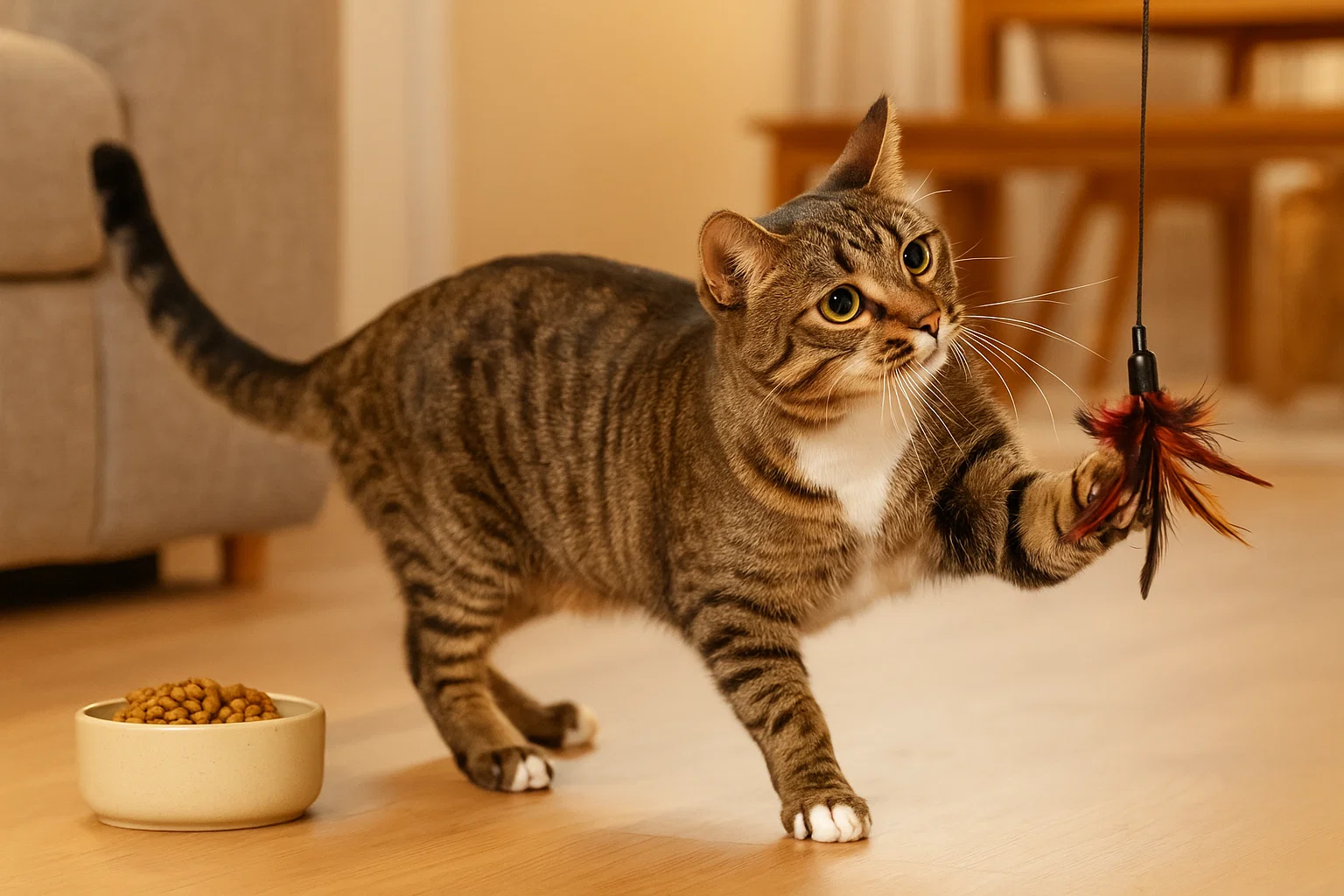
Cat obesity is a growing problem. Many indoor cats are overweight. This can lead to health problems like diabetes, joint pain, and a shorter life. But you can help your cat stay fit and healthy with two simple tools: the right food and daily play. This guide will show you how.
Why Cat Obesity Happens
Most cats become overweight because they eat too much and move too little. It’s easy to overfeed a cat, especially with treats and dry food. Indoor cats often become bored and lazy. They sleep a lot and don’t have space to run or climb.
Some cats also gain weight after being spayed or neutered. Their metabolism slows down. If their food stays the same, they gain fat.
Obesity isn’t about laziness. It’s about habits, routine, and care. Small changes can make a big difference.
How to Tell If Your Cat Is Overweight
You don’t need a scale to spot the signs. Look at your cat from above. You should see a waistline. If the body looks round or wide, that’s a warning sign.
Feel your cat’s ribs. You should feel them under a thin layer of fat. If you can’t easily feel them, your cat may be overweight.
Other signs include:
- Low energy
- Difficulty jumping
- Heavy breathing after mild activity
- Greasy fur from a lack of grooming
If you’re unsure, ask your vet. A quick check can confirm it.
Choosing the Right Diet
Food plays the biggest role in weight gain and loss. Here’s how to feed your cat right:
- Feed by Portion, Not by Eye
Always measure your cat’s food. Guessing leads to overfeeding. Use a kitchen scale or a standard measuring cup.
Check the feeding guide on the label, but don’t follow it unthinkingly. Those guides are often too generous. Ask your vet for the right portion.
- Avoid Free Feeding
Leaving food out all day leads to mindless eating. Feed your cat two or three small meals a day. Take the bowl away after 15-20 minutes. This provides your cat with a routine and helps keep hunger in check.
- Choose High-Protein, Low-Carb Food
Cats are meat-eaters. Their bodies need protein. Many dry foods are high in carbs and calories. That causes weight gain.
Wet food is often better. It has more protein and water, and fewer carbs. Look for real meat as the first ingredient. Avoid foods with corn, wheat, soy, and artificial fillers.
- Watch the Treats
Treats add up fast. A few each day can add hundreds of calories a week.
Limit treats to less than 10% of your cat’s daily intake. Choose healthy options, such as freeze-dried meat or kibble, from their daily portion.
How Play Helps with Weight Control
Playing keeps your cat active and helps burn calories. It also reduces boredom, which can lead to overeating.
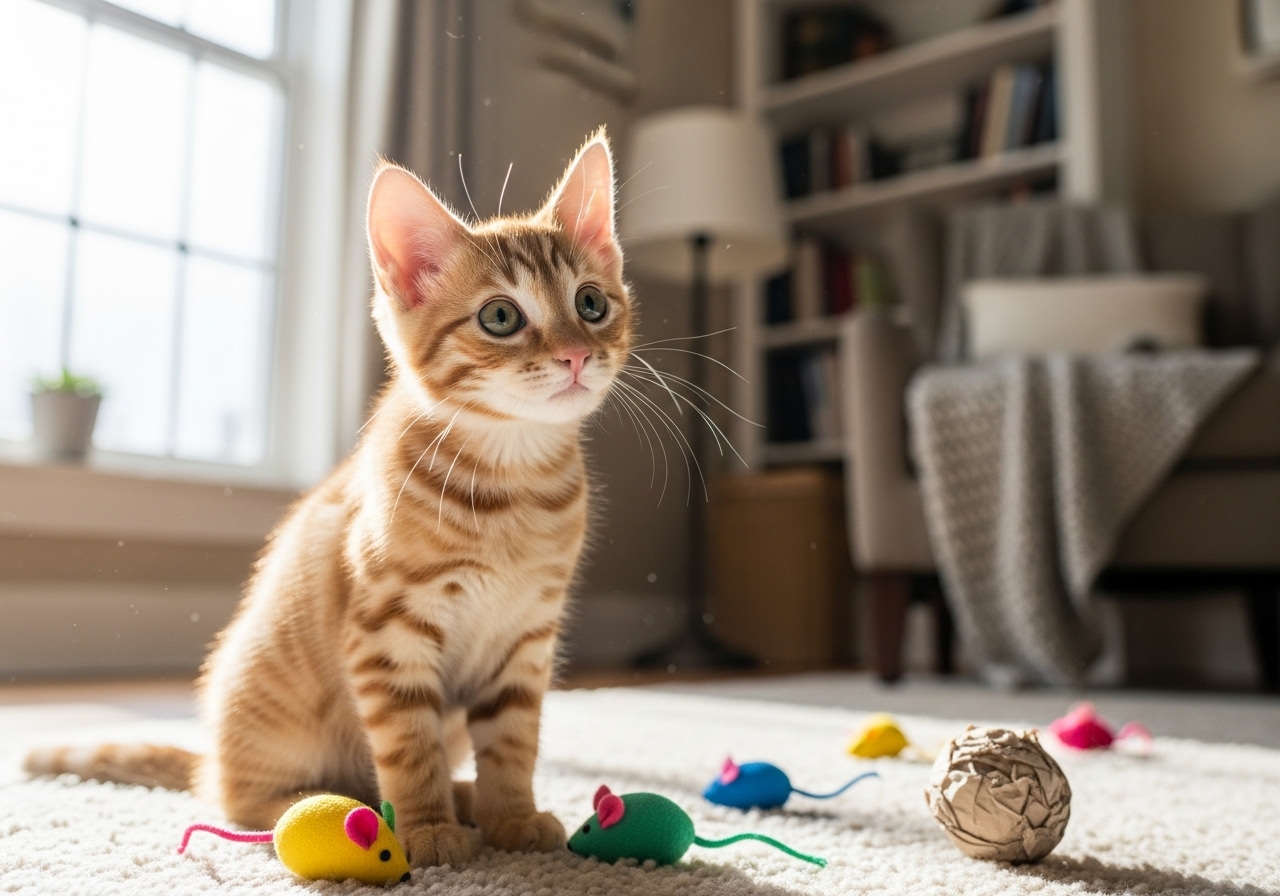
You don’t need fancy toys. Simple things, such as feathers on a string or crumpled paper balls, work well. Try these ideas:
- Laser Pointer Chase
Move the light in a circular motion, back and forth. Let your cat “catch” the red dot sometimes to avoid frustration.
- Feather Wand
Drag it across the floor like a mouse. Make it hide and reappear. Your cat will pounce and jump.
- Climbing and Scratching
Add a cat tree or wall shelves. Let your cat climb and explore. It builds muscle and helps burn fat.
- Food Puzzle Toys
These toys encourage your cat to work for its food. They move, spin, or roll to release kibble. Great for mental and physical stimulation. Aim for 10–15 minutes of active play twice a day.
Make Movement Part of the Day
Don’t just play once and stop. Make your cat move more every day.
- Move the food bowl upstairs or across the room
- Hide bits of kibble in different places
- Encourage chasing games
- Use window perches to promote jumping
Little movements matter. They add up over time.
Track Progress Without Stress
You don’t need to weigh your cat daily. But keep an eye on changes.
- Check how easily you can feel the ribs
- Watch for better energy and movement
- Note if jumping or grooming improves
Use photos to compare progress every month. Celebrate small wins.
Common Mistakes to Avoid
Even with good intentions, people often make errors. Avoid these:
- Overfeeding diet food: “Light” food can still make cats gain weight if you feed too much
- No vet check: Rule out thyroid or hormone issues before starting a diet
- Too fast weight loss: Cats should lose weight slowly. Sudden loss can harm the liver
- Feeding human food: Avoid table scraps. Many are high in fat and salt
- Ignoring boredom: Bored cats eat more. Enrichment matters
Don’t let your cat struggle with weight and health issues. Get online courses for your cat to learn more about holistic pet care, natural feeding, and play-based enrichment.
Explore our expert-led courses and resources to become the best wellness advocate your cat could ever have.
Always consult your veterinarian about your cat’s weight loss journey. They can:
- Check for health issues
- Suggest the best food
- Help you create a safe weight loss plan
- Track progress with regular weigh-ins
If your cat is obese or has other health conditions, consider consulting with your veterinarian about prescription food or supplements.
FAQs:
How much should my cat weigh?
It depends on the breed. Most cats should weigh between 8 and 10 pounds. Your vet can confirm the ideal weight.
Can I still give my cat treats?
Yes, but in small amounts. Use part of their daily food as treats during training or play.
How fast should my cat lose weight?
No more than 0.5 to 1 pound per month. Slow loss is safer and long-lasting.
Are indoor cats more likely to be obese?
Yes, they usually move less. Play and climbing space can help prevent this.
What if my cat refuses to play?
Try different toys. Use treats as a reward. Start with short sessions. Some cats prefer quiet, slow movement over fast chases.
Final Thoughts
Preventing cat obesity isn’t complicated, but it does require consistency. Feed wisely, encourage daily play, and watch for any changes in weight or behavior. Make it fun by turning meals into games and playtime into bonding moments. The more engaged you are, the easier it becomes. A healthy cat is not only happier, but also brings joy and balance to your home.