
No one likes to think about worms, but if you share life with a dog—especially a puppy—it’s a reality you’ll probably face at some point. Intestinal parasites such as roundworms, hookworms, whipworms, and tapeworms are surprisingly common. Left untreated, they can sap your dog’s energy, cause digestive issues, lead to weight loss, and even put your pup’s long-term health at risk.
The good news is that while veterinary deworming remains essential, your dog’s diet can play an important supporting role. Certain whole foods contain compounds that help make the digestive system a less hospitable environment for parasites, while at the same time strengthening immunity and improving gut health. Think of them as natural reinforcements for your dog’s wellness plan.
This guide will walk you through seven dog-friendly foods that may help discourage worms, exactly how to prepare and use them, and when it’s time to call your vet. By the end, you’ll know how to create a healthier, more parasite-resistant bowl for your furry friend.
A Reality Check Before We Begin
Let’s set the stage clearly.
Food is not medicine for active infections. If your dog already has worms and is showing symptoms—diarrhea, vomiting, weight loss, scooting, a pot-bellied appearance, or visible worms—you need to visit your veterinarian. Only a fecal exam and proper dewormer can address an active infestation.
Food is powerful support. When used consistently, certain foods help strengthen your dog’s digestive defenses. They can make the gut environment less appealing to parasites, while also promoting resilience and recovery after treatment.
Heartworm is different. Unlike intestinal worms, heartworms live in the bloodstream and heart, and they’re transmitted by mosquitoes. No diet or natural remedy will protect against them. Only veterinary preventives work here.
With that in mind, let’s look at the seven foods you can add safely and effectively to your dog’s diet.
1. Pumpkin Seeds: Tiny Powerhouses with Anti-Parasitic Potential
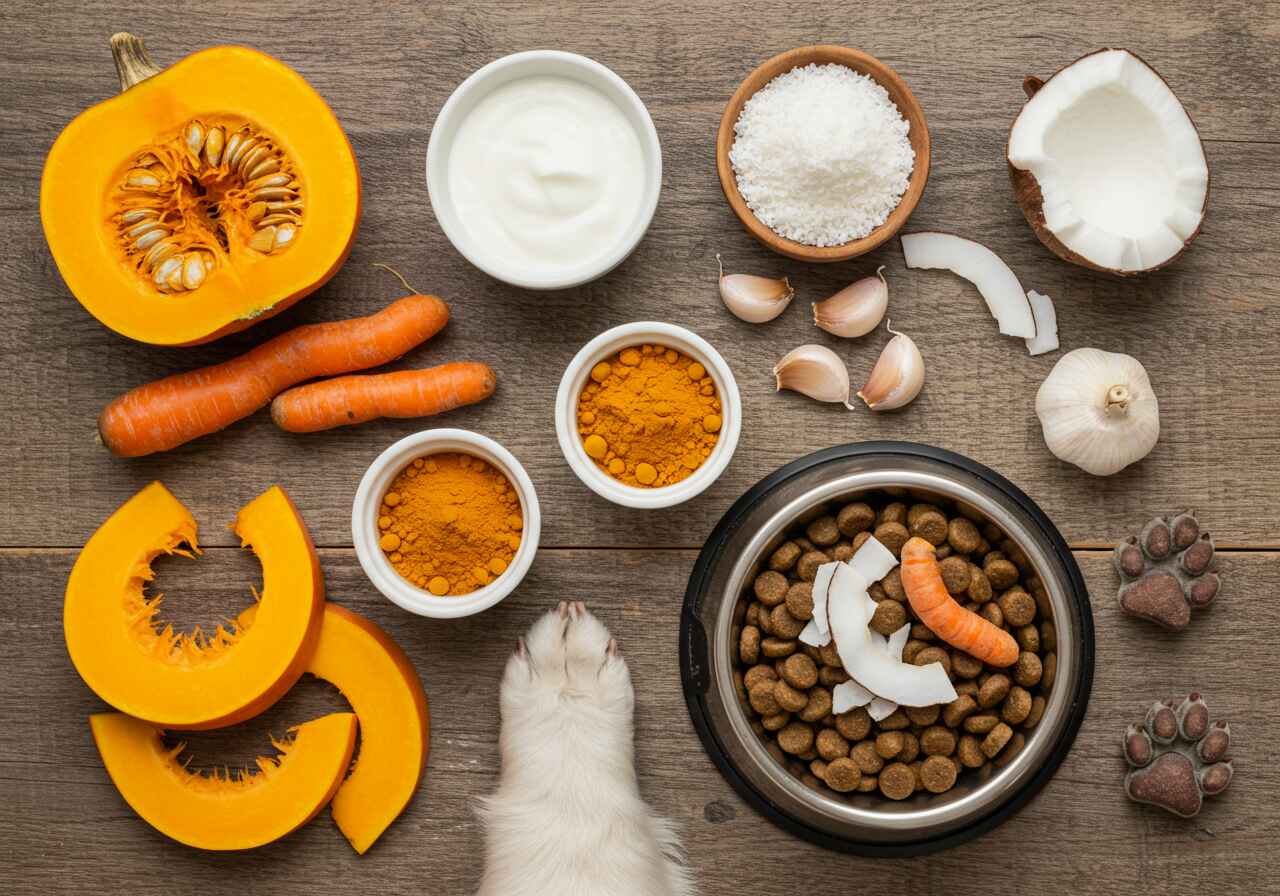
Pumpkin seeds may look unassuming, but they’re nutritional powerhouses. They contain a unique compound called cucurbitacin, believed to paralyze certain intestinal worms, making it easier for the body to expel them. Beyond their parasite-fighting potential, pumpkin seeds are rich in zinc, vitamin E, magnesium, and antioxidants—all of which support immune function and overall health.
Preparation and Use
- Buy organic, raw pumpkin seeds (shelled).
- Grind them into a fine powder using a coffee grinder or food processor; ground seeds are easier to digest.
- Store the powder in an airtight jar in the refrigerator to prevent rancidity.
Dosage
- ¼ teaspoon per 10 lbs (4.5 kg) of body weight, mixed into meals once daily.
- For a crunchy treat, roast the seeds lightly at 175°F (80°C) for 15–20 minutes, cool them, and grind again before serving.
Why dogs love it: Pumpkin seeds have a naturally nutty flavor, making them an easy addition even for picky eaters.
2. Kefir: Probiotic Reinforcements for a Strong Gut
Kefir is sometimes called “the grain of life,” and for good reason. This fermented milk drink is loaded with probiotics—beneficial bacteria and yeast that strengthen your dog’s gut microbiome. While probiotics don’t directly kill worms, a balanced and diverse microbiome makes it harder for parasites to thrive. A strong gut also means better digestion, nutrient absorption, and immunity.
Preparation and Use
- Choose plain, unsweetened kefir. Avoid flavored versions or any product with artificial sweeteners (especially xylitol, which is toxic to dogs).
- Goat’s milk kefir is often gentler on sensitive stomachs, but cow’s milk works too. Coconut-milk kefir is a dairy-free option.
Dosage
- Small dogs: 1 tsp daily
- Medium dogs: 2 tsp daily
- Large dogs: 1 tbsp daily
Introduce slowly to avoid temporary loose stools as the gut adjusts.
Pro Tip: Kefir is a perfect carrier food—mix in ground pumpkin seeds or a sprinkle of turmeric for a probiotic boost.
3. Carrots: Crunchy Helpers for Digestion
Carrots are a familiar snack, but their benefits go beyond vitamins. Rich in beta-carotene (a precursor to vitamin A) and an array of minerals, carrots also act as a natural digestive scrub. When grated raw, their fibrous texture helps sweep along debris in the intestines, which may include parasite eggs.
Preparation and Use
- Wash and grate raw carrots finely.
- Serve as a meal topper or mix into food.
Dosage
- Small dogs: 2 tsp daily
- Medium dogs: 4 tsp daily
- Large dogs: 2 tbsp daily
Grated is safer than chunks for gulpers and easier to digest.
Bonus: Carrots double as low-calorie training treats when cut into small sticks.
4. Coconut: Fiber and Healthy Fats in One
Unsweetened, desiccated coconut isn’t just a tasty topping. It contributes fiber to support regular elimination, while its fatty acids add antimicrobial support. Historically, coconut has been used as a vermifuge—a substance believed to help expel worms.
Preparation and Use
- Use unsweetened, desiccated coconut flakes, or virgin coconut oil.
- Sprinkle flakes over meals or add a small amount of oil to food.
Dosage
- Flakes: 1 tsp (small dogs), 2 tsp (medium dogs), 1 tbsp (large dogs), given 3–4 times per week.
- Oil: Start with ⅛–¼ tsp per 10 lbs body weight, and increase gradually if tolerated.
Tip: Combine coconut with oats or kefir so it sticks to the meal rather than sliding off.
5. Turmeric: The Golden Spice with Healing Potential
Turmeric has been used in Ayurvedic medicine for centuries, and modern research highlights its active compound curcumin for its anti-inflammatory, antioxidant, and antimicrobial effects. Studies suggest it may also help reduce parasite load. On top of that, turmeric supports the liver and soothes intestinal inflammation.
Preparation and Use (Golden Paste Recipe)
- Combine ½ cup turmeric powder with 1 cup water in a saucepan. Cook on low heat until thick (7–10 minutes).
- Stir in ⅓ cup coconut oil and 1½ tsp black pepper.
- Store in a glass jar in the fridge for up to 2 weeks.
Dosage
- ¼ tsp per 10 lbs of body weight daily, mixed into meals.
- Start small and increase gradually.
Alternative: Steep 1 tsp turmeric powder in hot water for 5–10 minutes, cool, and drizzle over food.
Caution: Avoid turmeric if your dog is on blood thinners, has gallbladder issues, or is scheduled for surgery. Always check with your vet.
6. Oats: Gentle on the Stomach, Strong for the Gut
Oats are a simple, soothing food for sensitive tummies. They contain beta-glucans, soluble fibers that form a gel in the intestines, supporting regularity and immune function. They’re especially useful for dogs recovering from digestive upset or needing sustained energy.
Preparation and Use
- Use plain rolled oats (not instant, not flavored).
- Cook in water only, never milk or sugar.
- Cool completely before serving.
Dosage
- Small dogs: 1–2 tbsp
- Medium dogs: 2–3 tbsp
- Large dogs: ¼–½ cup
Oats also make an excellent base for mixing in supplements like pumpkin seeds or turmeric.
7. Parsley: The Overlooked Detox Herb
Fresh parsley isn’t just a garnish. It’s packed with vitamins C and K, iron, and chlorophyll—all of which support detox pathways. It also freshens breath naturally and acts as a mild diuretic, helping flush the system.
Preparation and Use
- Wash thoroughly and finely chop curly or flat-leaf parsley.
- Mix into food or sprinkle on top.
Dosage
- Small dogs: 1 tsp
- Medium dogs: 2 tsp
- Large dogs: 1 tbsp
Note: Avoid large amounts in pregnant dogs or those with kidney issues.
Supplements Worth Discussing with Your Vet
Some natural supplements are often paired with the foods above, but they’re strong enough to require professional guidance.
- Oil of Oregano: Contains carvacrol and thymol, compounds with antimicrobial activity. Often suggested at 1–3 drops in food, diluted. Strong taste; use carefully.
- Grapefruit Seed Extract (GSE): Known for broad antimicrobial effects. Typically 1 drop per 10 lbs of body weight. Quality varies, so consult your vet before use.
These supplements are not replacements for veterinary dewormers, but can complement a prevention plan.
A Simple “Gut Guard” Topper Recipe
Here’s an easy way to combine several of these foods into one supportive topper.
- ½ cup cooked, cooled rolled oats
- 2–3 tbsp plain kefir
- 1–2 tsp ground pumpkin seeds
- A pea-sized amount of golden paste (turmeric mix)
- Optional: 1 tsp chopped parsley
Mix well and let sit for 5 minutes before serving. Use 1–2 tablespoons for small dogs, more for larger breeds. Store leftovers in the fridge for up to 24 hours.
How Often to Use These Foods
For most dogs, rotating two to four of these options throughout the week works well. Sensitive stomachs? Introduce one food at a time, waiting a few days before adding another. Puppies require special consideration, so always run new additions by your vet.
Consistency is key. A little, offered often, is better than a lot, once in a while.
Can These Foods Replace Dewormers?
No. These foods support a healthy gut and may help discourage worms, but they do not replace medical treatment. If you see signs of worms—such as rice-like segments near your dog’s tail, spaghetti-like worms in stool, persistent diarrhea, or bloating—visit your vet for a stool exam and prescription dewormer.
Remember: Heartworm is completely different, and only prescription preventives protect against it.
When to Call the Vet
Contact your vet right away if your dog has:
- Persistent diarrhea or vomiting
- Weight loss despite eating normally
- Lethargy or pale gums
- A bloated belly
- Visible worms or worm segments
- Coughing (possible heartworm or migrating parasites)
Your veterinarian will identify the specific parasite and provide targeted treatment. The foods in this guide then become helpful allies in recovery and long-term prevention.
Frequently Asked Questions:
Is garlic a natural dewormer for dogs?
Garlic is controversial. In high amounts it can damage red blood cells; in small, carefully managed doses, some practitioners use it. Because dosing is critical and risk varies by dog, it’s not included here. Always consult your vet first.
How long until I notice benefits?
You may see improved stool quality within a few days of adding foods like oats, carrots, or kefir. Pumpkin seeds, coconut, parsley, and turmeric usually work best with consistent use over several weeks.
Can I give all seven foods at once?
You could, but it’s not necessary—and it might upset sensitive stomachs. Start with two or three foods, rotate weekly, and monitor your dog’s response.
My dog won’t eat kefir. What can I try instead?
Goat’s milk kefir is often easier to accept, or you can try coconut-milk kefir. Veterinary probiotic powders are also an excellent alternative. The key is supporting a balanced gut microbiome.
Putting It All Together
If this were my dog, here’s how I’d do it:
- Add ground pumpkin seeds to breakfast daily, plus grated carrot at dinner.
- Offer kefir a few times a week as a probiotic boost.
- Rotate in coconut flakes or parsley on alternating days.
- Use oats with a little golden paste after stressful days or travel.
- Stick to regular stool checks and prescribed preventives from the vet.
It’s a simple, sustainable plan that keeps the gut strong and less welcoming to parasites, while ensuring your dog is protected with veterinary care where it matters most.
The Bottom Line
Worms may be common, but they don’t have to control your dog’s health. With a thoughtful combination of fiber-rich vegetables, functional seeds, natural fats, probiotics, and herbs, you can build a bowl that strengthens immunity and makes life tougher for parasites.
These foods won’t replace veterinary treatment, but they can make your dog healthier, more resilient, and better equipped to fight off infections. Combine smart nutrition with regular vet care, and you’ll give your dog the best shot at a long, energetic, worm-free life.
Want more natural strategies for keeping your dog healthy? Explore the Dog Wellness Courses at Animal Wellness Academy.