
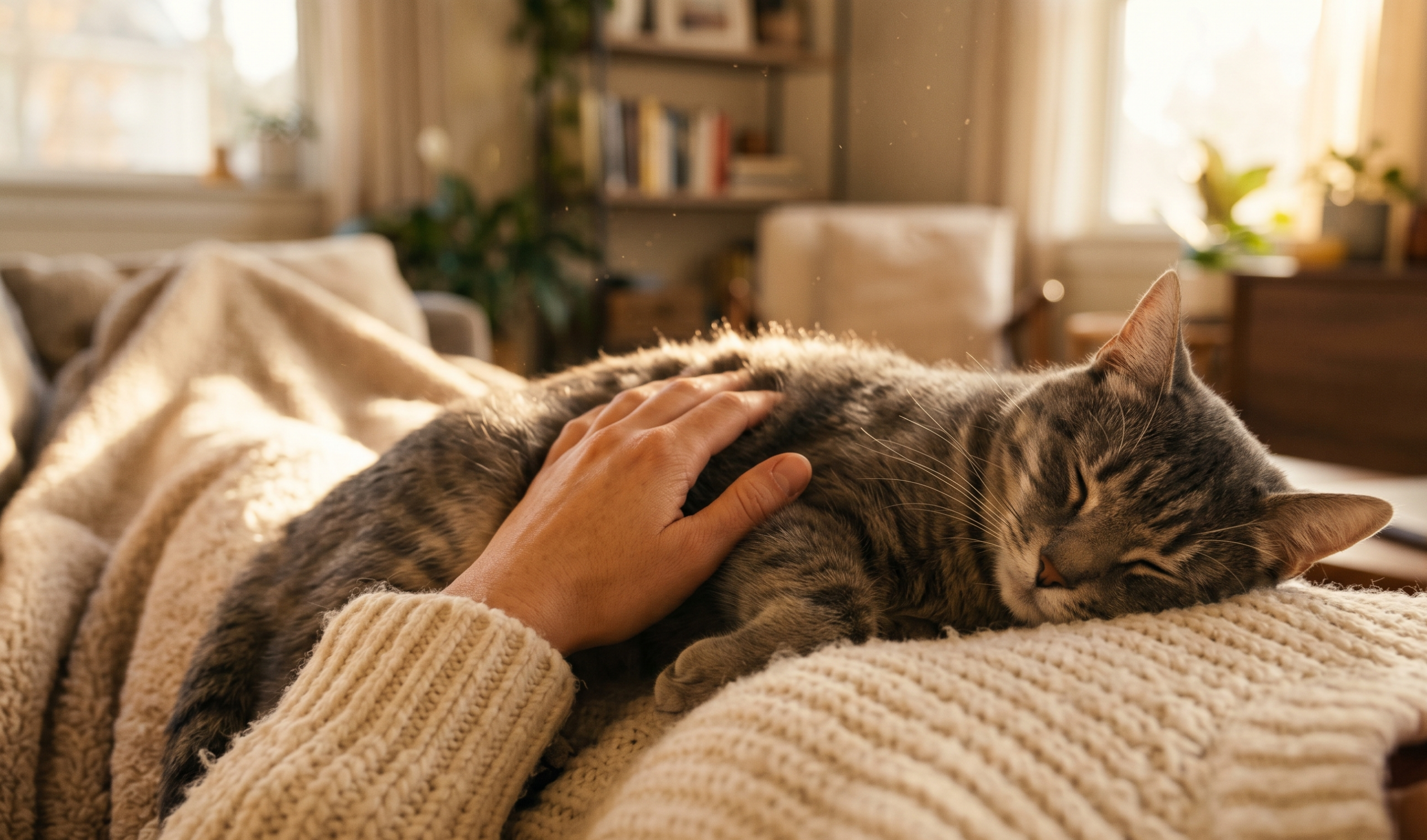
Have you ever noticed how comforting it feels when your cat curls up next to you and starts purring? That gentle vibration isn’t just a sign of contentment—it might actually be helping both you and your feline companion heal. Science has discovered something remarkable about purring that explains why cats might be nature’s little healers.
The Science Behind the Purr
When your cat purrs, they create vibrations that range from 25 to 150 Hertz (Hz). This might sound like just a technical detail, but researchers have found that these specific frequencies can have real effects on the body. Studies suggest that vibrations in this range can promote healing in bones and tissues, which is pretty amazing when you think about it.
Cats purr in all sorts of situations—when they’re happy, when they’re nursing their kittens, and interestingly, even when they’re injured or stressed. This has led scientists to believe that purring might be a way for cats to help themselves heal and feel better. It’s like they have their own built-in healing mechanism.
How Does Purring Help?
The vibrations from purring may work in several ways. First, they can help strengthen bones and repair tissues. This could explain why cats often recover quickly from injuries. The gentle vibrations might stimulate bone cells and encourage tissue repair.
Second, purring appears to have pain-relieving properties. The vibrations might trigger the release of natural pain-relieving chemicals in the body. This could be why your cat purrs when they’re hurt or uncomfortable—they might be self-medicating.
Finally, purring can lower stress levels. For both cats and the humans around them, that rhythmic rumbling sound and feeling can be incredibly calming. It can lower blood pressure and reduce anxiety, creating a peaceful environment that supports healing and wellness.
The pain‑relief and healing mechanisms are suggested by research but not fully proven.
Benefits for You Too
The good news is that these healing effects aren’t just for your feline companion. When your cat purrs while sitting with you, you may also experience reduced stress and lower blood pressure. Many people find that petting a purring cat helps them relax after a difficult day. It’s a win-win situation—your cat feels content, and you feel more peaceful.
Stress‑relief benefits for humans are well supported, but direct tissue healing in humans is not fully proven.
Understanding Your Cat’s Health
While purring is generally positive, remember that cats also purr when they’re sick or in pain. If your cat is purring but also showing signs of illness—like not eating, hiding, or acting differently—it’s important to contact your veterinarian right away. Purring doesn’t always mean everything is fine.
Your veterinarian can give you a professional evaluation of your cat’s health and help you understand what their purring might mean in different situations. Never hesitate to reach out if you’re concerned about your feline companion’s wellbeing.
The next time your cat curls up and starts purring, appreciate that you’re experiencing one of nature’s most soothing sounds—one that benefits you both!