
Explore how ozone therapy is transforming veterinary dentistry — enhancing healing, reducing infection, and minimizing antibiotic use. Learn practical ways to integrate ozone into your practice.
Ozone has been used in medicine since the late 1800s. Although underutilized in internal medicine, it has been integrated into dentistry — and more recently, into veterinary dentistry. The use of ozone in veterinary dentistry is instrumental in many aspects of our patients’ oral health. In water and oil form, ozone is easy to implement with the proper equipment and practical applications. The goal of this article is to touch on the history of ozone in medicine and the areas that can benefit us in veterinary dentistry. It will also outline simple and practical ways to incorporate ozone into the practice of veterinary dentistry.
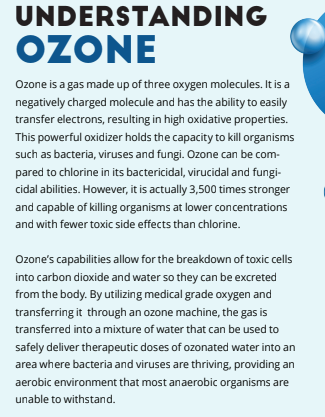
The oral cavity is often the first area of the body to reflect the overall health of our animal patients. The presence of biofilm, caries, inflammation and other dental pathologies are all the result of deeper disease. The biofilm (see sidebar on page xx) is unique in each individual pet and contributes to the pathology of the oral cavity. This is seen in plaque deposition, which in turn results in dental caries, periodontal disease, infection and inflammation. Additionally, secondary wounds can form, and primary wounds may result from oral foreign bodies. In all cases, ozonated water and oils play a pivotal role in restoring and maintaining oral health.
History of ozone use in medicine
Ozonated water was once referred to as “oxygenium” and dates back as early as 1885. Nikola Tesla founded the Tesla Ozone Company in the 1900s. It was the first company to patent and produce the O3 generating machine, and also the first to initiate the production of ozonated olive oil. In the 1940s, Dr. William Turska was one of the first doctors to start using ozonated water, and in the 1950s, Dr. W. Zable used it for treating cancer.
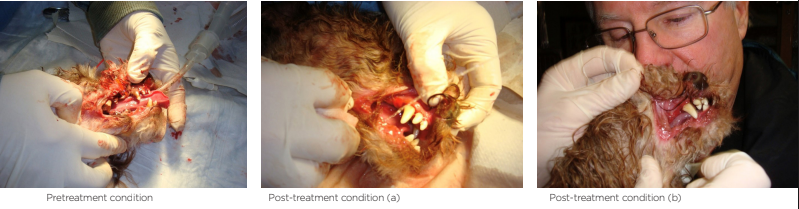
Despite its successful results, ozone therapy hasn’t been widely accepted by conventional medicine as a systemic therapy. However, it has been utilized in the discipline of dentistry. Dr. Edwin Fisch, a Swiss dentist, first introduced ozonated water in 1932. Studies have shown that ozonated water is an instrumental and effective alternative to antibiotic therapy and is efficacious as an antibacterial agent. Ozone is beneficial for conditions such as caries, periodontal disease, oral infections, inflammation, and as a post extraction treatment, while facilitating wound healing and dampening pain.
In dentistry, ozone helps eliminate the need for, and overtreatment with, antibiotics. The utilization of ozone in dental hygiene, routine dentistry and oral surgery proves to elevate the level of care in our animal patients and hasten overall recovery.
The role of ozone in veterinary dentistry
Caries, plaque and extractions
Tooth decay is an infectious process that results in the breakdown of tooth structure. By incorporating ozonated water washes and using ozonated olive oil as a preventative routine, it is possible to decrease the bacterial load and delay the degenerative process, resulting in a healthier oral cavity. Research shows that ozone can augment the remineralization of tooth enamel and enhance the remineralization potential of nanohydroxyapatite.
The utilization of either ozonated olive or mineral oil is effective for preventing plaque in addition to halting the cavity’s progress and aiding in the restoration of the tooth’s integrity when applied directly to the crown. So, using ozonated oils as a final polish can prove beneficial.
Ozonated water can eliminate many organisms, such as bacteria (including MRSA), fungi, viruses, protozoans and other products of necrotic debris. In our animal patients, many pulp infections result from fractured crowns and wear caused by chewing a variety of toys and bones. Often, this is a possible cause of tooth root abscesses that can result in extractions. Proper flushing of post-extraction pockets is instrumental in disinfecting areas prior to closing.
In addition to ozone flushes, ozonated olive oil provides continued protection from infection and helps dampen pain upon closing. Healing in areas that result in extractions can be facilitated by applying ozonated olive oil into the socket prior to the placement of any synthetic dental products, such as Consil, or biological additions, such as a fibrin clot/autologous blood concentrates/platelet rich plasma (PRP).
PRP plugs can be harvested by collecting the patient’s blood in a serum separator tube and immediately centrifuging at 3,000 rpms for ten minutes with no waiting time for clot contractions. Upon completion of centrifugation, a fibrin clot is liberated and can be removed from the tube and placed directly into the socket. In combination with the ozone, this process provides access to platelets and growth factors for expedited and maximum healing. This practice is often seen in human biological dentistry but has served the author for well over a decade.
Periodontal disease: infection, inflammation and pain
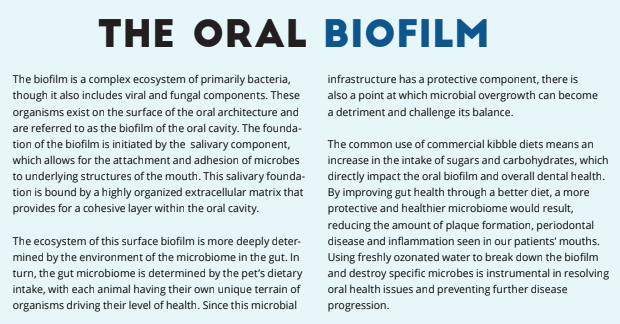
Our patients’ periodontal health reflects their overall systemic health. The oral cavity can often be viewed as an external barometer of gut health. Even though we are addressing critical issues of the oral cavity as veterinarians, we must also look at any deeper health issues that need to be addressed, such as gut health, less than optimal organ function, diet and more. To address the external expression of deeper disease we can utilize ozonated water, oils and gas to break down the biofilm layer and decrease the pronounced inflammation and underlying infection commonly found in the mouths of pets with significant periodontal disease.
The overall fear pet owners experience over the idea of general anesthesia leaves them seeking options such as non-anesthetic dentals. Such inappropriate procedures leave opportunities for serious underlying problems to be missed, which potentiates periodontal disease bringing about increased infection and inflammation. Clean crowns are not an indicator of the absence of dental disease, but this misinformation results from non-anesthetic methods. To overcome most cases of periodontal disease, proper dental radiographs must be performed to address deeper underlying problems. By solely addressing the cleanliness of the crown, many pets are still affected, and cardiovascular and renal health are compromised, often making the necessary procedures prohibitive.
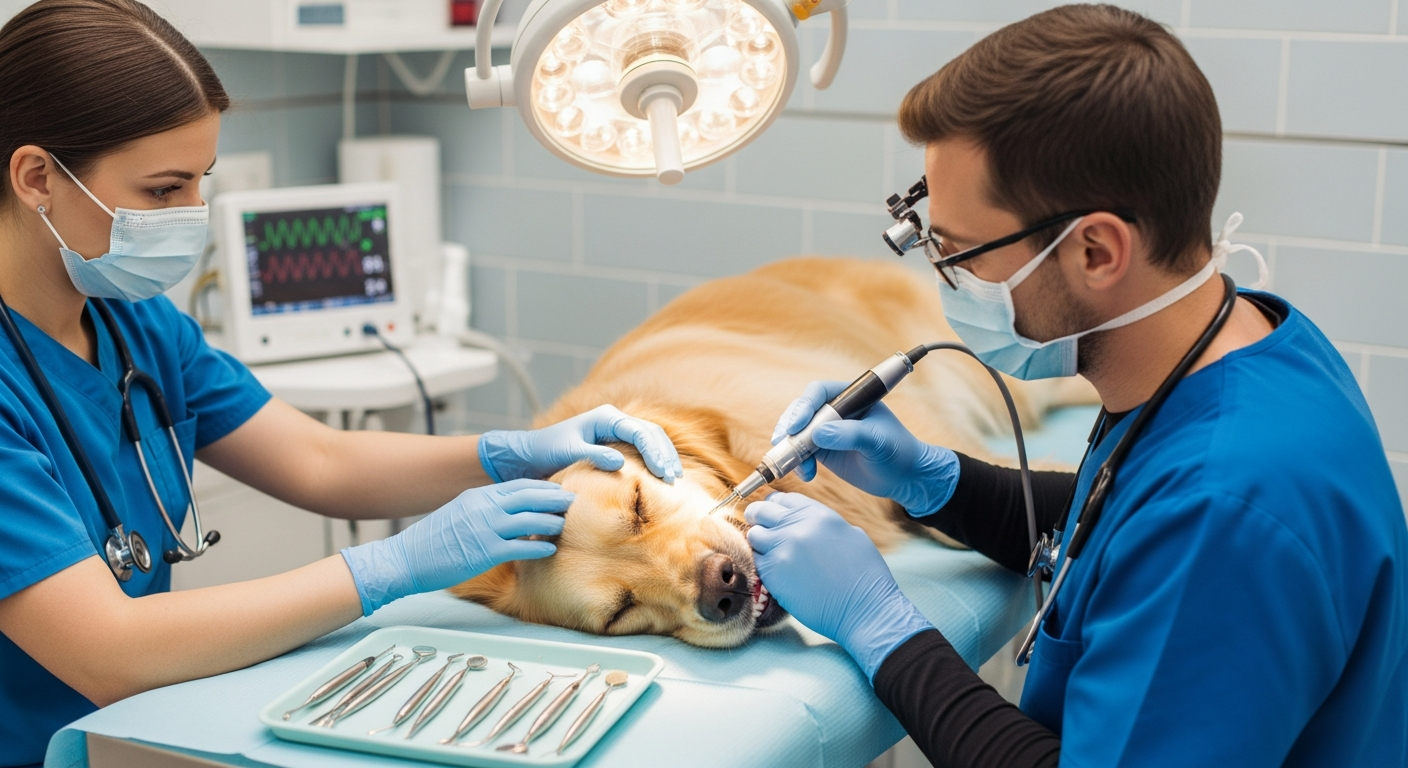
When dental disease is handled in a timely manner with anesthetics, dental radiographs and the implementation of ozone therapy, the frequency of further dental procedures can be lessened in some cases. While procedures such as radiographs, dental cleaning and polishing are taking place, ozone-soaked gauze can be positioned onto the entire gumline to minimize inflammation and infection. Addressing dental pathology at the root cause brings resolution to the surface issues of periodontal disease, which are often the result of deeper infection and inflammation.
Root canals
Ozone’s ability to open the dental tubules and allow for desensitization of nerve endings proves its importance in the area of root canal therapies. Although this article is aimed at general and advanced dentistry, ozone also serves a purpose in root canal therapy. Next to retained tooth roots or fractures to the tooth, the next most common complication of root canals is bacterial infection. Such deep-seated infections can result in deep abscesses and complications with osteomyelitis.
A common organism in root canal therapies is Enterococcus. Integrating ozone water and oils into such procedures would be beneficial in decreasing post-op complications and result in a better prognosis overall. Many root canal procedures encounter commonly found organisms such as Enterococcus along with other organisms, which are not being fully eradicated despite the use of sodium hypochlorite. More commonly, complications with osteomyelitis occur, and these may be significantly decreased with the use of ozone on a routine basis.
Conclusion
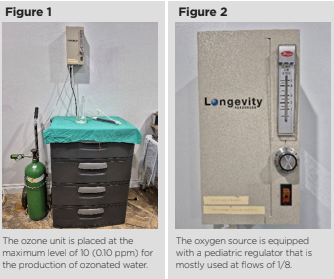
Ozone is a simple modality that is easy to incorporate into your veterinary dental practice. This simple oxidative therapy provides maximum benefits for improving the quality of veterinary dental care. Its ability to oxygenate tissue is imperative in the healing process, while its capacity for eradicating infectious agents is transformational. Ozone is an excellent augmentation to traditional dental therapies and can eliminate or decrease the need for antibiotic therapy. The post dental use of oils can also benefit dental health when used on a regular basis. Both ozonated water and oil play a pivotal role in reducing pain, inflammation and infection, along with facilitating wound healing. Its use elevates the quality and standard of care along with the comfort of our animal patients.
References
Bialoszewski D, Pietruczuk-Padzik A, Kalicinska A. Activity of Ozonated Water and Ozone Against Staphylococcus aureus and Pseudomonas aeruginosa biofilms. Med Sci Monit. 2011 Nov 1;17(11):BR339. Doi: 10.12659/MSM.882044.
Ozga A, Ottoni C. Dental Calculus as a Proxy for Animals Microbiomes. Quaternary International. Volumes 653-654, 20 April 2023 Pages 47-52.
Schwartz A, Sanchez G. ISCO3 International Scientific Committee of Ozonetherapy. Ozone Therapy and Its Scientific Foundations. November 8, 2012. (Madreid 2012).
Melanie P, Niola C, Plataroti I, Mancini S, Fratini F. Use of Ozone IN Veterinary Dentistry as an Alternative to Conventional Antibiotics and Antiseptics. Vet Sci. 2024 Apr 3;11(4):163. doi: 10.3390/vetsci11040163.
Silver S, Steinberg L. Biological Dentists of New Jersey: Dental Ozone; 2019. https://biologicaldentistsofnj.com/patient-education/dental-ozone/.
Srinivasan S, Prabhu V, Chandra S, et al. Does ozone enhance the remineralizing potential of nanohydroxyapatite on artificially demineralized enamel? A laser induced fluorescence study. Proceedings of the SPIE, Volume 8929, id. 892903 8 pp. (2014). doi:10.1117/12.2039399.
Woodward T. Bonegraft Materials in Veterinary Dentistry; Dental Aire; https://www.wellpets.com/
Xu J, Gou L, Zhang P, Li H, Oiu S. Platelet -rich plasma and regenerative dentistry. https://doi.org/10.1111/adj.12754
Elvis A, Ekta J. Ozone therapy: A clinical review. 2011 Jan-Jun;2(1):66–70. https://doi.org/10.4103/0976-9668.82319
Domb W. Ozone therapy in dentistry. Interv Neuroradiol. 2014 Oct 17;20(5):632–636. https://doi.org/10.15274/INR-2014-10083
Abreu-Villela P, Ferraro M, Antonio M, et al. Ozone therapy in the prevention of dental plaque formation in dogs. Journal of veterinary dentistry. Volume 38 Issue1.
https://doi.org/10.1177/08987564211013920
Kacirova J, Madari A, Mucha R, et al. Study of Microbiocenosis of Canine Dental Biofilms 2021 Oct 5;11:19776. doi: 10.1038/s41598-021-99342-5.
Bertolini M, Costa R, Barao V, et al. Microorgnaism. 2022 Dec 6;10(12):2413. Doi: 10.3390/microorganisms10122413.